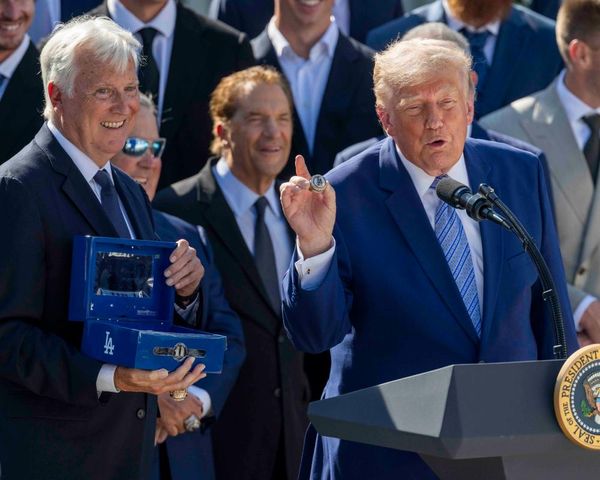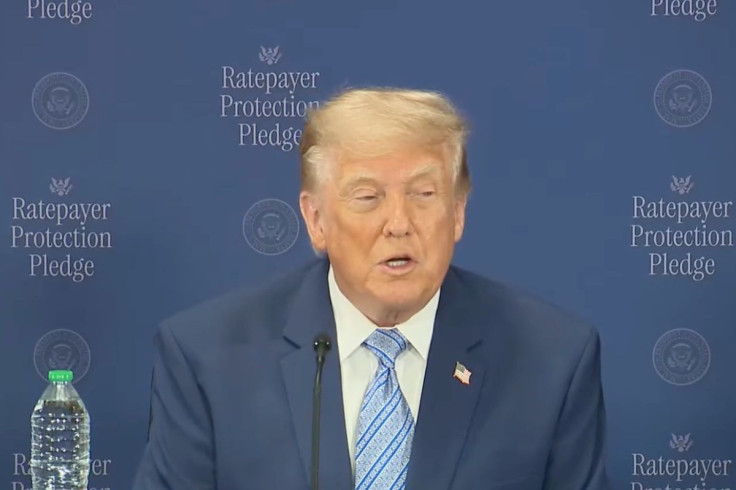
US President Donald Trump on Thursday appeared to joke about wanting to return to the White House, telling a crowd at the Environmental Protection Agency headquarters in Washington that he 'would like to be the next president' as he unveiled a major expansion of his administration's plan to shield households from utility price hikes linked to the rapid AI energy boom.
The off-the-cuff remark came as he announced a nationwide extension of his administration's key initiative designed to prevent the costs of powering new artificial intelligence data centres being passed on to consumers.
Trump Links AI Energy Build-Out to His 'Next President' Quip
Highlighting his self-perceived intellect, Trump suggested that the upcoming wave of new energy infrastructure would reflect well on whoever follows him in office. 'When all these plants and buildings and factories open, all I know is I'd like to be the next president,' he said.
He added that he was going to make someone 'look very good', noting that when the facilities finally begin operations, the next administration will 'simply sit there' and be praised as a 'genius'.
Shielding Consumers From the AI Energy Boom
The expansion of the Ratepayer Protection Pledge requires artificial intelligence companies and major technology firms to build and fund the power infrastructure needed for their new data centres instead of passing those costs on to consumers.
The White House confirmed that more than 220 utilities, technology companies, state governments and other regional partners have now signed the voluntary agreement.
This coalition currently covers electricity distributed to roughly 80 per cent of households and businesses across the country.
During his address, Trump argued that the updated approach will strengthen the electric grid while preventing higher utility costs for local communities. He explained that tech firms are going to be building their own electric plants, which he said would effectively turn them into utility providers.
The president went on to claim that household rates are 'actually going to go down', as these companies will generate surplus electricity that can feed back into the broader network.
To reinforce this stance on corporate costs, White House Press Secretary Karoline Leavitt stated ahead of the Thursday event that the administration is insisting that artificial intelligence data centres and big tech companies pay their own way, ensuring 'the American people are never left footing the infrastructure bill so private companies can benefit'.
The Ambition Behind the Ratepayer Protection Pledge
The foundational framework of the agreement was first unveiled in March. At that time, seven technology companies, including Amazon, Google, Microsoft, Meta, OpenAI, Oracle and xAI, formally agreed to cover the expenses for new power generation and grid upgrades.
Rather than shifting those capital costs to residential customers, the companies committed to absorbing the financial costs of their operational demands.
Following the initial signing earlier this year, White House Office of Science and Technology Policy Director Michael Kratsios described the initiative as necessary for the financial security of working families.
He stated that American technological leadership in the global arena should 'never come at the cost of hardworking citizens' ability to pay their basic monthly electricity bills'.
The pledge is driven by the growing power requirements of advanced computing, which have raised concerns about future grid stability.
A recent analysis published by consulting firm ICF estimated that monthly utility bills could rise by 15 per cent to 40 per cent by 2030 if the costs of powering new data centres are passed on to residential consumers.