Iran is caught in yet another round of widespread civil unrest. These lines are written amid an internet blackout and I didn’t know if I’d be able to send them out. Ever since the 2009 post-election uprising, sporadic outbursts of public anger have become somewhat the order of the day, mostly silenced – brutally for a while – only to fester and uncork again on another occasion.
The street protest is not the sole medium through which opposition has tried to convey its dissent. Iranians have tried everything – be it the very narrow and funnelled channel of elections between the limited choices offered by the state, or on social media, in universities and at public events. The demand for meaningful change is repeated through different means, again and again, yet to no avail. Ever since the 2000s, the Iranian state heeds little in the way of democratic demands. And when there has been a narrow crack in the state bulwark, the likes of Donald Trump – by the reimposition of sanctions and violating the Joint Comprehensive Plan of Action – sabotaged and derailed civil attempts at reforming the Islamic republic.
And here we are again. Many of us Iranians grapple with the feeling that our agency counts for little. The dilemma we face does not stop here. Not only are many of us unrepresented inside Iran, but also among its opposition. For many, the man who is talked about as the main opponent to the Islamic republic, the heir to Iran’s former monarchical tyrant, Reza Pahlavi, is not our cup of tea. The sheer idea of returning to dictatorship and one-man power, secular though he might well be, makes one’s hair stand, let alone returning to him, widely seen as an Israeli stooge, surrounded by anti-democratic forces, patriarchal to his core, inexperienced and distanced from Iranian society by his expat status.
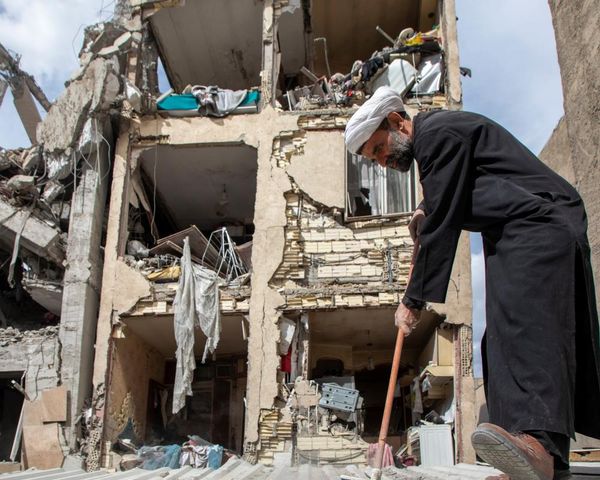
What is more, there is a high chance that the unpredictable man in the White House, drunk with his exhibition of power in Caracas, could militarily intervene. And that could be an act sure to lead to an extended period of violence and probably years of war. Trump has shown that despite his “America first” rhetoric he is willing to toy with the idea of reincarnating a new form of western imperialism. He hesitates little to use military means for political ends. His threats and “big, beautiful” presence cast a shadow over any discussion, and how ugly his words about us are: the orientalist image of west Asians as barbaric people who cannot move their country in the right direction and, indeed, need a white saviour in the shape of a Marvel hero, Captain America. At any rate, the memory of his recent bombardment of Iran is still fresh, and it is not one many of us remember fondly.
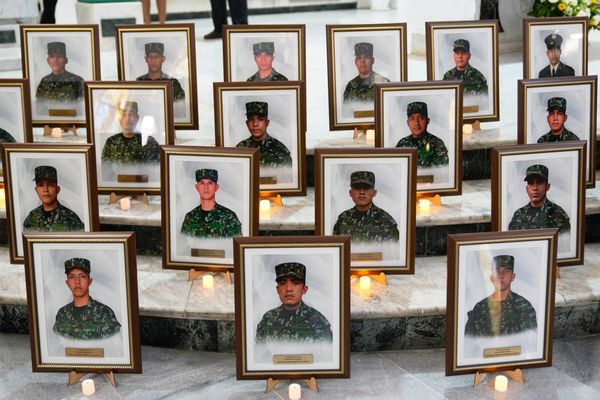
This is another sorry episode for Iran, and I inhabit a social bubble mostly formed of academically educated individuals who, so far as I can tell via limited means of communication, view this episode with trepidation. Now, the streets are no longer the stage for protest, but when they were, it was messy, bloody and apocalyptic. The funeral of 100 policemen was held last week at Tehran University, and only God knows how many protesters have met their demise in return. This level of violence is unprecedented, and such spectacles scare many.
We are not strangers to revolution in Iran. We still live through the repercussions of the last revolution in 1979. And precisely because of that, many of us are fearful. The collapse of the state is disruptive. It begets violence and uncertainty. It scares people into migration; thus, nothing to be looking forward to.
And the possibility of the Islamic republic collapsing is far-fetched. This political entity has roots in many social groups and a dedicated base that will stick with it through thick and thin. The Islamic republic is likely to remain, and one can assume when it is presented with such massive and widespread demonstration – backed by foreign powers – its paranoia gains fresh currency. The state starts to see itself under existential threat, putting up its guard and more vociferously relegating any voice for change. Which, of course, leads to another round of civil unrest in the near future. Unless the Iranian state begins giving way to meaningful, fundamental changes, what one can see awaiting Iran is repetitive recursion of social unrest on the one side, and shows of force by the state on the other. A circle of attrition whereby the country erodes and sinks down, instead of moving towards a democratic form of politics.
I can’t remember a time like this at any point in my life, where I felt so downcast and pessimistic about the future of my country. It is sad, yet I never wished I was wrong in my pessimism moreso than I do now.
The writer lives in Iran
Do you have an opinion on the issues raised in this article? If you would like to submit a response of up to 300 words by email to be considered for publication in our letters section, please click here.