The strongest men I’ve known didn’t behave anything like Donald Trump.
They were capable of restraint, first off. They may have spoken loudly, but they never used volume to enforce authority. None of them thought domination equaled leadership. How silly that would be.
Instead, these men empathized. They listened, correcting themselves when necessary. They apologized without fear of appearing weak. They understood that a paycheck, a job title, or physical prowess alone did not make them men. Not one of them mistook cruelty for strength. They learned that at home, on the job, and in the service. They understood the difference.
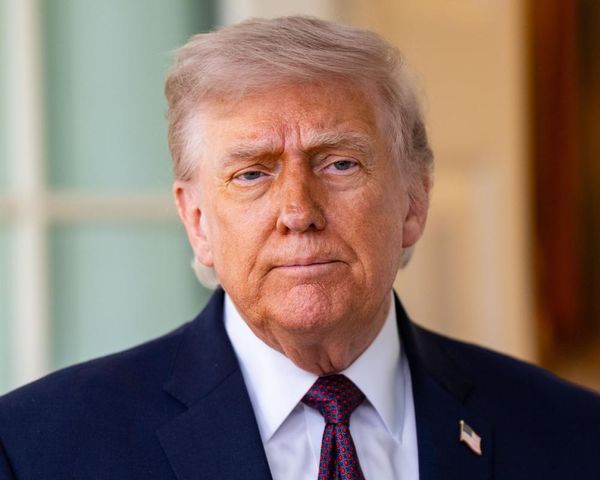
The US president is different. Just in the past week, while his vice-president sought to “help” a foreign autocrat facing re-election, Trump continued his conflict with Iran and publicly mocked Pope Leo XIV for urging restraint before posting a blasphemous image that likened him to Jesus Christ. (Trump claimed it depicted him as a doctor.)
These are ways that this man conveys strength. He learned them by watching us.
In the United States, we too often define strength as domination: the refusal to yield, to apologize, to be corrected. We flatten authenticity into the performance of grievance. We reduce resolve – once a matter of discipline or moral clarity – to the capacity to inflict harm without hesitation.
These are not new distortions. Still, I’ve watched them grow powerful enough to reshape what we recognize as leadership – what we reward, excuse and expect. Over time, they don’t merely distort judgment. They replace it.
Trump did not invent these ideas. He auditions for them. Real strength, even the counterfeit kind, doesn’t need this much reassurance. More than that, he reveals them – bringing into the open assumptions about power and masculinity that have long operated just beneath the surface of American life.
Those assumptions have never been applied evenly. Some of us have known since childhood that a person who looks like us would never receive even a fraction of the indulgence Trump enjoys. We have understood, instinctively or through experience, that discipline would be demanded, that mistakes would be magnified, that composure would be required at all times. Still, it is startling to watch the contrast play out so plainly. It is difficult to imagine Barack Obama indulging in even a sliver of this behavior, much less being rewarded for it. It is harder, still, to imagine a woman of color surviving it politically.
The president appears strong because we have decided that strength looks like this. He appears authentic because we have decided that impulse is honesty. He appears resolute because we have decided that escalation is courage. We made these decisions. Some of our elders did so long before Trump was born.
That is why, still, many Americans now absorb, explain away, or even admire behavior that would once have disqualified a president. The problem is not simply that he is unfit for office. The Americans who support him continue to see his conduct as evidence of fitness. That confusion is most dangerous when it meets real power.
A presidency that treats brinkmanship as proof of strength does not merely degrade political culture. It risks lives. It ends them. It invites conflict and catastrophe. It turns the most serious decisions a nation’s leaders can make into petty performances of will.
The first American pope has denounced the “delusion of omnipotence” that he sees fueling the US-Israel war against Iran, but that is no mere condemnation. He is insisting, correctly, that peace is not weakness, but moral clarity. That stands in stark contrast to what passes for leadership here in the United States. That Trump tries to dismiss such a position as weakness tells you less about the man making the argument than about the culture receiving it.
Strongmen do not last forever. They fall when a public stops recognizing them as strong. That reckoning comes late and at steep cost, and only when enough people decide they have seen enough. I see no sign we are close.
The men I grew up watching understood what strength costs. They knew it without being told. They had no use for performance. Some of us learned the same lesson early – not as a matter of character, but as a matter of survival. We couldn’t afford to confuse cruelty with strength. Too many still can.
Jamil Smith is a Guardian US columnist