
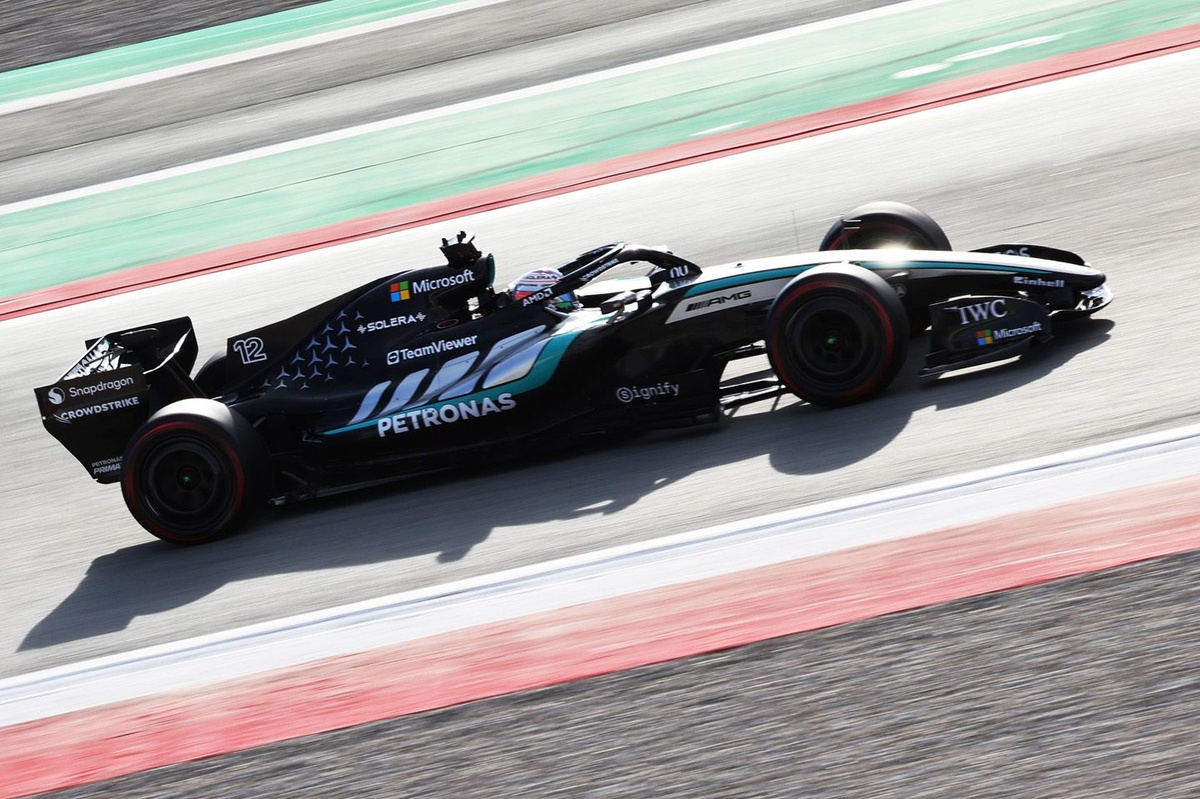
Mercedes Formula 1 team principal Toto Wolff has called on rival power unit manufacturers to "just get your shit together" after they voiced complaints to the FIA on Mercedes' interpretation of the regulations.
The 2026 power unit regulations prescribe an engine compression ratio of 16:1, down from 18:1 last year. That compression ratio has always been measured at ambient temperatures when the engine isn't running, so it doesn't account for any material expansion under heat when cars are running out on track.
Several manufacturers have been worried about Mercedes and Red Bull Powertrains coming up with a trick to increase the compression ratio closer to 18:1 when the car is actually running while still complying with the static test.
“We have to, as we do, trust the FIA with making the right decisions here,” said Audi technical director James Key at the team’s 2026 car launch.
“It's new regs. You've got to have a level playing field. If someone came up with a clever diffuser and you said it's not the right thing to do, no one else can have it, but you can have it for the rest of the year. It doesn't make sense. We'd never accept that.”
However, Mercedes is adamant its cars are fully compliant with the regulations as they are written, and has been somewhat bemused by how some of its competitors, which is also believed to include Honda and Ferrari, have been rallying against what it feels like is a black and white case.
"I just don't understand that some teams concentrate more on the others and keep arguing a case that is very clear and transparent," Mercedes F1 chief Wolff told select media, including Motorsport.com, at the official launch of the team's 2026 challenger, the W17. "Communication with the FIA was very positive all along and it's not only on compression ratio, but on other things too.
"Specifically in that area, it's very clear what the regulations say. It's very clear what the standard procedures are on any motors, even outside of Formula 1. So just get your shit together.
He added: "The power unit is legal. The power unit corresponds to how the regulations are written. The power unit corresponds to how the checks are being done."

While it appears there will be no immediate change on the horizon, talks are still understood to be ongoing on any alternative ways of measuring compression ratios, such as adding checks under running conditions. Any proposed solutions would have to follow the usual governance procedures, which includes a meeting of the F1 Power Unit Advisory Committee and subsequently a vote through the F1 Commission.
But Wolff is not particularly impressed by efforts to change the procedures on something that is considered industry standard.
"Just doing secret meetings and sending secret letters and keep trying to invent ways of testing that just don't exist... I feel like I can just say at least from us here, we are trying to minimise distractions, looking more at ourselves than at everybody else when it's pretty clear what the regs say and also pretty clear what the FIA has said to us and has said to them so far," Wolff added.
"But maybe we're all different. Maybe you want to find excuses before you even started for why things are not good. If somebody wants to entertain themselves by distraction, then everybody's free to do this."
The FIA has been clear that it at least wants the matter fully cleared up before the start of the season in Australia next month, so the topic doesn't linger into the new campaign when it wants the focus to be on the on-track competition.
"We are very keen to avoid such controversies and to make sure that when people go racing, they understand the rules in exactly the same way," FIA single-seater director Nikolas Tombazis told Motorsport.com at the recent Autosport Business Exchange.
"Inevitably, when there's such a new set of regulations certain things do come up, and we take the view that it is our responsibility to resolve these matters before the first race."