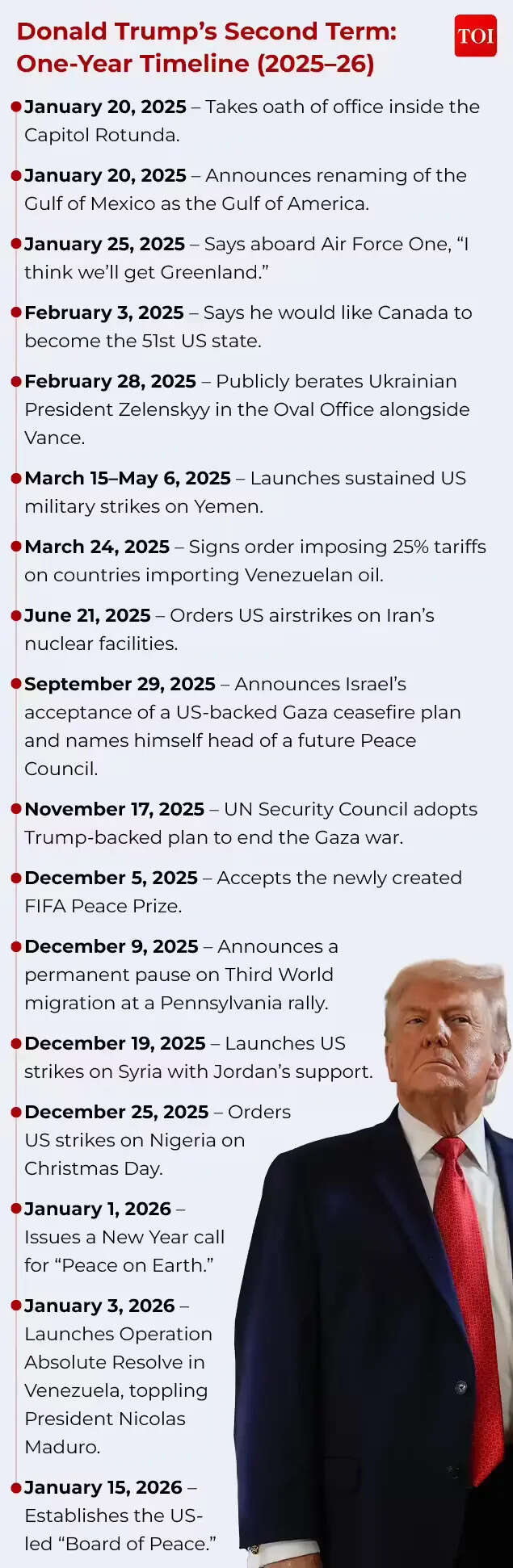
“Peace on Earth” was Donald Trump’s message as 2026 began. But the first half of the year has transformed his presidency into one defined less by diplomacy and more by muscular interventionism, marked by military offensives, regime pressure campaigns and dramatic displays of American power stretching across continents.
And it all began with Venezuela.
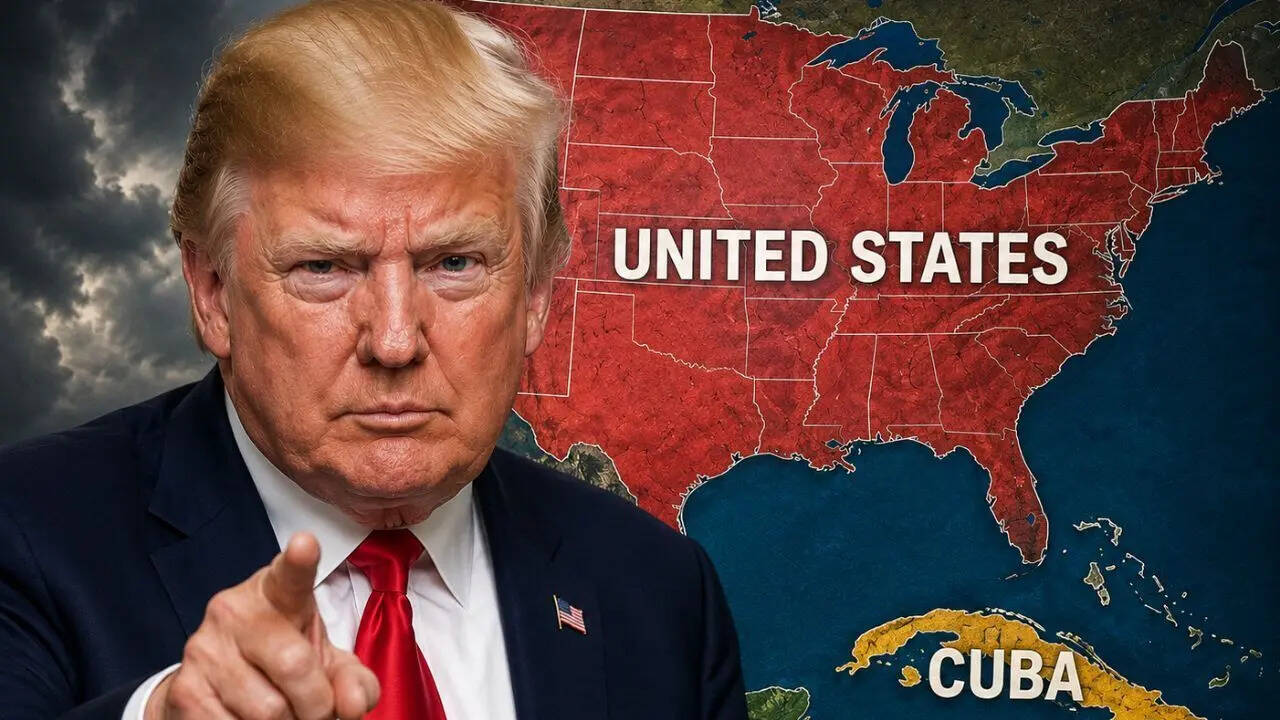
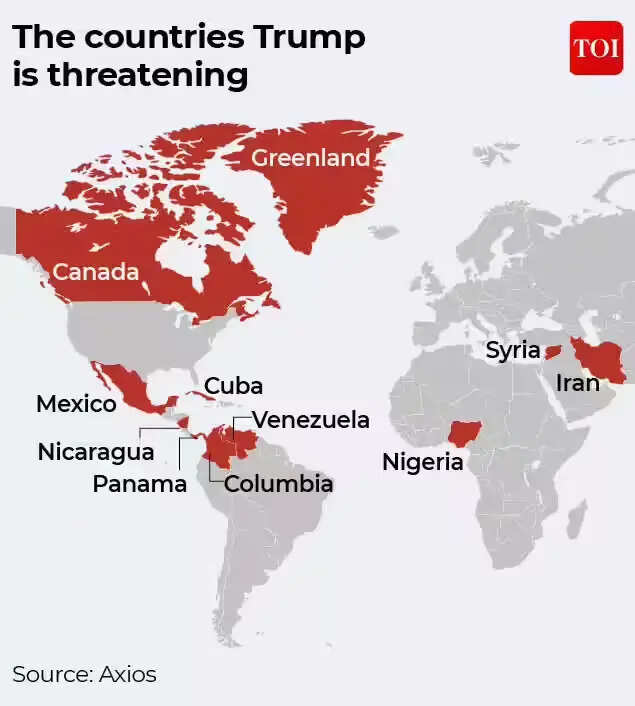
Now, the MAGA supremo appears increasingly focused on neighbouring Caribbean island Cuba, another country shaped by decades of communist influence and long-standing hostility with Washington.
The defining moment came in January.
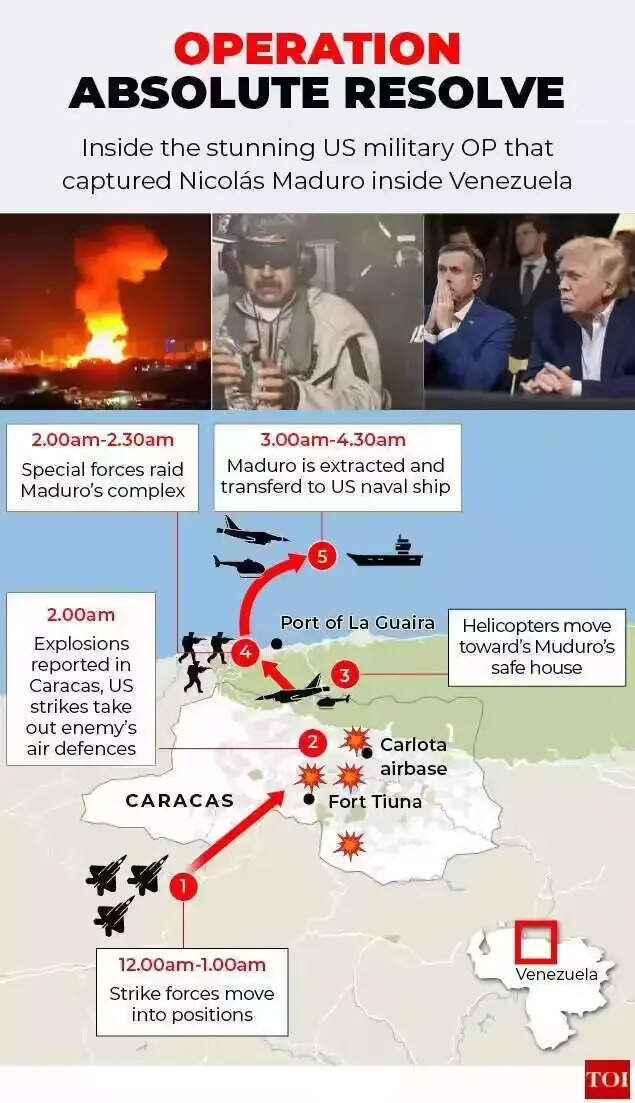
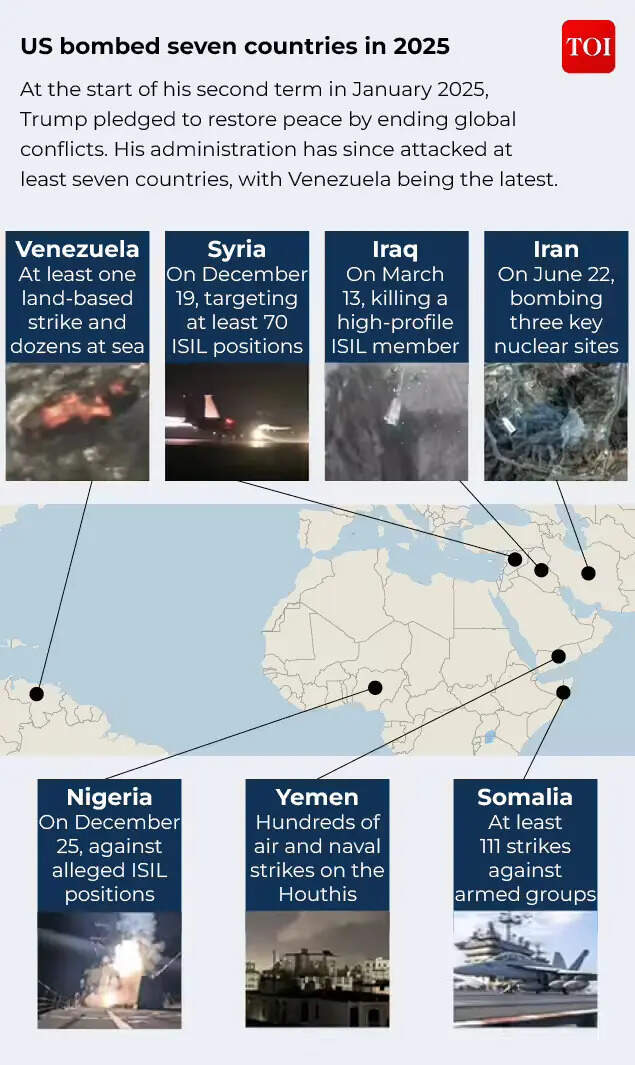
Under Operation Absolute Resolve, US forces launched a stunning operation in Venezuela, storming Caracas, toppling President Nicolas Maduro and transporting him and his wife to a prison in the United States. The speed of the operation shocked much of the world. Within hours, a sitting head of state had been reduced to a detainee on American soil.
The operation left Venezuela politically fractured but strategically valuable. The South American nation possesses the world’s largest oil reserves, and the collapse of Maduro’s rule immediately opened doors for American commercial and geopolitical influence. Washington projected the operation as proof that hard power could succeed where decades of sanctions and diplomatic pressure had failed.
The Venezuela operation also appeared to embolden Trump.
In the months that followed, Trump did not stop with the success in Venezuela. Instead, the operation appeared to strengthen his confidence, pushing him toward an even more ambitious campaign alongside ally Israel against Iran’s ruling regime.
Under Operation Epic Fury, Trump oversaw the offensive that killed long-time Islamic Republic supreme leader Ayatollah Ali Khamenei, leaving the Middle East deeply fractured and unstable. Even now, negotiations between the two sides are only beginning to take shape after months of conflict and escalating tensions.
Now, the next target appears to be Cuba.
Trump and secretary of state Marco Rubio have sharply escalated rhetoric against Havana in recent weeks, reviving fears of a direct confrontation between the United States and the communist island for the first time in decades.
The escalation gained momentum after US federal prosecutors indicted former Cuban president Raul Castro over a 1996 incident in which Cuban jets allegedly shot down aircraft operated by Cuban exiles, killing four American men. The charges include conspiracy to kill US nationals, four counts of murder and two counts of aircraft destruction.
The indictment marked one of the sharpest escalations between Washington and Havana in years.
Soon after, Trump openly hinted at possible military action.
“Other presidents have looked at this for 50, 60 years, doing something,” Trump told reporters during an Oval Office event. “And it looks like I’ll be the one that does it. So I would be happy to do it.”
Marco Rubio amplified the pressure further. Speaking before departing for a Nato-related trip and a visit to India, Rubio described Cuba as a long-standing national security threat because of its ties with US adversaries.
“[Trump’s] preference is always a negotiated agreement that’s peaceful. That’s always our preference. That remains our preference with Cuba,” Rubio said. “I’m just being honest with you, you know, the likelihood of that happening, given who we’re dealing with right now, is not high.”
The rhetoric immediately triggered comparisons with Venezuela. But beneath the surface, Cuba presents a vastly different challenge, politically, militarily, economically and geographically.
And that is precisely why Trump’s Venezuela model may not work in Havana.
No vacuum waiting to be filled
One major reason the Venezuela operation unfolded quickly was the existence of a functioning political structure ready to take over after Maduro’s removal.
Then-vice president Delcy Rodriguez stepped in as acting president almost immediately after Maduro’s capture. Venezuela also had a globally recognised opposition movement led by Maria Corina Machado, who had already emerged as a symbol of anti-Maduro resistance after the disputed 2024 elections.
And later came the Nobel Peace Prize, an honour long chased by MAGA supremo Donald Trump. But in a striking display of political loyalty, Maria Corina Machado, after receiving the award, handed it over to Trump, hailing him as the architect of Venezuela’s “liberation” after Maduro was driven into exile by the American-led operation.
The gesture also cemented Machado’s own ambitions to occupy the chair of Venezuela’s new political order. However, she is still to get that desired role.
Like Venezuela, Cuba offers no such political opening.
The Cuban state has spent decades eliminating alternative centres of power. There is no powerful vice president waiting to inherit the system, no organised opposition with nationwide influence and no transition mechanism that Washington can easily support.
The leadership structure in Havana remains tightly controlled around the Communist Party, the military and the security apparatus. Unlike Venezuela, where fractures inside the state gradually widened over time, Cuba’s political system remains far more cohesive and ideologically entrenched.
That creates a fundamental problem for Washington.
Removing the leadership is one thing. Replacing it with a stable alternative is another entirely.
Without a credible successor or transition plan, any sudden collapse in Havana risks creating chaos rather than regime change.
Cuba’s military is not Venezuela’s military
Another major difference lies in the structure of the armed forces.
In Venezuela, the military’s internal divisions and weakening morale became increasingly visible over the years. Cuba, however, has built a far more disciplined and ideologically committed military establishment.
The Cuban armed forces are deeply integrated into the country’s political and economic system. Military-linked institutions control large parts of the economy, including tourism infrastructure, ports, banking systems, fuel networks and major commercial operations.
This makes the military not just a defence institution but also a pillar of state survival.
Years of confrontation with the United States have also shaped Cuba’s security doctrine differently. The island has long treated the possibility of American invasion not as a theoretical risk but as a permanent national reality.
That mindset has produced a heavily securitised state with strong intelligence networks, internal surveillance systems and extensive civilian defence planning.
Cuba has also learned lessons from Venezuela.
Dozens of Cuban personnel reportedly died in January while helping secure Maduro during the US operation in Caracas. Survivors returned to Havana with direct knowledge of American operational tactics, rapid assault methods and intelligence procedures.
That experience has only reinforced Cuba’s preparations.
Havana is preparing civilians for conflict
The clearest indication of Cuba’s mindset emerged this week when the country’s Civil Defence released a detailed public manual titled "The Family Guide for Protection Against Military Aggression".
The guide lays out protocols for families during wartime, evacuation procedures, shelter responsibilities and survival measures in the event of a US attack.
The document reflects Cuba’s long-standing “War of All People” doctrine, developed after the collapse of the Soviet Union.
The doctrine envisions resisting foreign invasion not merely through conventional military engagement but through mass civilian mobilisation, guerrilla tactics, local militias and decentralised resistance networks.
In practical terms, Cuba is preparing not just soldiers but society itself for conflict.
That significantly changes the strategic equation.
A rapid decapitation strike similar to Venezuela becomes far more difficult when resistance is expected to spread beyond military installations into civilian structures and neighbourhood-level defence systems.
Geography changes everything
Venezuela sits far from the American mainland. Cuba does not.
Located just 90 miles from Florida, the island occupies a uniquely sensitive geopolitical position for the United States. Any military escalation carries immediate domestic consequences for Washington in ways Venezuela never did.
The most immediate risk is migration.
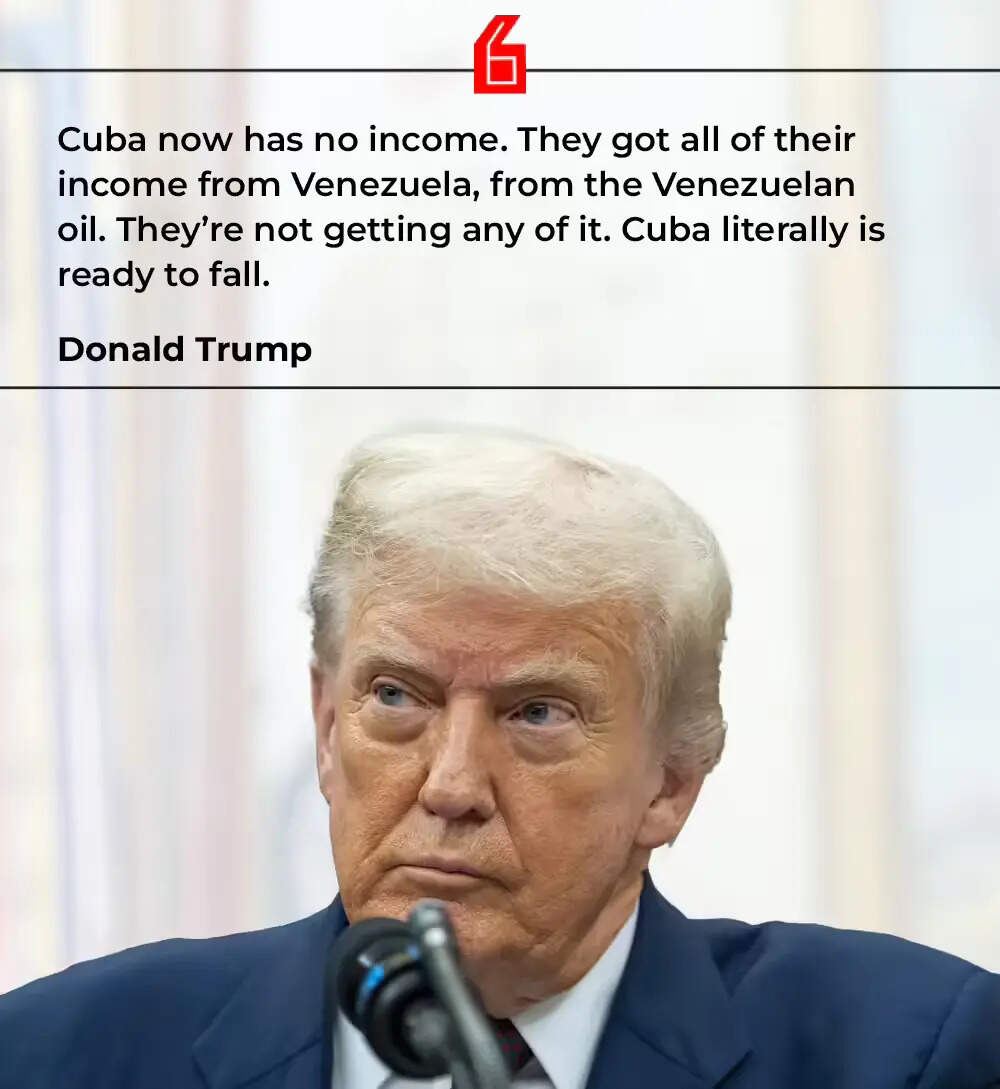
Cuba is already suffering through severe economic distress, blackouts, shortages and fuel crises aggravated by sanctions and the collapse of Venezuelan energy support after Maduro’s removal. A military conflict could trigger a massive and uncontrollable refugee wave toward Florida.
That would place enormous political pressure on Trump domestically, particularly given his long-standing anti-immigration agenda.
Unlike distant Middle Eastern conflicts, instability in Cuba would unfold directly on America’s doorstep.
The proximity also creates security concerns. Any retaliatory capability from Cuba, whether military, cyber or maritime, immediately acquires greater significance because of the island’s location near the US coastline.
Cuba offers fewer strategic rewards
Another reason the Venezuela model may struggle in Cuba is economics.
Venezuela’s vast oil wealth created clear strategic incentives for intervention. Energy companies quickly positioned themselves to benefit from the opening created after Maduro’s fall.
Cuba lacks comparable resources.
Its economy is heavily state-controlled, tourism-dependent and weakened by years of sanctions, declining infrastructure and chronic shortages. The island does not possess a major private sector capable of rapidly integrating into Western capital networks after political change.
That limits the immediate economic gains Washington could expect from intervention.
The legal landscape also complicates matters.
The Helms-Burton Act of 1996 ties any lifting of the US embargo on Cuba to specific democratic reforms and political transitions. Unlike Venezuela, where Washington removed Maduro while leaving state structures broadly intact, Cuba’s legal framework makes partial adjustments far more difficult.
Any post-intervention strategy would therefore become politically and legally complicated almost immediately.
The shadow of history
Cuba also carries a historical weight that Venezuela never did.
For decades, Havana symbolised resistance to American power in the Western Hemisphere. From Fidel Castro’s revolution in 1959 to the Cold War confrontations that followed, Cuba’s political identity has been shaped around defiance against Washington.
That history still matters.
The idea of resisting the United States remains deeply embedded in Cuban nationalism, state messaging and military culture. Even amid severe economic suffering, the leadership continues to frame confrontation with Washington as a struggle for sovereignty and survival.
That creates a psychological and ideological barrier that did not exist to the same extent in Venezuela.
The Trump administration may believe the Venezuela operation proved the effectiveness of rapid intervention and maximum pressure. But Cuba presents a far more complicated battlefield, one without an obvious successor, without internal fragmentation, and without the economic incentives that made Venezuela attractive.
What looked like a lightning victory in Caracas risks becoming a prolonged and unpredictable confrontation in Havana.
And for Trump, that may be the biggest difference of all.