Iran has scheduled the funeral of its slain former supreme leader, Ayatollah Ali Khamenei, from 4 July to 9 July, with ceremonies beginning in Tehran and ending with his burial in Mashhad more than four months after he was killed in Israeli and US airstrikes. The announcement, carried by state media on Saturday, ends months of uncertainty surrounding funeral arrangements that had originally been expected to take place far sooner.
The funeral of Iran’s late Supreme Leader Ali Khamenei will begin in Tehran on July 4, and he will be buried in his hometown of Mashhad on July 9, according to state media https://t.co/C4uQpABwzC pic.twitter.com/AWiZm3ydOH
— Al Jazeera English (@AJEnglish) June 13, 2026
The funeral timetable emerged as US President Donald Trump claimed a separate agreement with Iran could be signed in Europe within days, placing the burial of Iran's most influential modern leader against the backdrop of continuing diplomatic efforts to stabilise relations following the conflict.
Funeral Dates Finally Confirmed
Iranian state television said the funeral programme will begin in Tehran on 4 July, continue in the holy city of Qom on 7 July and conclude in Mashhad on 9 July.
Mashhad holds particular significance as Khamenei's birthplace and home to the shrine of Imam Reza, one of the holiest sites in Shia Islam. Iranian media have also reported that Khamenei had expressed a wish to be buried near the shrine.
The ceremonies will take place across some of Iran's most important religious and political centres, underscoring the status Khamenei held within the Islamic Republic during decades in power.
The announcement also provides the first complete public timetable for ceremonies that had remained unresolved since the conflict erupted earlier this year.
Why the Funeral Was Delayed
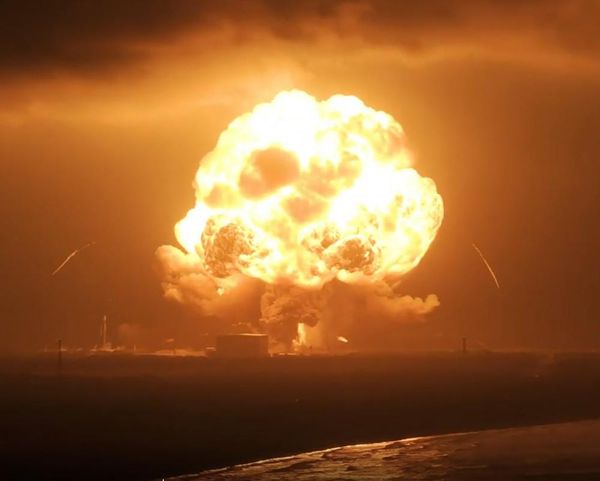
Khamenei was killed on 28 February in Israeli and US strikes that Tehran described as the beginning of a wider war. Reuters and other outlets previously reported that funeral arrangements were initially expected to take place in March.
Those plans never materialised.
As fighting intensified and regional tensions escalated, Iranian authorities released little information about funeral preparations. No detailed public timetable emerged in the weeks following Khamenei's death, fuelling uncertainty over when the ceremonies would be held.
The prolonged delay was notable given Khamenei's position at the top of Iran's political and religious system. More than four months passed between his death and the eventual announcement of funeral dates, an unusually long period for ceremonies involving a figure of such prominence.
While Iranian authorities have not publicly detailed every factor behind the postponement, the delay unfolded during a period marked by military conflict, heightened security concerns and uncertainty over the broader direction of the crisis.
Saturday's announcement finally provides clarity on a process that had remained largely out of public view since February.
Diplomatic Efforts Continue
The funeral announcement came as Trump suggested negotiations between Washington and Tehran may be approaching a breakthrough.
Speaking on Thursday, Trump said a deal with Iran could be signed 'maybe this weekend' or on Monday and indicated that Vice President JD Vance would attend a signing ceremony in Europe. NBC News and Axios both reported the remarks.
"Most importantly, we have a deal that Iran will never have a nuclear weapon." - President Donald J. Trump 🇺🇸 pic.twitter.com/lFLJC2lblf
— The White House (@WhiteHouse) June 11, 2026
Discussions have included provisions relating to the reopening of the Strait of Hormuz and potential sanctions relief if Iran complies with the terms of a future agreement, Axios reported.
Trump also said Iran had agreed to abandon efforts to obtain nuclear weapons and suggested the strategic waterway would reopen once an agreement was finalised.
Iranian officials, however, have not publicly confirmed those specific claims in the terms described by Trump, leaving uncertainty over how close the two sides are to reaching a final agreement.
A Defining Chapter Nears Its End
The funeral and diplomatic discussions are not formally linked, but both developments stem from the same conflict that reshaped relations between Iran, the United States and Israel earlier this year.
For Iranian authorities, the ceremonies represent the formal conclusion of a chapter that began with Khamenei's death in February. For diplomats, attention remains focused on whether ongoing negotiations can reduce tensions that have persisted since the outbreak of war.
Khamenei's funeral will move through Tehran, Qom and Mashhad before concluding on 9 July. By then, Iran will have completed the burial of a leader whose death altered the country's political landscape, while negotiations over the region's future continue in parallel.