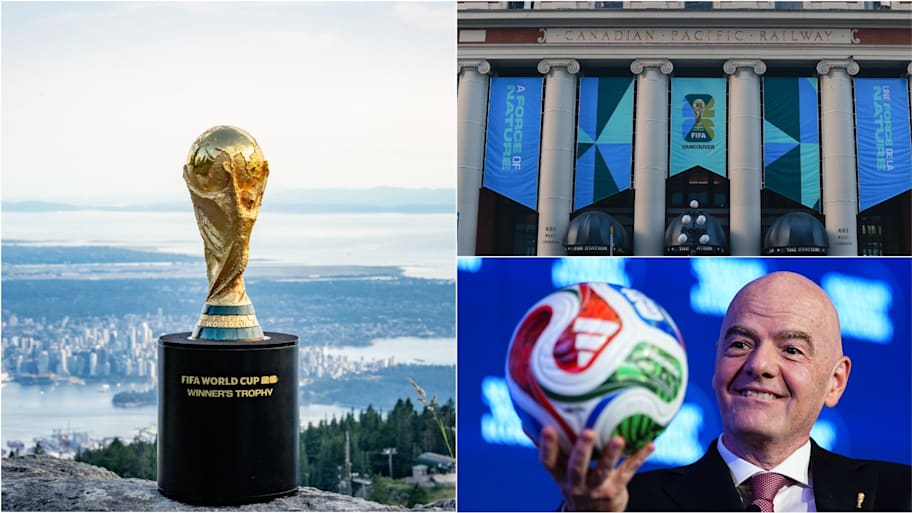
VANCOUVER—Featuring a backdrop of the coastal mountain range and the shores of the Pacific Ocean, all 211 FIFA member associations will engage in soccer’s most formative talks as Vancouver hosts the 76th annual FIFA Congress this week, a critical union for FIFA ahead of World Cup kickoff in less than 50 days.
Over 1,600 delegates are expected to descend upon the Canadian city, which is set to host seven matches this summer. This year’s FIFA Congress features a full week of scheduling, beginning with the Asian Football Confederation congress, followed by an exhibition match featuring FIFA legends at the local University of British Columbia, a dinner at the BC Place World Cup venue, and the formative meeting to discuss and vote on soccer’s future plans.
Here, Sports Illustrated looks at four topics expected to be on the agenda.
Updating the Global Stand Against Racism
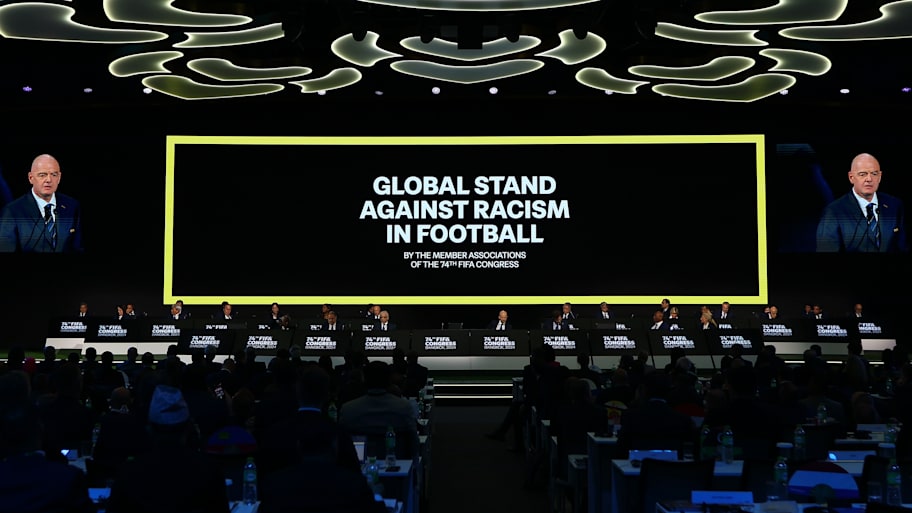
The 76th FIFA Congress marks two years since the organization introduced the “Global Stand Against Racism” campaign, which features a five-pillar initiative to combat racism in soccer.
The pillars included severe rules and sanctions, such as match forfeits for racial offenses and a three-step procedure to address match incidents, as well as education and a players’ voice panel, while also pushing for the recognition of racism as a criminal offense in every country.
While several of the plans have been implemented over the past two years, racial incidents are still common in soccer around the world, whether from fans or those on the pitch. Within Concacaf, several Mexico matches have harnessed the three-step process due to homophobic chants. The three-step process has become regularly used, which first sees a match official halt play to urge the audience and players to stop using the offensive language. If the actions continue, the match is first suspended, before eventually being abandoned as a final step.
In the FIFA Congress, the entire Global Stand Against Racism initiative will be reviewed, with the potential to introduce more severe punishments ahead of the 2026 World Cup and beyond, following incidents against Real Madrid and Brazil’s Vinicius Junior, as well as several others in recent months.
“This is a good moment for football to end these things. In the dressing room, we know what Vinícius told us. It has happened many times in football; not just on the pitch but in the stands,” Belgium and Real Madrid goalkeeper Thibaut Courtois said in February. “We have to end this now. UEFA will decide what they have to do – the players do not matter in that — but it would be a good message [to act].”
Could Russia’s Reintroduction Begin?
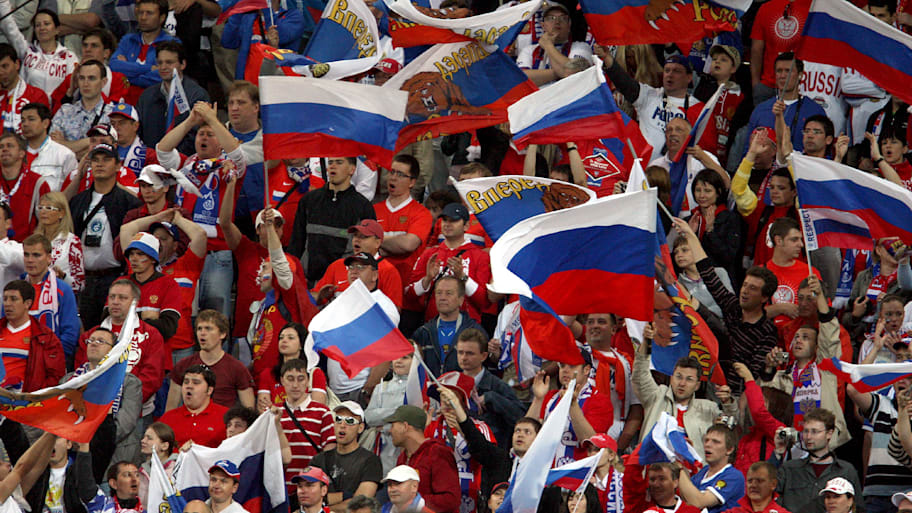
It takes up just seven words in the official agenda circulated by FIFA, but the “Suspension or expulsion of a Member Association” could be the key storyline through the week, with three nations—Russia, Pakistan and Congo all currently banned from playing at the international or club level.
Russia will be the focus, however, having been banned since 2022 after the invasion of Ukraine and ensuing war, which is ongoing. The country's teams have been sanctioned or banned by FIFA, the International Olympic Committee and most other international sports organizations, but have slowly been reintegrated into the sporting landscape.
For FIFA, President Gianni Infantino made a surprise statement in February, telling Sky: “We have to [look at reinstating Russia], definitely, because this ban has not achieved anything, it has just created more frustration and hatred.”
In December, FIFA announced that a new Under-15 tournament would be “open to all member associations,” potentially opening the door to Russia’s return at the youth level. However, no further updates have become available. At the senior level, Russia’s men have continued to play unsanctioned friendlies against willing nations, including Mali, Nicaragua, Peru, Bolivia, Iran and several others.
Unlike other suspended teams, Russia is not suspended as a federation. It remains a member of both UEFA and FIFA and is expected to be in Vancouver. It is only the nation’s teams, rather than its governing body, that have been sidelined.
FIFA would not be the first organization to begin the reinstatement process either, with the International Paralympic Comittee having allowed Russia to compete under the nation’s flag at the Milan Cortina 2026 Paralympics and World Aquatics, allowing Russian athletes back into competitions.
Prize Money Increase Among Proposals
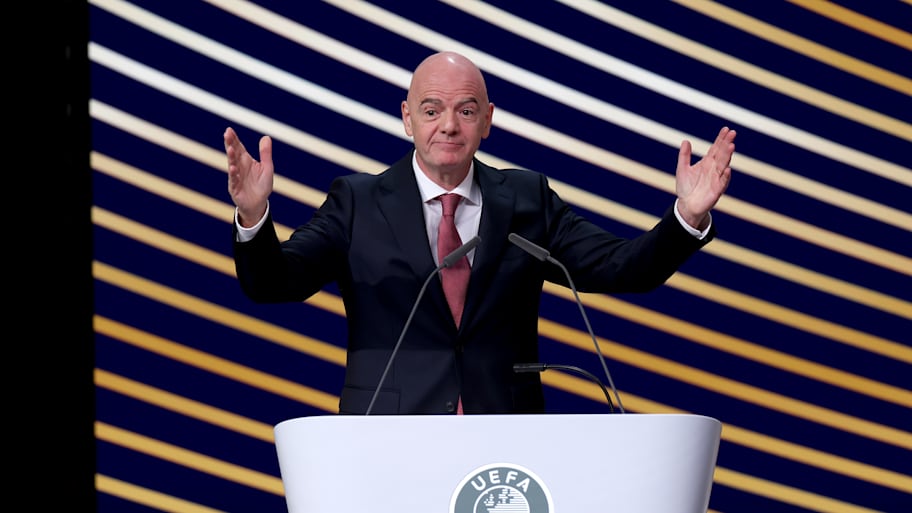
One of the several proposals members will vote on includes a further increase in prize money for the upcoming men’s World Cup.
In December, FIFA said that the prize money would be 50% higher than the previous edition of Qatar 2022, agreeing to a $727 million financial contribution. Now, FIFA has indicated that the projected $11 billion in tournament revenues could further increase that cash injection, with Infantino saying that the not-for-profit organizational structure demands that any additional financial gain benefits member associations.
Those potential increases could be directed at teams that have qualified for the 2026 tournament to support their North American plans as well as all 211 associations for greater developmental funding.
Could the FIFA Peace Prize End?
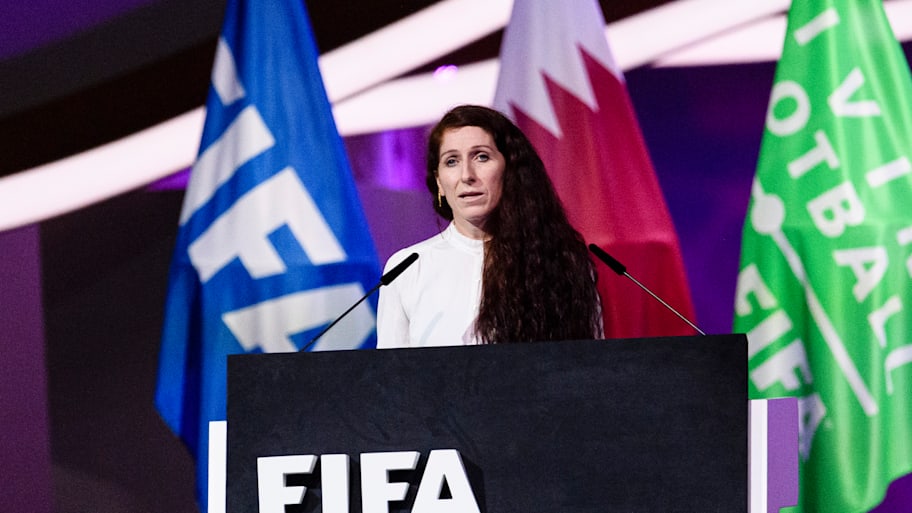
The president of Norway's football association, Lise Klavness, is calling to abolish the FIFA Peace Prize, ahead of representing the Nordic nation at Thursday’s FIFA Congress. The prize, introduced in 2025, was awarded to the U.S. President Donald Trump at the 2026 World Cup draw in Washington, D.C. and has been heavily criticized due to Trump’s past and the U.S. involvement in global conflicts.
Klaveness, also a member of the UEFA executive committee, told The Athletic that FIFA should stay “an arm’s length distance,” from political leadership.
FIFA—which unveiled its Peace Prize in the months following the Nobel Peace Prize, which Trump had lobbied for but did not win—did not announce any other nominees and did not have a public process for the award’s selection.
Klaveness, who spoke ahead of the 2022 World Cup in Qatar, is not planning to speak this week on the Peace Prize or other topics, but it does not close the door to other nations siding with Norway.
READ THE LATEST WORLD CUP NEWS, ANALYSIS AND INSIGHT FROM SI FC
- President Trump, Gianni Infantino Face Official Complaint From World Cup Nation
- ‘Sensitive’—USMNT’s Pulisic Hits Career-Worst Form Ahead of World Cup
- 2026 World Cup: The Best Young Players at the Tournament—Ranked
- James Rodriguez Makes World Cup Guarantee After First MLS Start
This article was originally published on www.si.com as FIFA Congress—Addressing Racism on the Pitch, Russia’s Future, and the World Cup Prize Pot.