A beloved teenage honors student and his father were killed in a “self-driving” Tesla Model 3 that suddenly veered off the road without warning, slammed into a tree and then burst into flames, according to a wrongful death suit filed by the boy’s mother.
At the same time, the vehicle’s electric-powered door handles became inoperable once the battery system caught fire, preventing them from getting out or rescuers getting in – a serious issue that has similarly doomed others riding in Teslas – Shantorria Herring’s complaint alleges.
“Consequently, both occupants burned to death in the thermal runaway and fire that occurred after impact,” the complaint states.
“Thermal runaway” describes a chain reaction of battery short-circuits ultimately resulting in a domino effect of uncontrollable combustion, with temperatures that get so hot, they can literally pulverize a person’s bones. Battery fires burn far more intensely than gasoline fires, and make it easier for the rest of the car to ignite, while making it far more difficult for firefighters to contain such a blaze.
Attorney Quinton Seay, who is representing Herring, told The Independent that his client remains devastated by the loss of her son.
“It has been a struggle for her to even talk about it enough for us to be able to file this lawsuit on her behalf,” Seay said. “It’s a very tragic situation, and very painful.”
Seay said the various alleged shortcomings in Tesla vehicles “all make for a very uncrashworthy vehicle,” and that the self-driving feature “is not a bad idea, but like any other piece of technology, it has to be fully tested in real-world scenarios before putting members of the driving public in those vehicles.”
Tesla did not immediately respond on Friday to a request for comment.
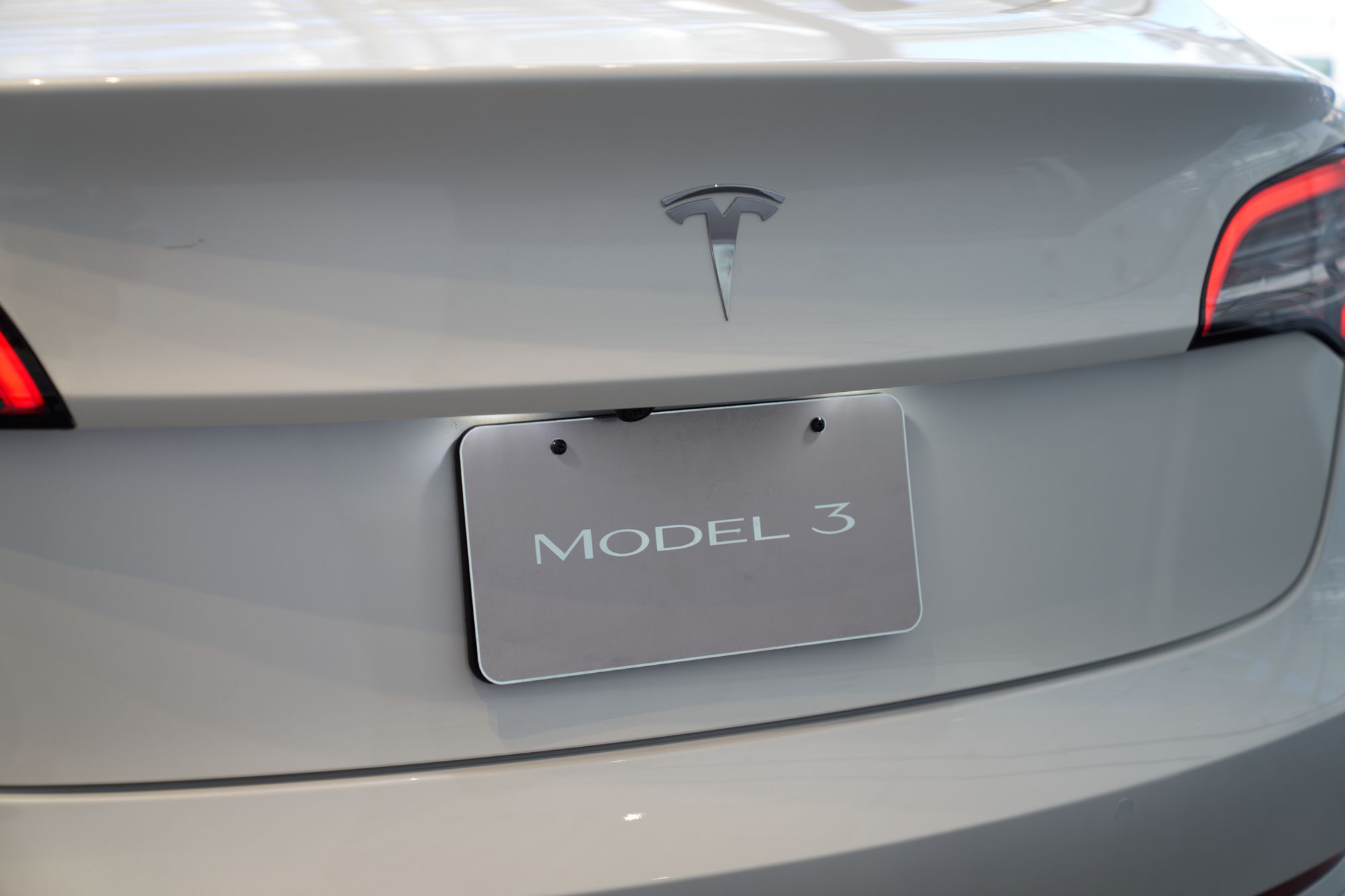
The incident in question occurred on December 23, 2024, when 14-year-old Karter Breon Smith’s dad, Margarret Smith, picked his son up at his mother’s home in Tallahassee, Florida, to drive to Atlanta, according to Herring’s complaint, which was filed April 2 in Atlanta federal court.
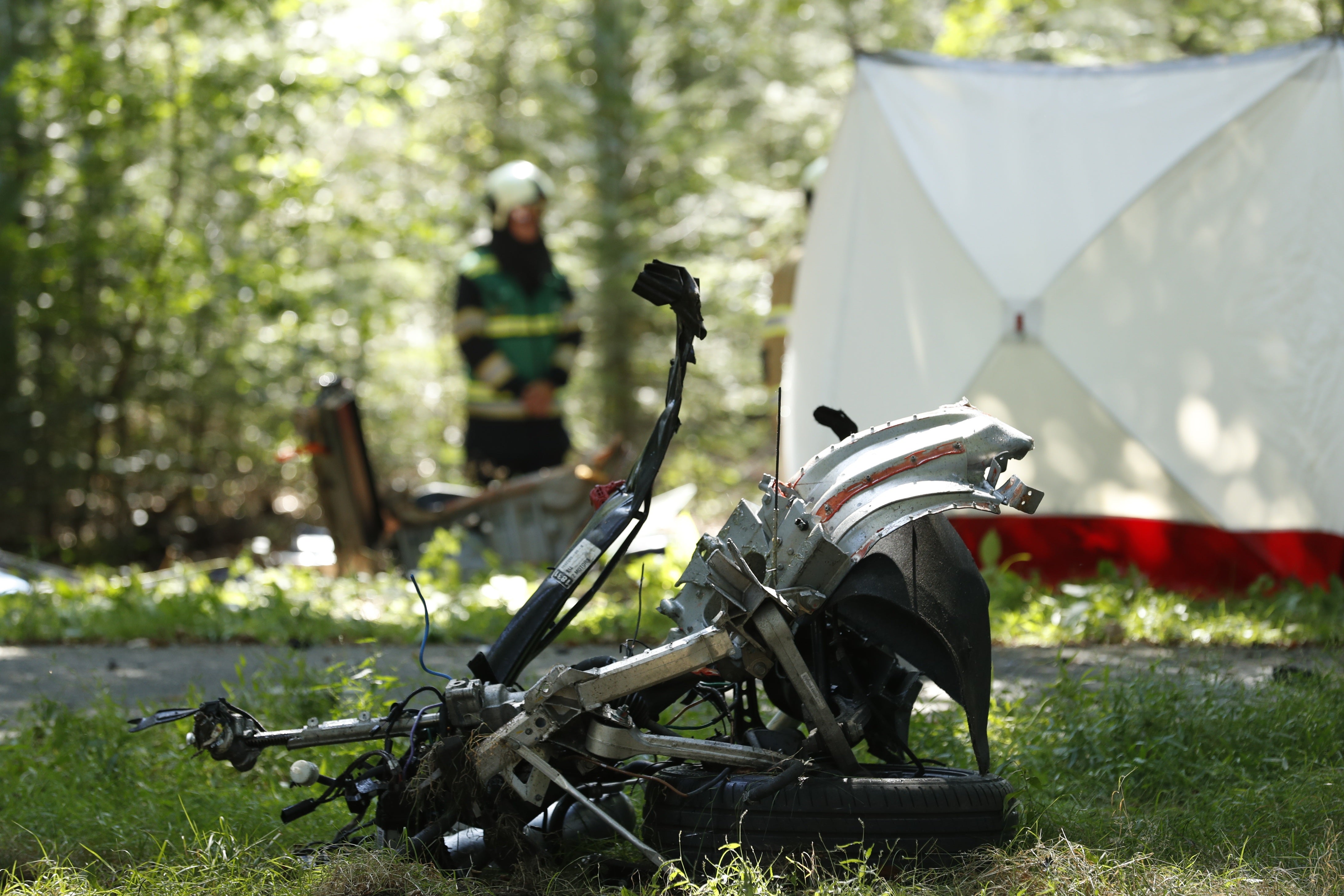
As the two were traveling north on Highway 35 in Thomas County, the Model 3, which was reportedly in self-driving mode at the time, “abruptly departed the road, struck a tree and burst into flames,” the complaint says.
“The movement of the Tesla Model 3 occurred – according to the Tesla EDR records – as the ‘Accelerator Pedal (percent)’ went from 0.0 (with a speed of 63 mph) to 100.0 without any significant change in vehicle speed and without any reported ‘Service Brake’ recording,” according to the complaint.
A Good Samaritan in another vehicle saw the crash and tried to help, but “was unable to assist Karter and his father from the vehicle because the handles on the doors were inoperable,” the complaint states.
“Consequently, both occupants burned to death in the thermal runaway and fire that occurred after impact,” it contends.
The complaint says the Tesla’s much-hyped Autopilot features were “improperly designed,” contrary to CEO Elon Musk’s claims.
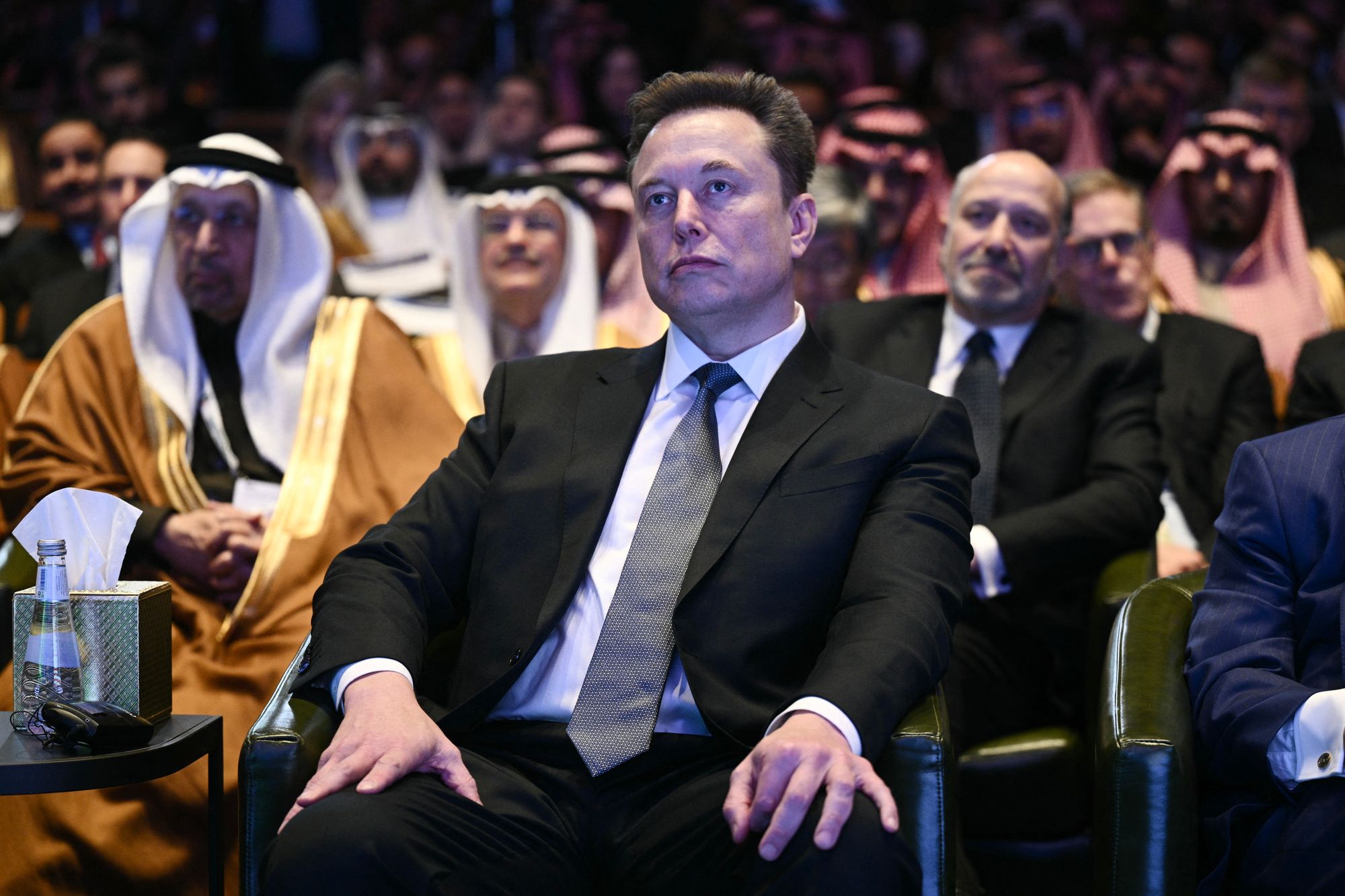
The lawsuit notes that Musk has touted the system as “probably better” than a human driver, but that it has never worked as advertised, saying that “thousands of Tesla drivers have relied on Tesla's [self-driving] technology as though it were capable of safe, fully autonomous self-driving with minor software updates when in fact it is incapable of safely handling a variety of routine roadway scenarios without driver input, and can become confused by a number of factors.”
In fact, there have been “numerous reports” that Tesla vehicles have crashed into other vehicles or stationary objects after accelerating “without driver input,” according to the complaint.
“To the extent that the Autopilot and/or self-driving features of the Tesla Model 3, including, but not necessarily limited to, the lane departure avoidance feature, the auto-steer feature, and the automatic emergency braking feature were engaged, they were either defectively designed or malfunctioned and caused the crash that killed [Herring’s] son,” the complaint states.
Herring’s complaint also takes issue with Tesla’s battery-pack design, which the company “knew… was vulnerable to post-collision thermal runaway and fire,” yet “failed to design that system in such a way that it was reasonably crashworthy and safe.”
Further, the complaint goes on, Tesla “designed and manufactured the door locking mechanisms on the subject vehicle in such a way that they prevented the doors from being opened from the outside in the event of a crash,” as they “rely exclusively on electrical power and have no mechanical backup.”
“Therefore,” the complaint continues, “the failure or compromise of the vehicle’s Battery Pack renders the door latches inoperable.”
Last September, the National Highway Traffic Safety Administration mounted a probe into Tesla door handles and the safety concerns surrounding their alleged failure after a wreck. There is a backup system, which requires passengers to lift a piece of carpeting to find and pull a metal tab that will allow an escape, but critics have criticized the layout as counterintuitive.
Herring’s complaint takes Tesla to task for “falsely reassuring customers that the ‘Autopilot’ feature worked as intended,” and instead marketing it as being ready for the road.
“Defendant Tesla provided owners with representations of the performance and effectiveness of these safety features,” the complaint states. “Consumers, including the decedent’s father, read and relied upon these representations.”
Karter Smith was “always smiling, laughing and had just this impressive aura about him wherever he went,” his former high school athletic director told the Tallahassee Democrat after his death. “Karter is very small in stature, but that kid’s got a heart the size of a mountain.”
Herring told the outlet that her son “wanted to be a basketball player, but I always iterated how important academics was.” The teen “was going to be amazing whatever he did and whatever he decided to do because he put his all into it.”
Karter’s father, a graduate of Florida A&M University, was reportedly pursuing a doctorate at the time of the crash.
Herring is now seeking special damages for her son’s funeral and burial expenses, general compensatory damages for the “pre-impact shock and fright, as well as the mental, emotional, and physical pain and suffering” Karter experienced. and punitive damages “in an amount sufficient to deter similar conduct by Defendant Tesla in the future,” plus reasonable attorney’s fees and litigation expenses.
Karter is “missed by a lot of people,” Seay told The Independent. “There have been some very encouraging recent developments in litigation that make us hopeful we will be able to hold Tesla accountable for the deaths of these two folks.”
One killed and two injured after explosion tears through Spanish bar
Atlanta woman dies in zip-lining accident while vacationing in the Caribbean
One crew member rescued after US F-15 shot down over Iran: report
Trump budget seeks $1.5T in defense spending alongside cuts to domestic programs
Harvard could cap how many ‘A’ grades it hands out - and students are furious
Trump weighs firing more Cabinet members after Bondi ousting, report claims