The European Union has set out fresh details of its plan to channel billions of euros in frozen Russian assets into Ukraine’s war effort and economic stability over the next two years – a proposal which has been met with resistance from Belgium, which warns of financial and legal issues.
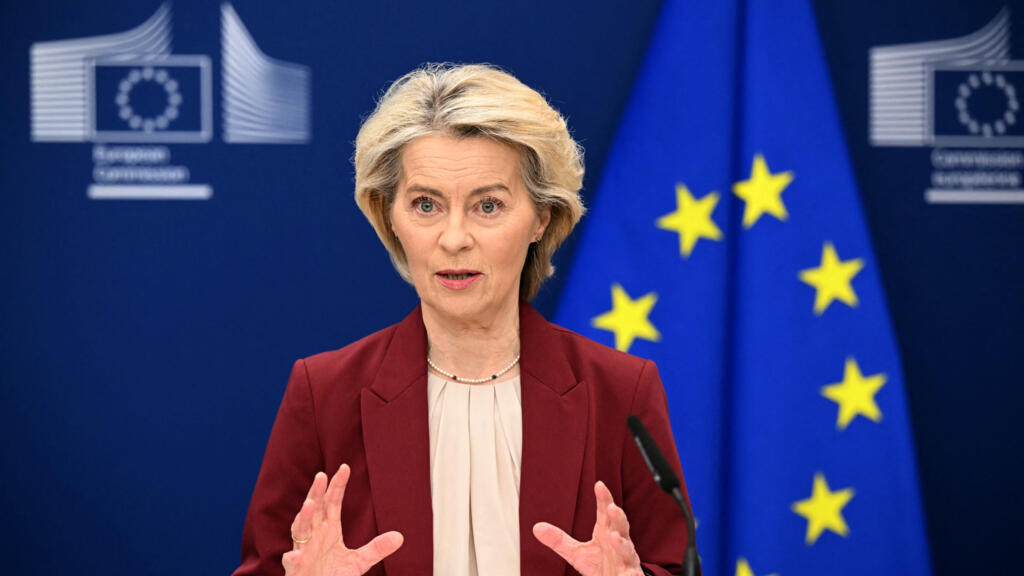
European Commission President Ursula von der Leyen announced on Wednesday that the EU intends to cover two-thirds of Ukraine’s projected needs for 2026 and 2027.
The International Monetary Fund estimates Kyiv will require around €137 billion over that period, and Brussels aims to contribute €90 billion of that sum through what it calls a "reparations loan" backed by frozen Russian funds.
"Today we are sending a very strong message to the Ukrainian people. We are with them for the long haul," von der Leyen said as she presented the plan, which would use Russian money as collateral rather than seizing it outright.
She argued that harnessing the frozen assets would boost Ukraine’s position in future peace talks with Moscow and Washington, while signalling to the Kremlin that prolonging the war "comes with a high cost".
She also confirmed she had briefed the United States administration on the proposal.
EU leaders have already committed to supporting Ukraine through 2026-27, and the bloc has poured in more than €170 billion since Russia’s full-scale invasion began in 2022.
If the reparations loan plan fails to secure political backing, von der Leyen said the EU could instead borrow on international markets – but that fallback would require unanimous approval, giving Hungary an effective veto.
Russia has denounced the concept of reparation loans as outright “theft”.
Von der Leyen urges stronger EU response to Russia’s 'hybrid war'
Belgium rejects ‘worst option’
As it stands, the largest pool of potential funding lies in the €210 billion in Russian assets immobilised in Europe, most of which – around €194 billion – sits in Belgium.
To calm nerves in Brussels, the European Commission has drafted a complex suite of safeguards, including measures against possible Russian retaliation, a ban on releasing any frozen assets and a framework for collective EU borrowing to guarantee loans to Ukraine.
However, Belgian Foreign Minister Maxime Prévot was unconvinced.
Speaking in Brussels, Prévot called the reparations loan option "the worst of all, as it is risky. It has never been done before".
Reading from prepared notes at NATO headquarters, he urged fellow member states to opt for the more conventional route of EU-backed borrowing on global markets.
"It is a well-known, robust and well-established option with predictable parameters," he said.
He warned that the Commission’s proposal leaves Belgium to bear too much of the fallout should Russia challenge the scheme, or should Euroclear – the Brussels-based financial clearing house holding most of the frozen assets – face legal trouble.
"It is not acceptable to use the money and leave us alone facing the risks," he said. "We are simply seeking to avoid potential disastrous consequences for a member state that is being asked to show solidarity without being offered the same solidarity in return."
EU Commission chief calls for defence 'surge' in address to EU parliament
'We will share the burden'
Under the Commission’s plan, the €90 billion would effectively constitute an advance on the vast reparations Kyiv expects from Moscow for the destruction caused by the war.
Ukraine would reimburse the loan once Russia pays up. If it refuses, the assets will remain indefinitely frozen.
Von der Leyen insisted the EU had taken Belgium’s objections seriously. "We have listened very carefully to Belgium’s concerns, and we have taken almost all of them into account in our proposal," she said. "We will share the burden in a fair way, as it is the European way."
Other member states echoed Belgium’s worries, yet stressed the urgency of keeping Ukraine afloat.
German Foreign Minister Johann Wadephul said Belgium’s fears were "justified" but resolvable – "if we are prepared to take responsibility together".
Meanwhile, Dutch Foreign Minister David van Weel underlined the importance of the frozen funds for supporting Ukraine’s economy. "We understand the Belgian concerns, and we are willing to at least make sure that they are not alone in this," he said.
Several countries have already signalled readiness to provide financial guarantees if required.
Belgium itself has been earning tax income from the frozen funds, and interest generated on the assets is already helping finance a G7-organised loan programme for Ukraine.
However, the European Central Bank has warned that an EU-level reparations loan could unsettle confidence in the euro on global markets.
EU leaders will meet again at a summit in Brussels on 18 December.
(with newswires)