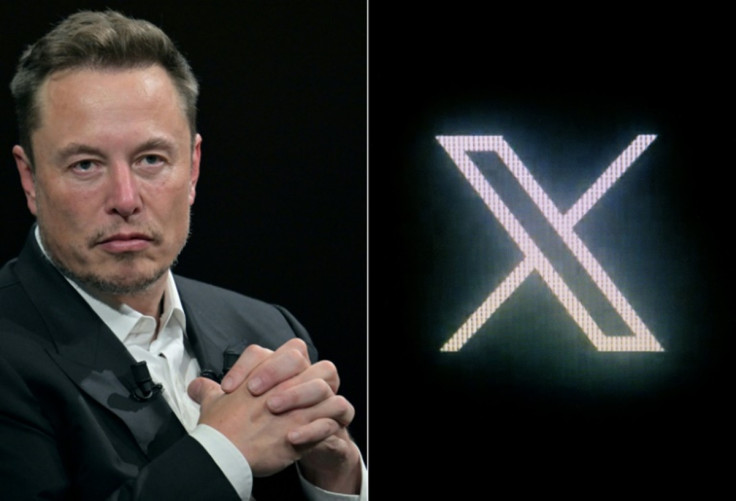
Elon Musk condemned Saturday night's shooting near the White House Correspondents' dinner in Washington DC, using his platform on X to argue that those prepared 'to die to assassinate' would be even more dangerous if they gained political power, and later branding US graduate schools 'indoctrination camps' in a separate post on political violence.
The gunfire broke out as guests were gathering at the Washington Hilton Hotel for the annual black-tie event, which draws senior politicians, journalists and celebrities. According to authorities, a man armed with two guns and knives allegedly forced his way through a security checkpoint outside the venue and began shooting.
The head table, where the US president, vice president and first lady were seated, was evacuated within seconds as Secret Service agents rushed them from the ballroom. No guests were injured, although one Secret Service agent was shot in the chest and survived thanks to a bulletproof vest, officials said.

Police later identified the suspected gunman as Cole Allen, a 31-year-old teacher from California who worked at C2 Education. Allen was taken into custody on felony charges following medical evaluation in hospital. At the time of writing, investigators have not publicly confirmed a motive, so any political explanation for the attack remains unproven and should be treated with caution.
Musk, who once headed Donald Trump's Department of Government Efficiency and has remained one of the most visible tech executives in US politics, weighed in as details of the White House dinner shooting spread online. Posting to his tens of millions of followers, he wrote: 'If they're willing to die to assassinate, imagine what they will do if they gain political power.' The remark did not specify who 'they' referred to, leaving the line open to interpretation and immediate dispute.
Elon Musk Faces Backlash Over 'They' Comment
Increasingly sharp political commentary from Musk on X, the platform he owns and has reshaped into a highly partisan public square. His latest post landed in a particularly charged moment, with the country already on edge over what has been described in US media as a third assassination attempt linked to national politics. In that atmosphere, his ambiguous 'they' struck many users as reckless.
Responses poured in underneath his post, some from long-time followers appearing openly exasperated. One user, @Bre_levins, wrote: 'You've flipped sides so many times I can't keep up.' Another, @b7gger, pushed back harder, asking: 'who's they? you're the biggest fraud. You wanna make this a democrat vs republican thing.... It's the same elite class that's pulling the strings and you're in on it.'
Elon Musk's long-awaited courtroom battle with Sam Altman poised to spill Silicon Valley dirt https://t.co/GNBwS1FE4A pic.twitter.com/iDyXeseUaW
— New York Post (@nypost) April 27, 2026
The criticism pointed to a wider frustration with Musk's habit of speaking in sweeping terms about unnamed groups, while wielding a communication platform that is increasingly central to political discourse. Supporters, however, see him as calling out a willingness to use force for political ends that they believe is being underplayed by traditional media.
What is not in dispute is that the Secret Service intervention at the Washington Hilton prevented mass casualties. One agent's survival was attributed to the protective vest he was wearing, and no further injuries were reported. Beyond that, little is formally known about Allen's beliefs or affiliations. Until investigators release more, assertions about ideological motives remain speculative at best.
1/ WATCH: Cole Allen in his own words…
— Asra Nomani (@AsraNomani) April 26, 2026
The California computer scientist, 31, accused of opening fire at the White House Correspondents’ Dinner isn’t just any would-be killer — he is an elite-trained engineer from Caltech, where students with perfect SAT scores gain admission.… pic.twitter.com/iU1J4I1wJc
Graduate Schools Branded 'Indoctrination Camps' By Elon Musk
Musk did not stop at commenting on the White House dinner shooting. He also replied to a graphic circulating on X that purported to show a correlation between holding a graduate degree and supporting political violence. Without offering data of his own, he responded with three words: 'Grad school indoctrination camps.'
It can be recalled that Musk has increasingly framed elite universities and advanced degree programmes as breeding grounds for what he sees as intolerant or extreme views. His new remark went further, effectively suggesting that higher education is training people who are more likely to endorse, or at least justify, political violence. There is no independent verification of the specific graphic he replied to, and no consensus among researchers that graduate education itself drives people towards violent politics, so his characterisation should be taken with a grain of salt.
Even so, the phrase 'indoctrination camps' resonated across X, tapping into an existing narrative on parts of the right that sees universities as hostile territory. For academics and students reading the post, it was another instance of a billionaire technologist painting complex institutions in cartoonish terms, flattening thousands of different campuses and disciplines into a single, damning label.
Musk's political trajectory has been unusually public. He played a prominent role in Trump's presidential campaign and was rewarded with a senior appointment in the administration before relations soured. The two men ultimately split after a very public clash on social media, and Musk has since used his own platform to criticise Washington in general and what he sees as a complacent 'ruling class' in particular.

Now, with a suspected gunman in custody after an attack on one of Washington's most establishment gatherings, Musk's reactions fold easily into that ongoing story. A man once invited inside the machinery of power is again on the outside, looking in, and warning that those he distrusts are not only wrong, but willing to kill for it.