Elon Musk's Department of Government Efficiency has reached the self-destruct date written into its own founding charter, closing an eighteen-month experiment that thinned the federal workforce and dragged Americans' most sensitive records into open court.
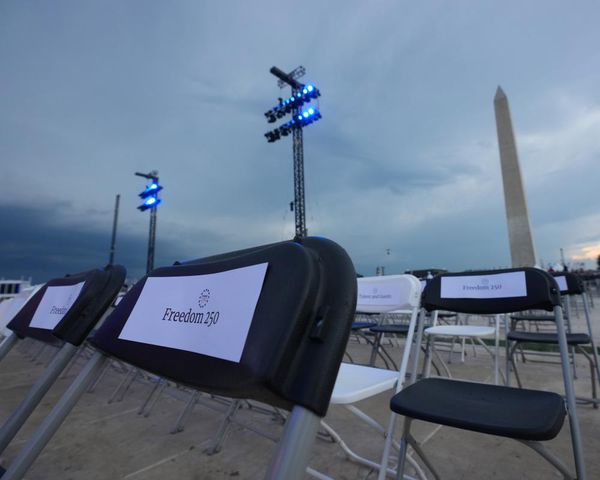
President Donald Trump created the commission on his first day back in office and always meant for it to expire on 4 July 2026, a deadline he framed as a birthday gift to the nation. What DOGE leaves behind is disputed on almost every front, from the billions it says it saved to the young engineers it placed inside the government's most guarded databases.
Its defenders call it a necessary shock to a bloated bureaucracy, while its critics point to a run of judicial findings that its methods likely broke the law.
A Sunset Written Into the Founding Order
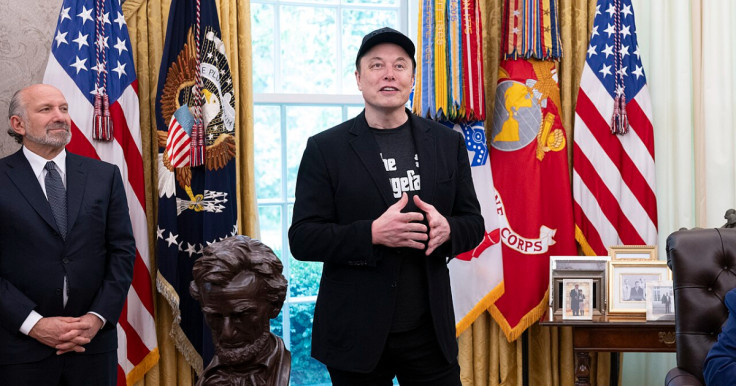
The executive order Trump signed on 20 January 2025 renamed the Obama-era U.S. Digital Service as the U.S. DOGE Service and set a firm end point. The text states that the US DOGE Service Temporary Organization 'shall terminate on July 4, 2026.' Musk, named co-leader alongside former presidential candidate Vivek Ramaswamy, described the plan bluntly, writing on X that the final step of the project was to delete itself.
Neither man saw it through. Ramaswamy left almost immediately to run for governor of Ohio, and Musk departed in May 2025 once his 130 days as a special government employee ran out. Administration officials now describe the ending as anything but clean.
Office of Management and Budget Director Russ Vought told a congressional hearing there would be no closing DOGE report, while the White House budget for the coming year still requested roughly £27.6 million ($35 million) for the U.S. DOGE Service, prompting one Republican congressman to remark that the operation had been 'pretty much eliminated' in the request.
Other DOGE veterans have simply moved on. Several, including Airbnb co-founder Joe Gebbia and Coristine, resurfaced at the National Design Studio, a separate temporary office created to redesign government websites. Reuters first reported in November that Office of Personnel Management Director Scott Kupor said DOGE 'doesn't exist,' before he clarified that its principles remained 'alive and well.'
Sweeping Access to Sensitive Records and a Run of Court Rebukes
Much of the alarm centred on who DOGE sent into federal systems. WIRED first identified six engineers aged 19 to 24, among them Edward Coristine, a 19-year-old Northeastern University dropout, none with meaningful government experience. Musk insisted his team included some of the world's best software engineers, a claim critics inside the agencies disputed.
The clearest legal test came at the Social Security Administration, where unions and retirees sued to stop DOGE from reaching records holding Social Security numbers, medical histories, immigration status, and bank details.
US District Judge Ellen Hollander granted a restraining order in March 2025 and a preliminary injunction weeks later, directing DOGE to delete data it had taken and comparing its approach to hitting a fly with a sledgehammer. She found the government had not explained why a handful of staff needed near-total access to the agency's data systems.
That restraint did not hold. In a 6-3 emergency order on 6 June 2025, the Supreme Court let DOGE resume access while the case continued and separately shielded the entity from a public records request. Justice Ketanji Brown Jackson warned in dissent that the ruling would hand DOGE staffers the highly sensitive data of millions of Americans before any court could judge whether that access was lawful.
A Ledger of Savings That Would Not Reconcile
DOGE's own public tally, unchanged since the start of the year, claims £169 billion ($215 billion) in savings, or £1,051 ($1,335.40) per taxpayer. That sits far below the £1.57 trillion ($2 trillion) Musk once promised and barely registers against a federal budget near £5.5 trillion ($7 trillion) a year.
Independent checks found the figures did not hold. An NPR review of DOGE's 'wall of receipts' matched its claims against federal contract data and estimated verifiable savings closer to £1.6 billion ($2 billion). The largest single entry, a supposed £6.3 billion ($8 billion) cancellation first flagged by The New York Times, turned out to be a £6.3 million ($8 million) contract mislabelled by a clerical typo.
On the workforce side, about 140,000 employees accepted the deferred resignation offer, according to Office of Personnel Management data. National Treasury Employees Union President Doreen Greenwald said in a statement that DOGE never proved its claims of waste and only caused chaos and disrupted lives.
Whether Washington files DOGE away as a blueprint or a warning, the databases it pried open and the public trust it spent will outlast the deadline it set for itself.