War in the Middle East “should never have happened”, China’s foreign minister Wang Yi has declared, even as he struck a more conciliatory tone with the US ahead of a highly anticipated visit by Donald Trump.
Regime change, a key stated aim of the US president as the US and Israel continue to attack Iran, “will find no popular support”, Wang said on Sunday. “A strong fist does not mean strong reason. The world cannot return to the law of the jungle,” he added.
Speaking on the sidelines of China’s annual parliamentary and political gatherings, known as the Two Sessions, the country’s top diplomat and foreign affairs official notably avoided directly criticising the US.
Instead, Wang stressed that China was “committed to a spirit of mutual respect” in US-China relations. Recent talks between Trump and Xi Jinping, China’s president, were “heartening”, he said.
Wang said that 2026 was a “big year for China-US relations” and that the two sides should “treat each other with sincerity and good faith”.
It was a markedly different tone to last year’s press conference, in which Wang accused the US of “two-faced” behaviour in relation to tariffs that the US president had imposed on Chinese goods. This year Wang said that “sliding into conflict or confrontation could bring the whole world down” and that “neither side can remodel the other”.
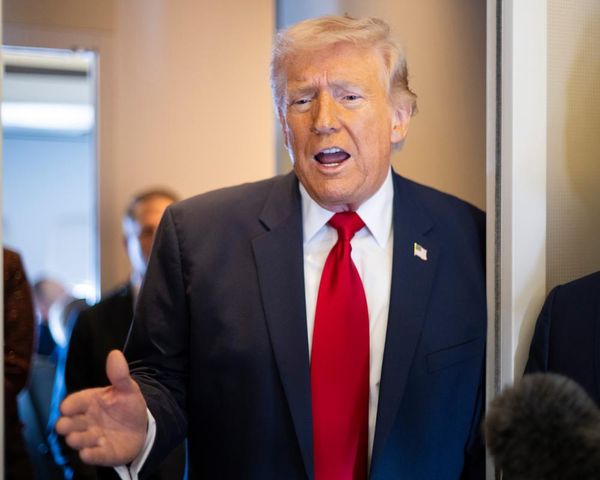
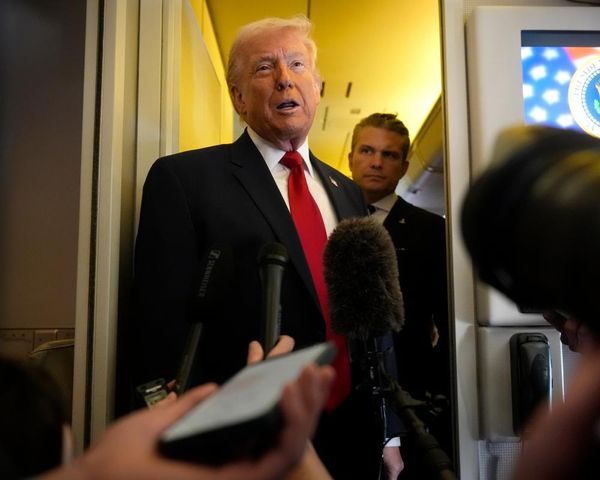
The US and China agreed a temporary truce to the trade war last October. The White House has said that Trump will travel to China between 31 March and 2 April, nearly a decade after his last visit to China in 2017, the most recent by a US president. Further trade negotiations will be high on the agenda.
Both sides seem to be focused on keeping the relationship on an even keel ahead of the trip, despite Trump launching a number of destabilising foreign policy moves in the first two months of the year.
In January, the US captured Nicolás Maduro hours after the Venezuelan leader met with a visiting Chinese delegation. In February, the US launched joint strikes with Israel on Iran, a Chinese partner in the Middle East, starting a war that looks likely to spread into a regional conflict that will disrupt global trade routes.
Both Venezuela and Iran are Chinese oil suppliers and part of Beijing’s latticework of global south partner countries.
But despite condemning the US operations inside both countries, China has stopped short of directly criticising Trump, or delaying his trip to Beijing.
Similarly, save for a brief dig at Chinese and Russian military technology, Trump made no mention of China in his sprawling state of the union speech last month, despite it being the longest in modern history.
“Given the ongoing turmoil in the Middle East, including the impact on global energy prices, China likely sees even more importance in having a chance to address a wide range of difficult issues, including bilateral trade relations, the Taiwan question, and other ongoing global conflicts and their impact, with Trump in person,” said William Yang, a senior analyst at the International Crisis Group.
Beijing “believes that a face-to-face meeting will allow them to better gauge Trump’s position on these issues and present the Chinese perspective more straightforwardly”, he added. Furthermore, China “doesn’t see much benefit to stick its neck out for Iran at this point”.
Addressing reporters’ questions, Wang struck a typically fiery tone on Taiwan. He said that “reunification” between China and Taiwan “is a historical process that cannot be stopped” and that “those who defy it shall perish”.
Beijing claims Taiwan, a self-ruled island, as part of its territory and has vowed to “reunify” it with China if necessary.
Wang also lashed out at Japan, whose relations with Beijing have nosedived since Japan’s prime minister Sanae Takaichi said an attack on Taiwan could trigger a deployment of her country’s self-defence forces.
Wang suggested that Takaichi was using the argument of self-defence to “hollow out its pacifist constitution”.
“Recalling that the Japanese militarists used the excuse of a ‘survival crisis’ to launch wars of aggression, people in China and in other Asian countries cannot but ask with great vigilance and concern: where exactly is Japan heading?” said Wang, referring to Japan’s historic military ventures in Asia.
Additional research by Lillian Yang