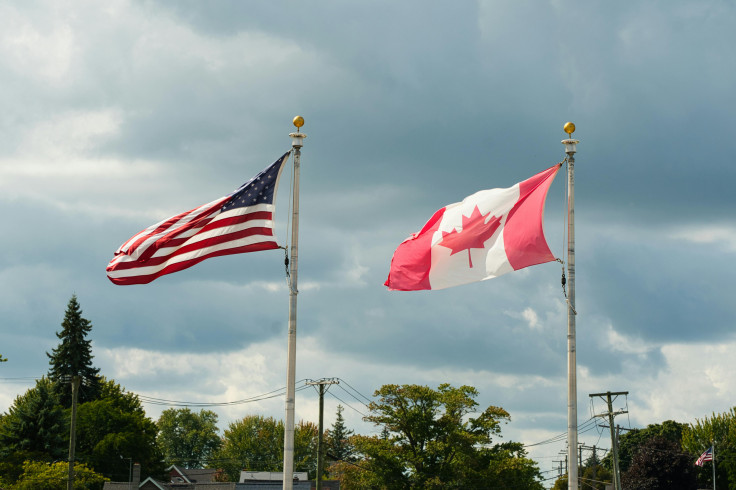
Americans are looking north in growing numbers, not for a holiday but for something far more lasting, a second passport. A recent change to Canada's ancestry law, set against a backdrop of rising political tension in the United States, is quietly shaping how people think about where they belong and where they might go next.
Interest picked up after US President Donald Trump revived talk of making Canada the '51st state', a comment that left many uneasy. Around the same time, a legal shift in Canada opened the door for people with even distant family ties to claim citizenship.
For some, this is about security. For others, it touches on identity and opportunity. But together, these forces have created a rare moment where history, politics and law meet in very personal ways.
A Law that Reopened the Past
Canada's updated Citizenship Act, widely known as Bill C-3, has broadened access to citizenship by descent. It now allows individuals with Canadian grandparents or even great grandparents to apply, addressing earlier rules that had shut many out.
The change has sparked new interest among Americans who once assumed they were not eligible. Many are now discovering that a grandparent's birthplace or a great grandparent's status could open the door after all.
The process itself is not simple. Applicants must show an 'unbroken family' link to a Canadian ancestor using official documents such as birth, marriage or adoption certificates, along with citizenship records from Immigration, Refugees and Citizenship Canada (IRCC). As The Economic Times noted, the paperwork can be demanding, but the path is clearer than it used to be.
The reform is meant to fix gaps in earlier citizenship rules. It also signals Canada's effort to reconnect with members of its diaspora whose ties were once overlooked.
Political Tension Driving Personal Decisions
The timing of this surge is no coincidence. It comes as political uncertainty in the United States continues to deepen, with polarisation shaping everyday life.
According to Hindustan Times, Trump's remarks about absorbing Canada into US territory stirred debate and concern.
For some applicants, this is less about leaving the United States and more about having a backup plan. A second passport offers flexibility, whether for healthcare, work or simply peace of mind in uncertain times.
Immigration lawyers and consultants report a sharp rise in enquiries, in some cases up to tenfold, from US citizens exploring their Canadian roots. Cassandra Fultz, an American-Canadian immigration consultant in Ottawa, said interest tends to spike after election cycles regardless of who is in power.
Fultz stressed that the demand has usually been short-lived. Recently, though, she has seen something different. Since 2024, enquiries have continued to build rather than fade, something she had not witnessed in her 17 years in the field.
Reports also point to political stress as a key factor. As CNN has reported, some Americans are experiencing depression, burnout and insomnia linked to political divisions. Concerns over anti-immigrant policies and threats of racial violence are also shaping decisions about whether to seek options elsewhere.
A Quiet Surge With Real Consequences
This shift goes beyond symbolism. It carries real implications for both countries.
Canada may see a modest rise in population, particularly among skilled and well-educated applicants. Many of those seeking citizenship already have professional backgrounds that fit Canada's labour needs.
At the same time, the growing number of applications could put pressure on administrative systems. Processing times are likely to stretch as demand increases.
For the United States, the trend points to something deeper. It is not a mass exodus or departure, but it does suggest that some citizens are hedging their future beyond its borders.
Interest appears strongest among younger professionals and families, drawn by Canada's healthcare system, education opportunities and a sense of stability.
Identity, Opportunity and a Shifting Border Mindset
Beyond politics and policy, there is a quieter, more personal story unfolding. Many Americans are reconnecting with family histories that once felt distant or forgotten.
People are digging through ancestry records, speaking with relatives and revisiting old documents. What begins as curiosity often becomes something more significant, even life-changing.
The Canada-US border has long been one of the most stable in the world. Yet this moment hints at a subtle shift in how it is seen. It is no longer just a line separating two countries, but a bridge for those looking to keep their options open.
For now, the rush remains understated and continues quietly. There are no dramatic departures or headlines about mass migration. Instead, it is a steady flow of paperwork, family stories and a growing sense that the future might stretch across both sides of the border.