Today, the Supreme Court ruled that Slaughter gets slaughtered, but that Cook won't get cooked! In Trump v. Slaughter, a 6-3 Court divided along ideological lines ruled that the president generally has absolute power to remove the heads of executive branch agencies, even when Congress has enacted laws limiting that authority. At least as a general rule, those laws are - according to the Court - unconstitutional infringements on the president's executive power. Thus, Trump can give Democratic Federal Trade Commission member Rebecca Slaughter the axe.
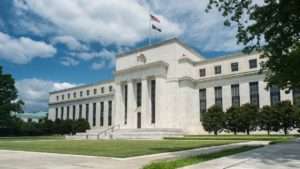
By contrast, in Trump v. Cook, a 5-4 majority (including two of the justices who were also in the majority in Slaughter), ruled that Trump does not have unlimited power to fire members of the Federal Reserve Board. The Court ruled that the law allowing him to remove them only "for cause" is constitutional, and that "for cause" is a fairly high standard, compatible with maintaining the Fed's "independence." Moreover, if the president tries for fire board members for cause, he has to give them substantial due process. This doesn't definitively save Federal Reserve Board of Governors member Lisa Cook's job (Trump claims he can fire her due to accusations of mortgage fraud). But it certainly gives her and her colleagues strong protection against removal, and makes it clear that the president cannot simply fire them whenever he wants.
Elsewhere, I have outlined my reservations about unitary executive theory, which focus in large part on its application to agencies that wield powers the federal government was not supposed to have in the first place. I also agree with most of prominent originalist legal scholar Larry Solum's critique of the Court's opinions in Slaughter and Cook. Even if they are right about the bottom line in one or both cases, the majority's reasoning is far from air-tight.
Here, I focus on the question of whether the two rulings are compatible with each other. It seems to me highly likely, though not certain, that the answer is "no." In addition, the tension between the two makes it possible that the Federal Reserve won't be the only exception to the rule in Slaughter. When it comes to presidential removal power, some federal agencies are more equal than others, and it is not entirely clear which ones are which.
In her dissent in Cook, Justice Amy Coney Barrett writes that "the Court's holding is in serious tension with Trump v. Slaughter, which we also decide today." She adds that, under the majority's approach it is not clear whether "the Federal Reserve [is] unique, or might history sanction other exceptions too?" Although I don't necessarily agree with all the other points she makes in her dissent, she seems right about this aspect!
Chief Justice John Roberts' majority opinion in Cook, explains the Federal Reserve Board's exception status as follows:
Justice Thomas [in his dissent] declares the statute "unconstitutional," an infringement on the President's power to "remove his subordinates at will,…"
We disagree, as did "the founders of our Government and framers of our Constitution" when they "were actively participating in public affairs." Myers v. United States, 272 U. S. 52, 175 (1926). They knew from experience (and Hamilton reminded them) of the calamities that could arise from even the "suspicion" of political manipulation of monetary policy. Report on a National Bank 331. So when they established the First Bank of the United States, they guaranteed its independence from Presidential control. Their successors did the same for the Second Bank. That enabled both banks to serve as the "great regulating wheel" of the early American financial system…. The Federal Reserve follows in this lineage….
It is true, of course, that this tradition has not stood still; as Justice Thomas notes, the Federal Reserve is more powerful than its predecessors, managing a vastly more complex economy in a vastly more complex world…. We see no reason, however, why our central bank ought to be "trapped in amber" any more than any other aspect of our constitutional scheme…. What matters is that the Federal Reserve remains "consistent with the principles that underpin" the First and Second Banks—namely, that monetary policy should not be subject to political interference…
This is far from satisfying. If the issue is simply that central bank independence is a longstanding tradition, the same is true of many other independent agencies, some of which - as the dissenters in Slaughter point out - have existed for a century or more. I certainly agree - as do monetary economists across the political spectrum - that central bank independence is important for ensuring the stability of the monetary system and curbing inflation. But that is a policy consideration of a kind that is not normally supposed to influence originalist legal interpretation. Moreover, there are policy arguments (occasionally perhaps even strong ones) for the independence of various other regulatory agencies.
If the claim is that the Federal Reserve is different because it has important non-regulatory functions, the same is true of many other agencies, too - including the FTC (at issue in Slaughter). As Justice Gorsuch notes in his concurring opinion in Slaughter, "Congress has also delegated to them vast legislative and judicial powers, effectively allowing these agencies to make laws and decide disputes under them. And, after today's decision, the President can effectively exercise all those powers too." Moreover, the Slaughter majority emphasizes that "the President may remove his subordinates at will," at least when it comes to officials who wield any significant executive power at all. As the Cook dissenters point out, members of the Federal Reserve Board exercise various executive powers, such as regulating banks.
If majority's position rests on specifically on the importance of continuity with the First and Second Banks of the United States, it is somewhat strange that this particular continuity gets such exalted status. It is especially strange in light of the fact that many of the Founders - including James Madison, Thomas Jefferson, and Edmund Randolph (the first Attorney General) believed that the Bank of the United States was unconstitutional. That doesn't strike me as the kind of consensus that should lead originalists to elevate this institution's pedigree over that of others.
As Larry Solum notes, the Cook majority's approach to the Fed has much in common with the "history and tradition" test the Supreme Court has been using in Second Amendment cases, since the 2022 Bruen decision. In both cases, the Court looks to historical analogues to assess the constitutionality of modern laws and policies. I would add that the criticisms I and others have raised against the Bruen test apply here too. While I favor strong protection for Second Amendment rights, the Bruen test is often amorphous, subjective, and too far removed from the actual text and original meaning. The same is true of the Court's use of similar reasoning in Cook.
All of this raises the prospect that it may be premature to declare the demise of all independent agencies other than the Fed. Perhaps the latter is not a unique exception, but one that can set a precedent for others. Justice Barrett raises this possibility in her Cook dissent. In his majority opinion in Slaughter, Chief Justice Roberts notes that "we have left open the possibility that some functions traditionally handled outside the Executive
Branch may not be encompassed by Myers's general rule [that the president must be able to fire subordinates]." He also emphasizes that the Court does not "determine the fate of officials not before us."
Cynics will say that what really matters here is that the justices know that central bank independence has enormous real-world significance to the stability of the economy, whereas they (or at least the conservatives) assign less value to the independence of other agencies. But I suspect at least some of the justices take the "history and tradition" approach seriously, and therefore will make at least some good faith effort to apply it elsewhere - just as they have tried to do in Second Amendment cases, including the 2024 Rahimi decision, where all but one conservative justice (Thomas) voted to uphold a gun control law. But even if the distinction is driven by policy concerns, it's possible the Court will find other agencies where such concerns loom large enough in the minds of a majority to make another exception to the rule.
For these reasons, I think today's decisions may not be as clear and definitive as they might seem. As is often the case, future rulings may shed more light on things. Perhaps the Court will give us a better explanation of why the Fed is different in a way that applies to few if any other agencies. Perhaps they will elucidate the exception in a way that encompasses a good many other agencies, too. There may be other possibilities, as well. We shall see.
The post Can the Supreme Court Slaughter Slaughter Without Cooking Cook? appeared first on Reason.com.