Brazil heads toward its October 2026 presidential election with President Luiz Inácio Lula da Silva and right‑wing Senator Flávio Bolsonaro locked in an almost perfect tie, setting up a deeply polarized contest with implications far beyond Brazil's borders. Recent polling shows the leftist incumbent and the son of former President Jair Bolsonaro running neck‑and‑neck in simulated second‑round scenarios, mirroring a broader regional shift to the right in South America where Brazil and Colombia remain two of the last major left‑leaning presidencies.
A race too close to call
A new Datafolha survey published this weekend found Lula and Flávio Bolsonaro each with 45 percent in a hypothetical runoff, with the remainder split between null votes and undecided voters. The poll, based on interviews with just over 2,000 respondents, underscores how the right‑wing challenger has closed an earlier gap, turning the race into what one analyst called "a coin toss" months before Brazilians head to the polls.
An AtlasIntel/Bloomberg survey published in late April similarly found Lula and Flávio statistically tied in a second‑round scenario, with 47.5 percent for Lula and 47.8 percent for Bolsonaro—well within the poll's margin of error. In first‑round simulations tracked by the Americas Society/Council of the Americas (AS/COA), Lula still tends to lead, but Flávio Bolsonaro has consolidated much of the conservative vote once spread across multiple right‑of‑center figures.
Lula's fourth run vs. Bolsonaro 2.0
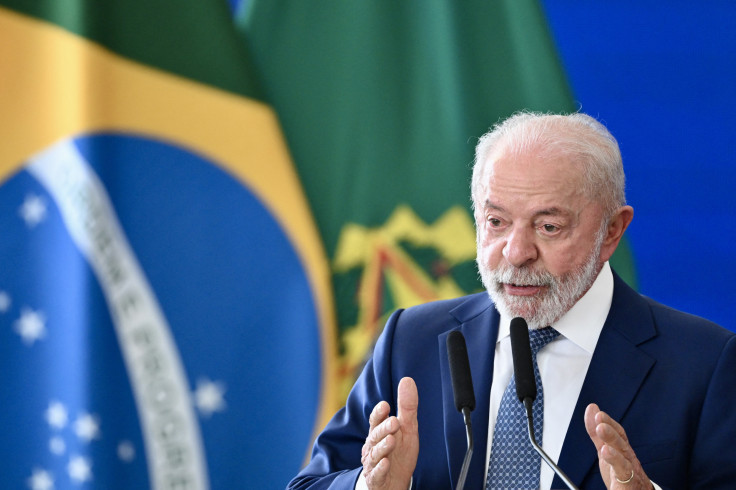
Lula, now 80, is seeking a fourth non‑consecutive term, arguing that Brazil needs continuity on social programs, climate commitments, and democratic safeguards after the turmoil of the previous Bolsonaro administration. For many on the Brazilian left and center‑left, Lula remains a symbol of social inclusion and poverty reduction, even as his government struggles with sluggish growth and pressure from markets and Congress.
On the other side, Senator Flávio Bolsonaro is trying to channel his father Jair Bolsonaro's political capital while presenting himself as a more institutionally palatable version of Bolsonarismo. Polls suggest he has inherited much of the ex‑president's base, especially among conservative evangelicals, agribusiness interests, and security forces, even as he faces scrutiny over a film‑funding scandal highlighted in Brazilian and international media.
A region drifting right—except Brazil and Colombia
The Brazilian election comes as South America's political pendulum swings back toward the right. In recent years, several countries in the region have elected conservative or market‑friendly leaders after a wave of left‑wing governments in the 2010s, reshaping debates on security, migration, and economic policy. Against that backdrop, Brazil under Lula and Colombia under Gustavo Petro stand out as major economies still governed by left‑leaning presidents, making the Brasília–Bogotá axis an important counterweight to the new rightward trend.
That contrast was visible in the recent "Shield of the Americas" summit, where presidents from Brazil and Colombia were notably absent, feeding speculation about how aligned—or isolated—the current left leadership in both countries may become in regional diplomacy. Their absence has fueled arguments that the two governments risk losing influence in hemispheric forums if political tides continue shifting right.
US–Brazil ties and the Trump factor
The 2026 vote will also be closely watched in Washington. The Bolsonaro family has maintained a warm relationship with US President Donald Trump, who previously enjoyed strong ties with Jair Bolsonaro during his own term in Brazil. An eventual election of Senator Flávio Bolsonaro could bring Brasília and Washington closer again on issues like trade, security cooperation, and a tougher stance on leftist governments in the region, especially if Trump seeks to rebuild a bloc of ideologically aligned partners in the Americas.
By contrast, a Lula victory would likely maintain Brazil's current mix of pragmatic engagement with the United States and efforts to assert independence through South–South diplomacy, BRICS coordination, and a more cautious approach to US foreign policy agendas. For Latin America as a whole—and for Latino communities in the United States that follow regional politics closely—the outcome in Brazil will help determine whether the continent's political map tilts more decisively to the right or remains ideologically divided.
With polls showing a dead heat and months of campaigning ahead, Brazil's 2026 presidential race is shaping up as one of the year's defining elections for the Americas.


© 2025 Latin Times. All rights reserved. Do not reproduce without permission.