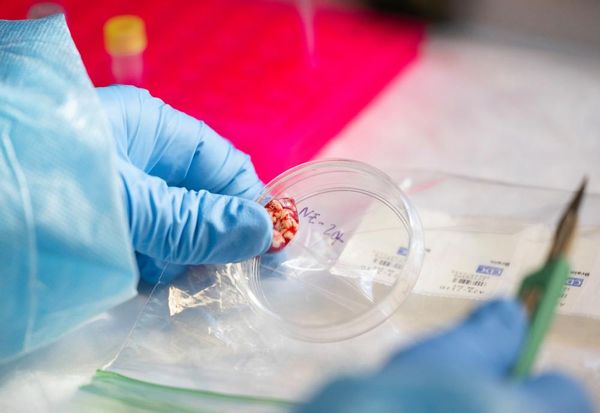
State officials have reported 28 more measles cases in the last two weeks, bringing the statewide total to at least 175 infections so far this year. The vast majority of cases are in a federal detention facility in Hudspeth County, according to the Texas Department of State Health Services, which released the latest figures on Thursday.
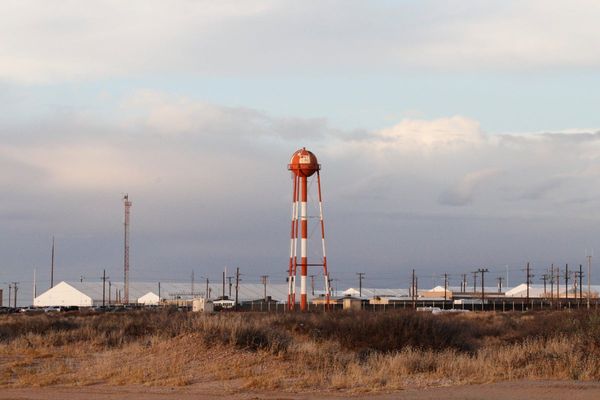
Most of the state’s recently reported measles cases were in Hudspeth County, where 135 cases have been reported so far this year. All of Hudspeth’s cases are among those in federal custody, according to DSHS. Hudspeth County is home to West Texas Detention Facility, a federal facility privately managed by Louisiana-based LaSalle Corrections. The facility holds U.S. Marshals Service detainees including immigrants who may be transferred to ICE custody after completing their sentences.
Other than Hudspeth, no county reported new cases this week.
There have been 24 reported measles cases in El Paso County so far this year. At least 14 of them were in Camp East Montana, the nation’s largest immigration detention facility, according to DSHS.
Emails obtained by The Texas Tribune through records request reveal at least four El Paso residents who worked in the West Texas Detention Facility became infected with measles, potentially exposing the disease to the community.
El Paso city officials voiced frustration in the emails with a lack of information from the federal detention center operators and the federal government about how many detainees were vaccinated and who came into contact with them.
Health experts said the explosion of measles in these detention centers signals how Texas’ role in the federal government’s immigration crackdown poses a public health risk.
In addition to the 159 cases confirmed in El Paso and Hudspeth counties so far this year, another 16 cases have been reported in Bandera, Bexar, Frio, Kendall, Lubbock, and Rockwall. The two cases in Frio County were reported at South Texas Family Residential Center, the country’s only ICE facility holding children and their parents, in Dilley. DSHS has not reported measles cases in any new counties in the past three weeks.
With 175 cases, Texas has the third highest number of reported measles cases this year, behind South Carolina, which has had 668 cases so far, and Utah, which has had 318 cases as of March 26. Outbreaks in those states have been ongoing since last year.
Measles — which is particularly dangerous to unvaccinated children, pregnant women and immunocompromised adults — is highly contagious and has a long incubation period. Infectious disease experts stress that investigations are important to determine how the infections happened and how to stop the spread.
The U.S. achieved elimination status of measles in 2000 due to high coverage with the measles, mumps, and rubella vaccine, along with strong disease surveillance and public health response.
Last year, Texas experienced the largest measles outbreak in 30 years, primarily affecting the South Plains region. The measles outbreak spread from the small town of Seminole to at least three other states and crossed international borders. The West Texas outbreak was the nation’s largest in more than 35 years, killing two children and sickening at least 762 Texans.
In November 2025, the Pan American Health Organization announced that the Americas region, which includes the United States and Mexico, lost measles elimination status after an outbreak in Canada lasted for more than 12 months.
The Centers for Disease Control and Prevention has reported 16 new measles outbreaks in the U.S. during 2026, including the one in Texas. PAHO has said it plans to review the United States’ measles elimination status later this year.