The US Department of Justice (DOJ) has significantly altered its legal posture against deposed Venezuelan leader Nicolás Maduro, quietly dropping long-standing allegations that he led a structured criminal organisation known as the 'Cartel de los Soles' (Cartel of the Suns).
The shift, revealed in a revised indictment unsealed following Maduro's dramatic capture by US special forces on 3 January, marks a departure from years of rhetoric by the Trump administration. While Maduro still faces grave federal charges — including narco-terrorism conspiracy and cocaine importation — prosecutors have pivoted away from the specific claim that he sat atop a formal drug cartel.
From 'Cartel' to 'Patronage System'
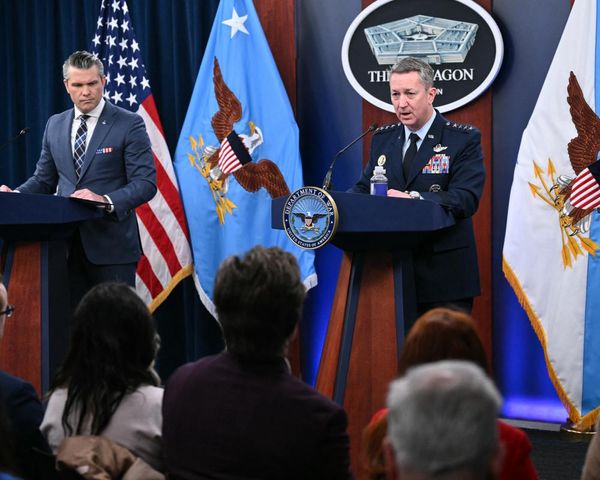
For over five years, US officials, including Attorney General Pam Bondi and Secretary of State Marco Rubio, have frequently characterised the 'Cartel de los Soles' as a sophisticated transnational criminal syndicate. In July 2025, the US Treasury Department even designated the group as a terrorist organisation to justify intensified military pressure.
However, the new 142-page indictment unsealed in the Southern District of New York reframes the narrative. Instead of a formal cartel, the DOJ now describes the 'Cartel de los Soles' as an informal 'patronage system' and a 'culture of corruption' within the Venezuelan military and political elite.
Experts have long argued that the term 'Cartel de los Soles' was a misnomer — originally a slang term used in Venezuela since the 1990s to describe high-ranking officers (who wear sun insignias on their uniforms) involved in bribery.
'The idea that the Cartel de los Soles is a unified terrorist organisation is largely a Western construction', Jenaro Abraham, a professor of Latin American politics at Gonzaga University, told TRT World. 'It has been circulated because it provides geopolitical utility — it creates a ready —made justification for intervention.'
The Core Charges Remain
Despite the removal of the 'cartel leader' label, the legal threat to Maduro remains life-threatening. The revised indictment alleges that Maduro turned Venezuela into a 'narco-state', using the machinery of the government to facilitate the transit of thousands of tons of cocaine destined for the United States.
Specifically, the DOJ alleges that Maduro:
- Collaborated with designated foreign terrorist organisations, including the FARC and ELN in Colombia.
- Partnered with the Sinaloa Cartel and the Tren de Aragua gang to protect drug shipments.
- Traded weapons for cocaine through intermediaries, including his son, Nicolás Ernesto Maduro Guerra.
During his first appearance in a Manhattan federal court on Monday, Maduro pleaded not guilty to all counts. Clad in a blue jail uniform, the 63-year-old former president declared himself a 'prisoner of war' and asserted, 'I am a decent man. I am still the president of my country'.
A Tactical Legal Pivot?
Legal analysts suggest the DOJ's decision to drop the formal 'cartel' claim is a tactical move to ensure a conviction. By focusing on a 'corrupt patronage system' rather than a non-existent corporate-style cartel, prosecutors avoid the burden of proving a specific organisational hierarchy that many intelligence experts believe never existed in a formal sense.
The removal of the claim also complicates the political narrative surrounding Operation Absolute Resolve. While the capture has been hailed as a 'decisive victory' by House Speaker Mike Johnson, critics at the United Nations have pointed to the shifting legal justifications as evidence that the intervention was politically motivated.
Maduro and his wife, Cilia Flores, who was also indicted and appeared in court with visible injuries from the raid, are currently being held at the Metropolitan Detention Center in Brooklyn. Their next court date is set for 17 March.