Public anger over Venezuela's response to last week's catastrophic twin earthquakes is growing into a political crisis for the country's U.S.-backed interim government, putting new pressure on President Donald Trump's administration as Washington tries to manage relief efforts without deepening resentment on the ground.
The June 24 earthquakes, measured at magnitudes 7.2 and 7.5, devastated parts of northern Venezuela, including La Guaira and areas around Caracas.
The confirmed death toll has risen above 1,900, with more than 10,000 injured and over 50,000 still missing, according to international reports and aid groups. The World Health Organization warned Tuesday that Venezuela's fragile health system is under severe strain, with hospitals overcrowded, several facilities damaged, and rising fears of disease outbreaks among displaced survivors.
But as rescue crews search through rubble, grief is turning into fury.
Survivors in the hardest-hit areas have accused interim President Delcy Rodríguez's government of moving too slowly, undercounting destruction and allowing soldiers and officials to interfere with community-led aid. Satellite analysis cited by The Guardian estimated that nearly 59,000 buildings may have been damaged or destroyed, far above official figures released earlier by Venezuelan authorities. The United Nations has estimated that millions of people may need humanitarian assistance.
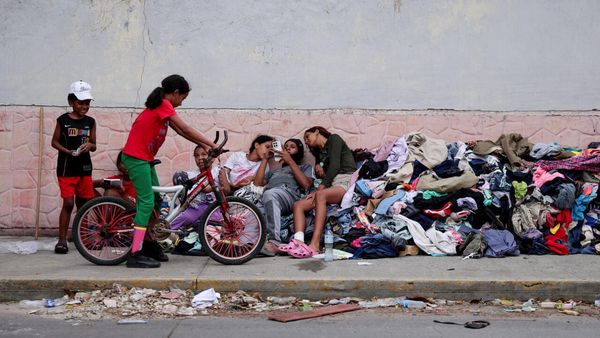
"We've been surviving thanks to our neighbors, not the government," María Hernández, a resident of El Junquito, to Reuters, describing how volunteers, farmers, and local residents have supplied food and water while waiting for official assistance.
The anger is also spreading online. Social media posts and videos circulating on social media showed residents confronting officials and demanding faster help, while Instagram reels from news and advocacy accounts described anger "boiling over" in La Guaira over the government's response. Other posts focused on damaged hospitals, missing relatives, and the slow arrival of food, water, and medical care.
@PatriceRoyTJ@BBC@TV5@ReutersWorld
— airnation🇨🇦 (@airnation) June 30, 2026
ALERT No fuel in #VENEZUELA THE FUEL COUNTRY FUCK IT GOVERNEMENT CORRUPTION NOT HELPING
NOT GIVING FUEL T9 BULDOZER TO HELP DIGGJNG THE RUBBLES Check out CNN's video! #TikTok https://t.co/sTGm3wEPmI
📹 | Detienen a cuatro policías en la Guaira por robar entre los escombros de los edificios caídos tras el terremoto en Venezuela https://t.co/7bhJ4DdUYs pic.twitter.com/GdJKMF2pY5
— EL PAÍS (@el_pais) July 1, 2026
Tres días para que tomen el control de #Venezuela
— joseramontr (@joseramontrve) June 30, 2026
Tres días @POTUS @SecRubio @SenRickScott @FoxNews @CNN @BBC @el_pais
Aquí claramente se ve como la
Policía política está deteniendo periodistas en vez de estar salvando vidas.#terremoto #Venezuela https://t.co/DS0oSsUFHg pic.twitter.com/EIixHTgdGs
The crisis has become the first major test for Rodríguez, who became interim president after the U.S. capture of Nicolás Maduro earlier this year. The Trump administration has continued to back Rodríguez as a stabilizing figure, even as many Venezuelans remain deeply skeptical of a transition led by officials associated with the old power structure.
That tension is now colliding with the humanitarian disaster.
The United States has sent search-and-rescue teams, medical units, and emergency supplies and has pledged hundreds of millions of dollars in assistance. U.S. teams have helped reopen key infrastructure, including Caracas' airport and La Guaira's port, according to reporting on the relief effort.
The local goodwill generated by Trump's retrieval of the former Venezuelan strongman Nicolás Maduro, who will stand trial in New York City, and the rescue aid was severely affected by the open support for Rodríguez's government, as well as an interview given to Univision by John Barrett, the White House business envoy to Caracas.
"The Venezuelan armed forces are working shoulder to shoulder with the United States," Barrett said.
🚨 LA FRASE DE JOHN BARRETT QUE DESATÓ LA INDIGNACIÓN DE TODO UN PAÍS:
— Fabian Dicosta (@fabiandicosta) June 30, 2026
🗣️ "Las Fuerzas Militares de Venezuela están trabajando hombro a hombro con EE. UU."
¿ESTE ES EL "TRABAJO INCANSABLE" DEL QUE HABLABAN? 😡 pic.twitter.com/GRe0wGymvx
SUICIDO DIPLOMATICO EN UNA SOLA ENTREVISTA@usembassyve
— Pedro Mario Burelli (@pburelli) June 30, 2026
La entrevista de John Barrett, Encargado de Negocios de EE.UU. en Venezuela, con Luis Carlos Vélez de @nmasunivision, fue lamentable en varios aspectos.
Muchos sostienen que su único objetivo, y probablemente su único… https://t.co/6QqOXrPuCL
Yet Washington's support for the interim government is increasingly unpopular among Venezuelans who see Rodríguez's administration as unprepared, opaque and politically motivated. In one viral episode, Venezuelan Interior Minister Diosdado Cabello was seen berating U.S. rescuers, adding to outrage over what critics described as government obstruction during a desperate search for survivors.
Only a criminal would stand between rescue workers and people trapped beneath the rubble.
— Rep. María Elvira Salazar (@RepMariaSalazar) June 29, 2026
And that’s exactly what Diosdado Cabello is.
The Delcy Rodríguez regime must understand this with absolute clarity: it must allow all humanitarian aid arriving from around the world to… https://t.co/qiHmYGTNAD
The political stakes rose further after opposition leader María Corina Machado accused the Venezuelan government of blocking her return to the country from Panama, where she has been living in exile.
Machado said she wanted to return to help earthquake victims but claimed airspace restrictions and airline pressure prevented her from boarding a flight. Reuters reported that Machado has contacted White House, State Department, and congressional officials as she seeks U.S. support for her return.
Spanish newspaper El País reported that the earthquake has exposed a growing distance between Machado and Washington, with the Trump administration prioritizing relief operations and short-term stability over a direct confrontation with Rodríguez's government or an immediate push for elections.
For many Venezuelans, that calculation is difficult to accept.
The country was already battered by years of political collapse, economic hardship, migration, failing hospitals and infrastructure decay before the earthquakes hit. Now, the disaster has made those weaknesses visible in the most brutal way: collapsed buildings, missing families, overflowing hospitals and desperate neighborhoods digging with their hands.
International teams from the U.S., Mexico, Ecuador, El Salvador and other countries continue searching for survivors, although hopes are fading as the critical window narrows. Reuters reported that rescuers were still combing through rubble in La Guaira as families waited for news of missing loved ones.
The Trump administration's challenge is now larger than delivering aid. It must decide how closely to tie itself to an interim government many Venezuelans blame for years of decay and days of confusion.