The Australian prime minister says he backs a “peaceful, democratic transition” of power in Venezuela after the forcible capture of Nicolás Maduro by the US military, but has urged that international law be respected.
In a cautious statement, Anthony Albanese said his government was “monitoring developments” after Venezuela’s president and his wife were captured and transported to the US.
“We urge all parties to support dialogue and diplomacy in order to secure regional stability and prevent escalation,” he said.
Sign up: AU Breaking News email
Albanese said Australia had long held concerns about the situation in Venezuela, “including the need to respect democratic principles, human rights and fundamental freedoms”.
“We continue to support international law and a peaceful, democratic transition in Venezuela that reflects the will of the Venezuelan people,” he said.
The Australian government’s Smartraveller website urges Australians not to travel to Venezuela.
“Do not travel to Venezuela due to the dangerous security situation, the threat of violent crime, political and economic instability and risk of arbitrary detention,” the advice reads.
“There are reports of military activity in and around Venezuela, including Caracas. The security situation is unpredictable and may deteriorate. Be prepared to shelter in place. Make sure you have enough supplies, including food, water and medicine.”
Australia does not have an embassy in Venezuela. The website advised Australian citizens who needed assistance to call the emergency consular assistance team on +61 2 6261 3305 from anywhere in the world or 1300 555 135 from within Australia.
One group, the Venezuelan Association of Australia, issued a statement saying it stood “in solidarity with Venezuelans at home and across the diaspora”.
“For Venezuelans living in Australia, this moment carries deep and complex emotions shaped by years of political repression, family separation and displacement,” the statement said.
“Our hope remains for a free democratic, and united Venezuela where people can live with dignity and opportunity.”
Australia’s opposition leader, Sussan Ley, said she welcomed Maduro’s removal from power, saying: “We should live in a world where dictators and despots face justice for their crimes.”
“Under his rule, Venezuela has endured years of repression, systemic human rights abuses, corruption, and the crushing of basic democratic freedoms – driving immense suffering and forcing millions to flee,” Ley said.
But the Greens’ defence spokesperson, David Shoebridge, alleged the kidnapping of the president was a gross breach of international law, and “continues the world on a dangerous path of lawless aggression”.
He said the people of Venezuela deserved the right to live in peace and elect their government, but that the US intervention would put those rights further out of reach.
“Lawlessness without consequences helps dictators, tyrants and aggressors. It places the world on a very dangerous footing,” Shoebridge said.
“This US war is not about self-defence, like so many before it, this is a war about resources, oil and dominance.”
Within Albanese’s Labor Party, there was also a measure of dissension. The Labor Against War group said Australia should condemn Trump’s “piracy brazen military aggression and adventurism”.
“Canberra should immediately distance itself from the Trump administration, whose conduct is marked by lawlessness at home and violent, reckless coercion abroad,” the group said.
World leaders react
In the early hours of Saturday local time, the US military launched a lightning raid on Venezuela’s capital, forcibly capturing Maduro and his wife. The couple were flown to New York, where, the US says, they will be arraigned on drugs and weapons trafficking charges.
It is unclear who is in control in Venezuela.
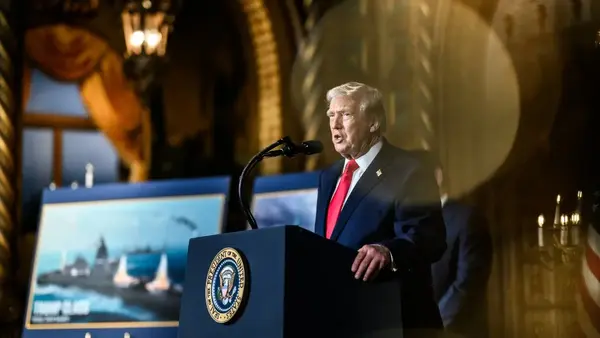
Donald Trump has said the US would indefinitely “run the country” after Maduro’s removal and would seize Venezuela’s massive oil reserves.
But Maduro’s vice-president, Delcy Rodríguez, a loyalist, has appeared on television and radio in Caracas, contradicting the US president, who described her as Venezuela’s new president and said she was cooperating with the US. Rodríguez said Maduro was Venezuela’s “only” president and that the country would not be colonised.
The UN security council was due to hold an emergency meeting on Monday.
Just last month, Venezuelan opposition leader María Corina Machado was awarded the Nobel Peace Prize for her “tireless work … to achieve a just and peaceful transition from dictatorship to democracy”.
Venezuela’s allies Russia, Cuba, and Iran have condemned the US military strike as a violation of sovereignty.
Among leading Latin American nations, Argentina’s president, Javier Milei, lauded Venezuela’s new “freedom”, while Mexico condemned the intervention and Brazil’s president, Luiz Inácio Lula da Silva, said it crossed “an unacceptable line”.
Maduro was indicted in US federal court in 2020 on narco-terrorism and other charges for running what prosecutors alleged was a scheme to send tons of cocaine to the US. He has always denied such allegations.
In July 2024, Maduro appeared to suffer a landslide defeat in the presidential election, amid widespread anger at his increasingly authoritarian rule.
The US, under former president Joe Biden, recognised opposition candidate Edmundo González as the victor. Detailed voting data released by the opposition and verified by independent experts showed González had won the vote, but Maduro clung to power after launching a ferocious crackdown against his political opponents.
The UK prime minister, Keir Starmer, said his government would “shed no tears” over the end of Maduro’s regime.
“The UK has long supported a transition of power in Venezuela,” Starmer said.
“We regarded Maduro as an illegitimate president, and we shed no tears about the end of his regime.”
The French president, Emmanuel Macron, also accused Maduro of seizing power and trampling on fundamental freedoms.
Canada’s foreign minister, Anita Ananda, said: “We have refused to recognise any legitimacy of the Maduro regime and opposed its repression of the Venezuelan people, including the persecution of dissenters and particularly political leaders opposed to the regime.”