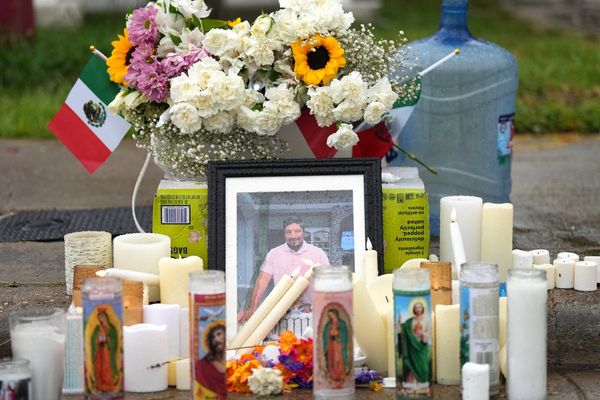
A 29-year-old tree trimming worker was killed in Whitewater, Wisconsin, on Monday morning in what fire officials described as a suspected lightning strike, roughly two hours before a tornado struck the Fox Valley about 100 miles to the north.
Whitewater Fire and EMS responded shortly before 10 a.m. to a report of a person stuck in a tree and possibly electrocuted. Crews found the man unresponsive and suspended about 60 feet up, wearing a safety harness. Members of his crew climbed the tree and lowered him to waiting EMS personnel. He died at the scene.
The crew supervisor reported "a loud bang and a flash" and believed the tree had been struck, according to the department. Officials said a severe weather system was moving through at the time and that they found no evidence the worker had contacted energized electrical lines. He was working for a contractor clearing trees for a utility.
The Walworth County Medical Examiner's Office and the Whitewater Police Department are conducting the death investigation. The cause has not been formally determined.
The Number That Should Change Behavior This Week
Lightning kills roughly 30 people in the United States each year and injures many more, according to the National Weather Service, out of about 300 people struck. Some survivors live with permanent neurological disability.
Those numbers understate the significance because of when and to whom they happen. Deaths cluster in summer, in the afternoon, among people outdoors doing ordinary things: yard work, coaching, fishing, construction, farm work, walking to a car. The agency's own analysis of fatalities finds a recurring pattern in which victims were either caught out with no plan or waited too long to act.
The rule the National Weather Service reduces this to is four words. When thunder roars, go indoors. If you can hear thunder at all, you are close enough to be struck.
The Thirty-Minute Rule, and Why People Break It
The second half of the guidance is the part almost everyone gets wrong.
Stay inside a safe building or a hard-topped vehicle for at least 30 minutes after the last rumble of thunder. Not after the rain stops. Not after the sky brightens. Thirty minutes after the last thunder you hear.
The reason is that lightning frequently strikes outside the area of heavy rain, and can reach as far as 10 miles from any rainfall. That is why people are struck under blue sky, and why the storm looking finished is not evidence that it is. Charge can linger in clouds after a storm appears to have moved off.
The National Weather Service is direct about the consequence: some victims were struck because they went back outside too soon. Thirty minutes feels excessive precisely when it is doing its job.
For anyone running an organized outdoor activity, whether that is a youth sports practice, a work crew or a community event, the agency recommends a written lightning plan with a designated person watching the weather. That person should not be the coach or the crew lead, who will be occupied.
What Counts as Shelter, and the Tree Mistake
Safe shelter means a substantial, fully enclosed building with wiring and plumbing, or a hard-topped metal vehicle with the windows closed. Convertibles do not qualify.
What does not count: sheds, picnic shelters, dugouts, tents, covered porches, balconies, bus stops and open vehicles. These feel like shelter and provide none. A rain shelter protects from rain.
Sheltering under a tree is the classic fatal error, and the reason is mechanical. Lightning tends to strike the tallest object in an area. When it hits a tree, the current can jump to a person standing nearby, an effect called side splash, and can also travel outward through the ground. Standing under a tree in a storm places you next to a preferred target.
If you cannot reach safe shelter, the National Weather Service advises avoiding open areas where you are the tallest object, staying away from isolated tall trees, towers and utility poles, and keeping clear of metal conductors such as fences and wires. Metal does not attract lightning, but it carries current a long way.
Groups should spread out. This slightly increases the chance that someone is struck and substantially reduces the chance of multiple casualties, while improving the odds that someone can help.
Indoors is not automatically safe either. Injuries occur inside when people use corded phones, touch plumbing, or contact electrical equipment during a storm. Avoid showers, baths, and washing dishes. Cordless and cell phones are fine.
The Misconception That Costs Lives
This is the single most consequential thing in this article.
A person struck by lightning carries no residual electrical charge. They are safe to touch immediately. The National Weather Service lists the opposite belief among the myths it works hardest to correct.
The reason it matters is that cardiac arrest is the immediate cause of death for lightning victims who die. The heart stops. If someone begins chest compressions within the first minutes, survival is genuinely possible, and many strike victims are revived. Every second spent hesitating over whether the person is dangerous to approach is a second of no circulation.
The response sequence is short. Call 911. Begin CPR if the person is unresponsive and not breathing normally. Use an automated external defibrillator if one is available. If it is safe to do so, move the victim to a more protected location, because lightning can strike the same place again.
Survivors need medical evaluation even when they appear to recover. Cardiac and respiratory problems can persist, shock can develop, and neurological effects may not be immediately apparent.
Who Is Most Exposed and What Happens Next
Outdoor workers carry the highest occupational exposure, and utility line clearance, tree work, roofing, construction, landscaping and agriculture concentrate it. These jobs often involve elevation, metal tools and schedules that discourage stopping.
Beyond work, the recreational exposure is broad: youth sports, golf, boating, fishing, camping, beach outings and yard work. Water and open fields offer no protection.
Employers with outdoor crews should have a lightning plan with a defined trigger, a designated weather monitor, an identified shelter reachable quickly, and an explicit rule that work does not resume for 30 minutes after the last thunder. Workers who believe they are being pressured to stay out in a storm can raise it with the Occupational Safety and Health Administration.
The Whitewater investigation continues, and the medical examiner has not released findings. MedicalDaily will report on the determination.
The confirmed facts are that a 29-year-old worker died in Wisconsin in a suspected lightning strike and that the cause remains under investigation. The people most exposed this season are outdoor workers and anyone coaching or playing outdoors on summer afternoons. The most reasonable actions are going inside at the first thunder, waiting a full 30 minutes after the last one, and knowing that a strike victim can be touched and needs CPR immediately. The central uncertainty in this case is the formal cause of death.
Frequently Asked Questions
What happened in Whitewater? A 29-year-old tree trimming worker was found unresponsive about 60 feet up in a tree on July 27 after his crew reported a loud bang and flash. He died at the scene, and the cause is under investigation.
How long should I wait after a storm? At least 30 minutes after the last rumble of thunder, not after the rain stops.
Is it safe to touch someone struck by lightning? Yes. Victims carry no residual electrical charge. Call 911 and begin CPR immediately if they are unresponsive and not breathing normally.
Why is sheltering under a tree dangerous? Lightning tends to strike the tallest object. Current can jump from a struck tree to a nearby person or travel outward through the ground.
Does a picnic shelter or porch count as shelter? No. Only a substantial enclosed building with wiring and plumbing, or a hard-topped vehicle with windows closed, provides protection.
Am I safe indoors? Mostly, if you avoid corded phones, plumbing and electrical equipment. Skip showers and dishwashing during a storm.
How many people does lightning kill each year? The National Weather Service reports about 300 people struck annually in the United States, of whom roughly 30 are killed.