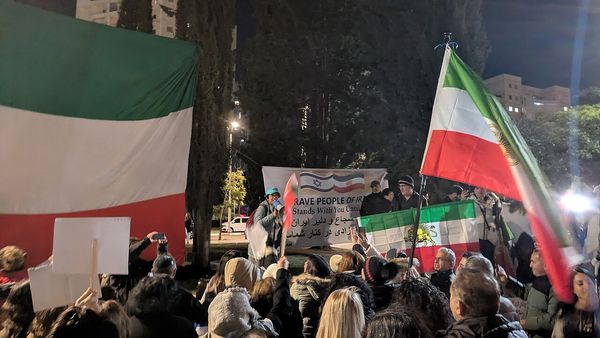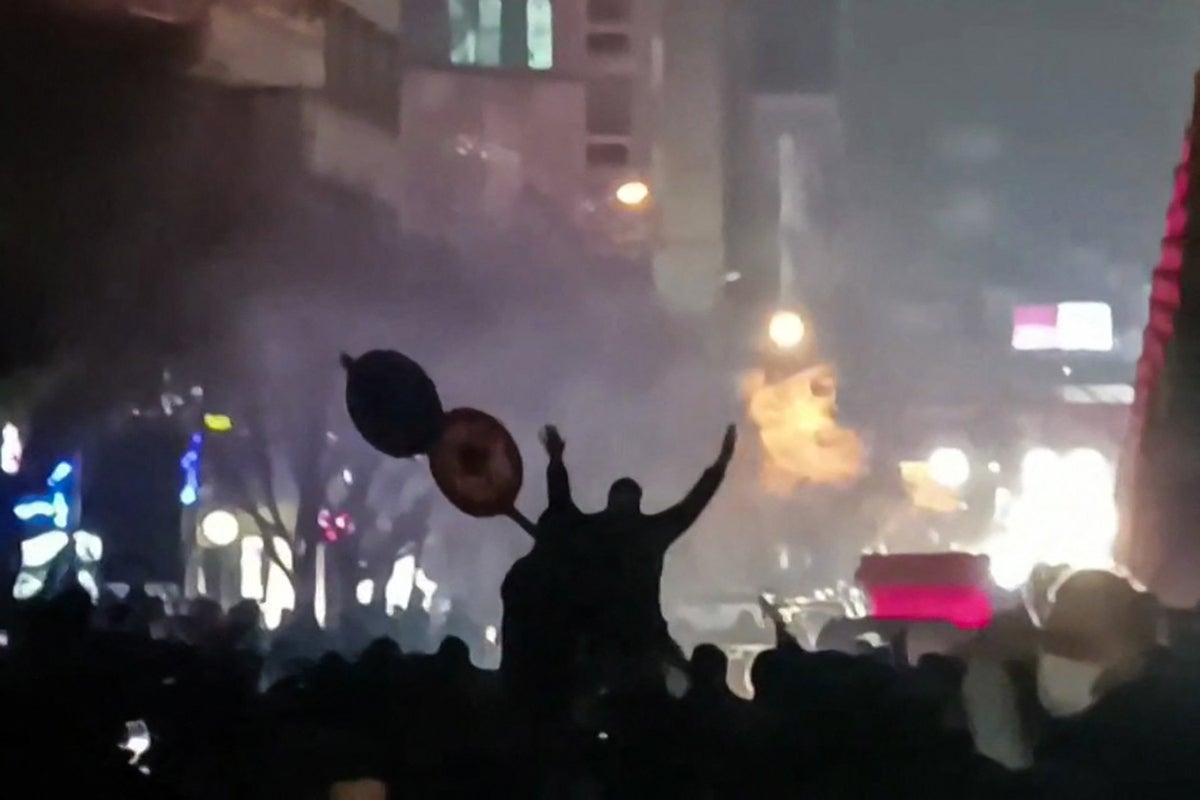
Iran was largely cut off from the outside world on Friday after authorities blacked out the internet to curb growing unrest, and videos showed buildings aflame in anti-government protests raging in cities across the country.
Rights groups have documented dozens of deaths of protesters in nearly two weeks and, with Iranian state TV showing clashes and fires, the semi-official Tasnim news agency reported that several police officers had been killed overnight.
In a televised address, Supreme Leader Ayatollah Ali Khamenei vowed not to back down, accusing demonstrators of acting on behalf of opposition groups abroad and the United States, and a public prosecutor threatened death sentences.
Iran's Ministry of Information and Communications Technology said the decision to shut down the internet was made "by the competent security authorities under the prevailing circumstances of the country."
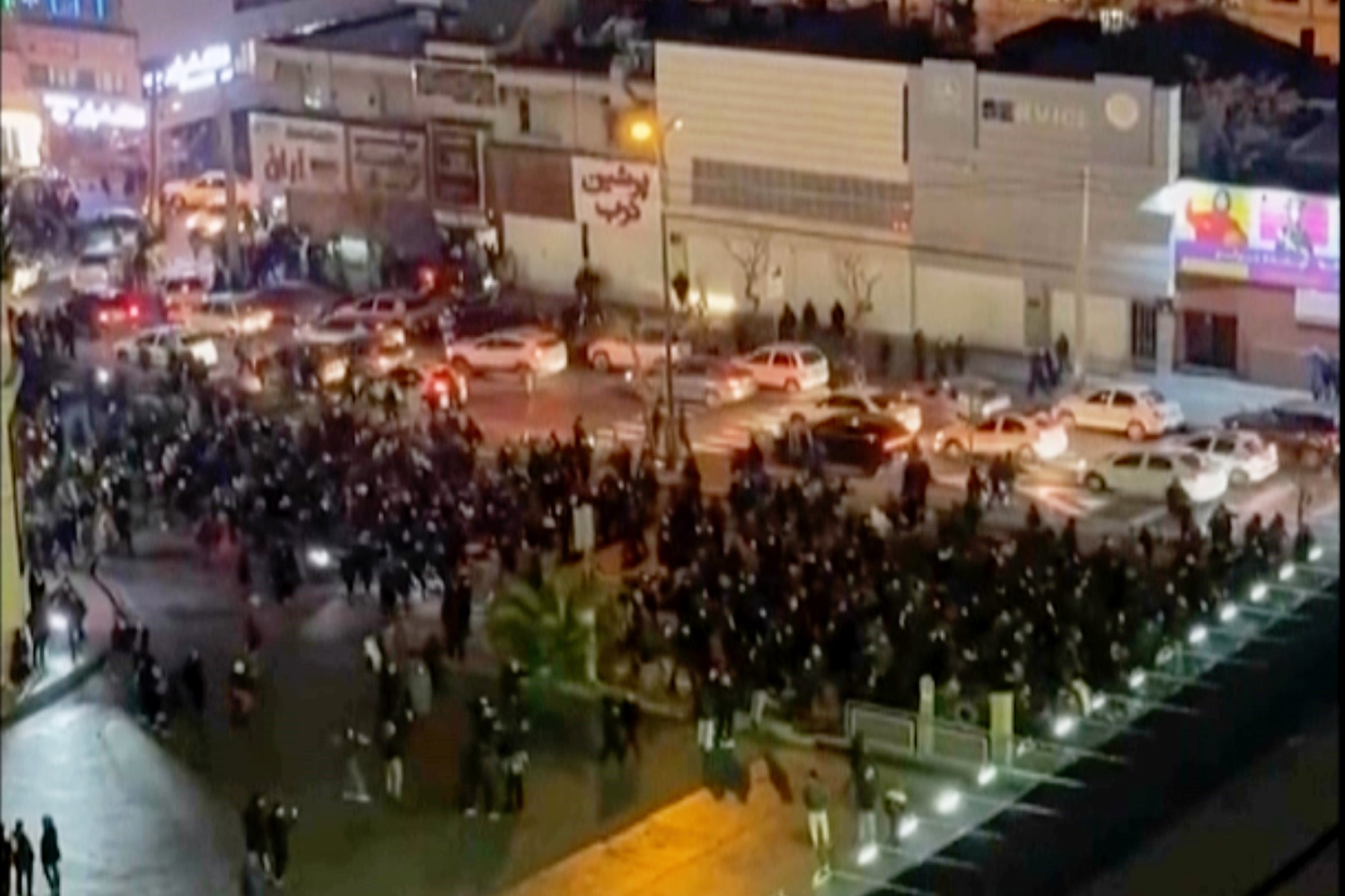
The protests pose the biggest internal challenge in at least three years to Iran's clerical rulers, who look more vulnerable than during past bouts of unrest amid a dire economic situation and after last year's war with Israel and the United States.
Here is how the Iran protests developed:
Dec. 28: Protests break out in two major markets in downtown Tehran, after the Iranian rial plunged to 1.42 million to the U.S. dollar, a new record low, compounding inflationary pressure and pushing up the prices of food and other daily necessities. The government had raised prices for nationally subsidized gasoline in early December, increasing discontent.
Dec. 29: Central Bank head Mohammad Reza Farzin resigns as the protests in Tehran spread to other cities. Police fire tear gas to disperse protesters in the capital.
Dec. 30: As protests spread to include more cities as well as several university campuses, Iranian President Masoud Pezeshkian meets with a group of business leaders to listen to their demands and pledges his administration will “not spare any effort for solving problems” with the economy.
Dec. 31: Iran appoints Abdolnasser Hemmati as the country's new central bank governor. Officials in southern Iran say that protests in the city of Fasa turned violent after crowds broke into the governor's office and injured police officers.
Jan. 1: The protests' first fatalities are officially reported, with authorities saying at least seven people have been killed. The most intense violence appears to be in Azna, a city in Iran’s Lorestan province, where videos posted online purport to show objects in the street ablaze and gunfire echoing as people shouted: “Shameless! Shameless!” The semiofficial Fars news agency reports three people were killed. Other protesters are reported killed in Bakhtiari and Isfahan provinces while a 21-year-old volunteer in the paramilitary Revolutionary Guard’s Basij force was killed in Lorestan.
.jpg)
Jan. 2: U.S. President Donald Trump raises the stakes, writing on his Truth Social platform that if Iran “violently kills peaceful protesters,” the United States “will come to their rescue.” The warning, only months after American forces bombed Iranian nuclear sites, includes the assertion, without elaboration, that: “We are locked and loaded and ready to go.” Protests, meantime, expand to reach more than 100 locations in 22 of Iran's 31 provinces, according to the U.S.-based Human Rights Activists News Agency.
Jan. 3: Iran's Supreme Leader Ayatollah Ali Khamenei says “rioters must be put in their place,” in what is seen as a green light for security forces to begin more aggressively putting down the demonstrations. Protests expand to more than 170 locations in 25 provinces, with at least 15 people killed and 580 arrested, HRANA reports.
Jan. 6: Protesters conduct a sit-in at Tehran's Grand Bazaar until security forces disperse them using tear gas. The death toll rises to 36, including two members of Iranian security forces, according to HRANA. Demonstrations have reached over 280 locations in 27 of Iran’s 31 provinces.
Jan. 8: Following a call from Iran's exiled crown prince, a mass of people shout from their windows and take to the streets in an overnight protest. The government responds by blocking the internet and international telephone calls, in a bid to cut off the country of 85 million from outside influence.
Jan. 9: Iran signals a crackdown is coming, but protesters again demonstrate. HRANA says violence around the demonstrations has killed at least 65 people while more than 2,300 others have been detained.
Iran protests live: Tehran threatens protesters with death penalty as casualties rise
Iran, Russia and China join for naval drills in South Africa as tensions run high
VR headsets are 'hope machines' inside California prisons, offering escape and practical experience
Who is Iran’s supreme leader as protests grip the country
What is happening in Iran? Internet blackout and Israel blamed after mass protests
Trump warns Iran ‘we’ll start shooting’ if demonstrators killed as protests continue