It’s Saturday morning, and news breaks shortly after the Premier League kickoff window; another member of your community has been brutally killed in the streets by ICE. There are already a few videos on social media, depicting multiple angles of the grotesque scene. This killing, like the one before, has felt inevitable – because of the actions of the federal government, and in spite of the diligence and peaceful pushback by you and your neighbors.
For more than a decade, watching soccer has been a staple of your Saturday routine, as it is for millions of others. Given that, it was hard not to think about a prize awarded by the sport’s most powerful organization just eight weeks prior, to the president overseeing and encouraging all of this. You know, the medal meant to reward “exceptional and extraordinary actions for peace.” Plenty of people have been joking about this “honor” online since the day it was announced. You were among them in December. Today, you find it hard to laugh.
You get a push notification half an hour later: a member of your Premier League fantasy team scored. You forgot to update your lineups, what with everything going on around you. The goalscorer was left on your bench. Once, this would have registered as a palpable, if minor, annoyance. Today, it barely registers as anything at all. You quickly close the notification and tune in to the local news.
The next kickoff approaches, in which your favorite team is about to play the defending champions. It’s a big one. Twenty minutes into the game, you mute it and load a stream of another press conference held by Jacob Frey, the mayor of Minneapolis, and Brian O’Hara, the city’s police chief. It’s all too similar to the media briefing they delivered just 17 days earlier, after Renee Good was also brutally killed by ICE. Once again, they plead for the only action that will truly defuse what has become an impossibly tense new normal. They beg for ICE to leave us alone.
The press conference wraps, and you look up to find that your boys are 2-0 up. The stadium is delirious. You might have been too, under different circumstances. Today, you haven’t heard a decibel of the crowd noise or a syllable of Peter Drury’s poetic reactions. You can’t bring yourself to go back and watch the replay to fill those gaps. Those goals are now forever associated with the sobering details of a senseless death. After 90 minutes, your team has pulled off the biggest upset of the weekend on the final kick of the game. Another day’s dose of euphoria doesn’t even register.
There’s another game at 4.30pm – this one a little closer to home. The US women’s national team has built a proud reputation; an international powerhouse that advocates for progress and against violence. You wonder if they’ll find a way to acknowledge what’s happening in Minnesota, a state they’ve visited with increasing frequency since the opening of Allianz Field in Saint Paul.
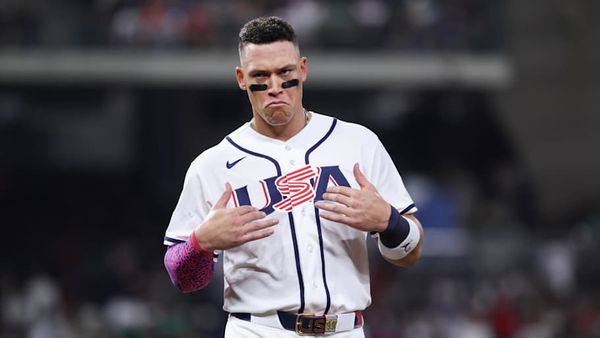
There are no black armbands of quiet support from the team. There’s no statement, or moment of silence, or acknowledgement before the national anthem. Even the gun lobby took time to criticize how Trump’s camp justified the killing by turning the victim’s second amendment rights against him. So when the fourth goal goes in, and its scorer hustles toward the camera to try creating a viral celebration for social media, you decide you can catch up on the final 35 minutes later. You decide this even though it’s the last meaningful soccer of the day, about a month before the domestic season kicks off in earnest.
You and your partner’s favorite bar and its dart boards will go unvisited this evening. Keeping up with your shows has been pushed off the priority list entirely. These days, time together often means grabbing a coffee, or a water bottle at later hours, and slowly driving around in areas that have requested neighborhood patrol as community observers.
You’re in group chats on platforms you had previously used to talk with sources. Nobody shares their real name, nor should they. You’re in constant contact with people who rename themselves after produce, minerals, and neighborhood landmarks. These are the people you trust most and are desperate to help protect.
It haunts you that the first two victims – may they please be the only two – in your community were both 37 years old at the time of their senseless deaths. In less than a month, you’ll turn 32. You’re left to ruminate on realities that you hadn’t really dwelled on much until your own government began its occupation. Before, you thought of these ages primarily as those when soccer players might retire – or start thinking about it.
It’s difficult to discuss this with your friends who have either moved away from Minnesota or who have never lived here at all.
You watch the evening news, and the anchors deliver a statement from Michael and Susan Pretti, the parents of the man – now known to be VA nurse Alex Pretti – whose life ended far too soon and far too needlessly. It pushes back against false statements about him and the events leading to his death, disseminated by some of the most powerful people in the country. “Please get the truth out about our son,” the statement says in closing. “He was a good man.”
Your professional instincts kick in, and you notice the Prettis’ statement hasn’t yet reached social media, and rush to transcribe and post it. It feels productive, helping them spread their message. Within an hour, it’s the most read and most shared post you’ve had on the platform – bigger than anything related to soccer, which is most of what you talk about on there.
You get back into snow pants and boots and tear open another pack of hand warmers. You stand with your neighbors in subzero conditions after sunset, holding candles, acknowledging the morning’s horrors but stressing the value of this community, of fighting technologically enabled isolation. Your ability to gather in public parks reminds you that you can resist this isolation. It’s shared strength when needed most.
A few years ago, sitting in freezing conditions like these rendered you unable to do your job of covering a World Cup qualifier. Today, there’s no place you’d rather be than this city park.
You anticipate the next day will be similar, even if nobody is killed. The past few weeks have introduced group chats and patrol drives and dutiful observation into your new daily routine. You stare at every car that drives past your window with longer gazes and greater scrutiny. Your camera roll, long teeming with pet photos, is now dominated by videos soundtracked by plastic whistles.
On Sunday, you wake up to news that Trump’s attorney general has issued a list of demands if ICE’s grip on your state is to be loosened. Immediately below the letter on your social feed, the USWNT has posted another angle of the fourth goal’s viral celebration. One of these feels far more important than the other.