
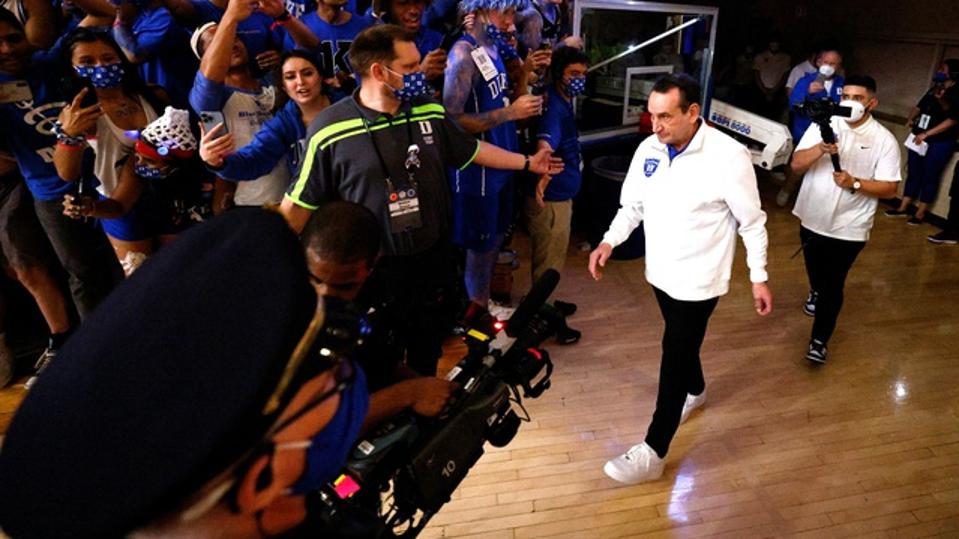
When our best-laid plans get laid to waste, how we react to the setback says everything about who we are as leaders. Last weekend, the script had been written, the cameras in place to chronicle THE story of the college basketball season. Duke basketball coach Mike Krzyzewski walked into his school’s legendary arena for the final time in his 42-year career, and the opponent would be archrival, North Carolina.
On Friday night, there was a student rally at Cameron Indoor Stadium, the beating heart of Duke’s campus life for Coach K’s tenure. Like a leader addressing his employees at a corporate “town hall,” the coach gave the students a pep talk and told them how he hoped they would behave during the game. “Make it about Duke,” he said, not harassing the underdog Tar Heels.
The next day, No. 4 Duke had every reason to anticipate beating unranked North Carolina as they had two weeks before. It would be a fitting sendoff for the only coach anybody has ever seriously compared to John Wooden, UCLA’s legendary winner of 10 NCAA National Championships. For this, Krzyzewski’s last day at the office, his wife, children, and grandchildren were front-and-center, along with his extended Duke family of players and managers and former staff, to celebrate the success that has been Coach K’s resounding legacy.
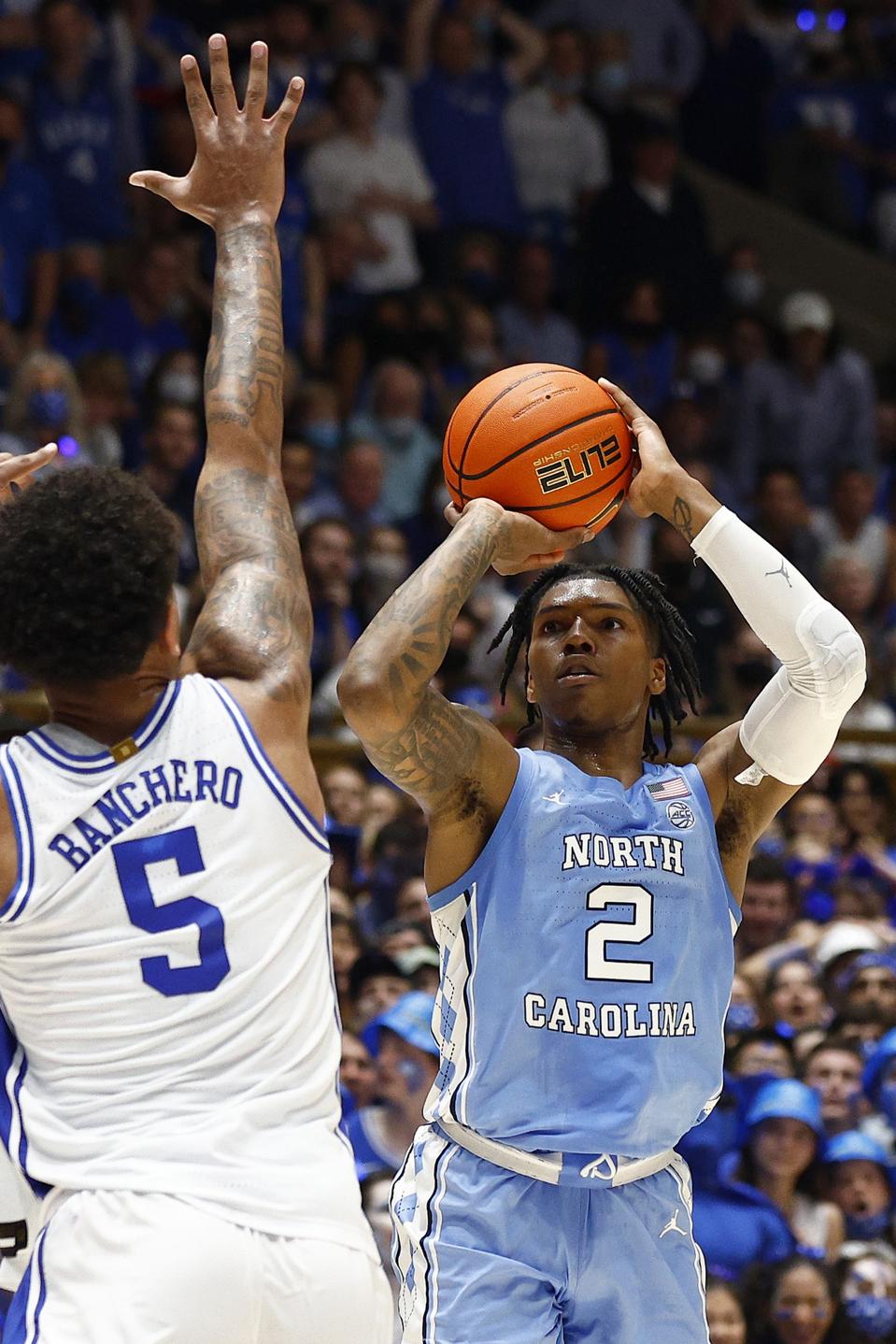
Krzyzewski had prepared some remarks—a farewell speech if you will—to deliver following the game. Everything was in place except for the game itself. And that’s when North Carolina switched the script on Blue Devils Nation by beating Duke 94 – 81 in a game that left a pall hanging over the crowd gathered for Coach K’s sendoff.
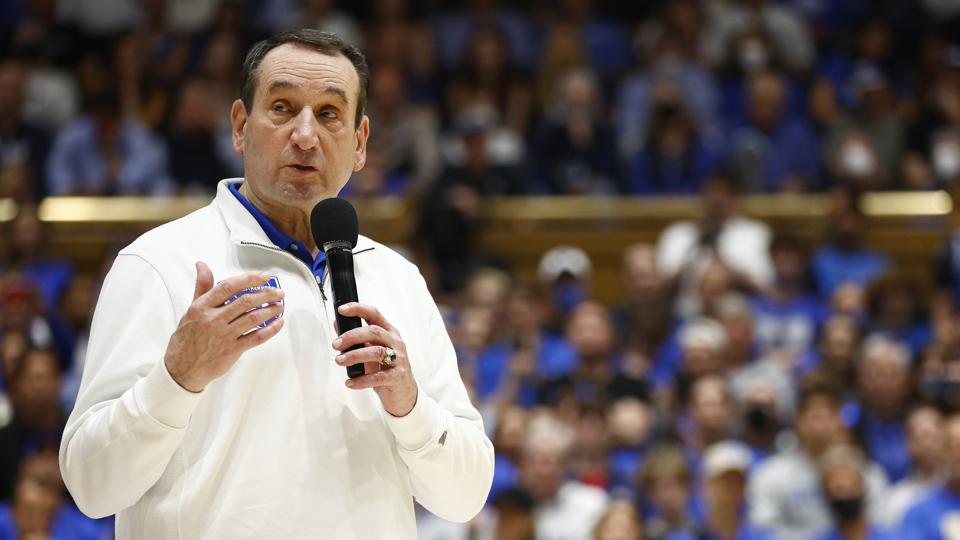
How would Krzyzewski recover from this shocking defeat? He did what a great leader does when the script is changed at the last second. First, as he approached the microphone with shouts of “we love you” coming down from the stands, he owned the moment and the loss.
Before settling down to his prepared remarks, Coach K admitted that he needed to speak “off script.”
“I don’t love me right now. I’m sorry about his afternoon,” he told fans, alumni, family, and his team.
When his apology was not accepted, and the protests of love kept pouring down, he said, a little firmer this time, “Please everyone be quiet. Let me say. It’s unacceptable. Today was unacceptable, but the season was very acceptable.”
Yes, it was. This season, Coach K led Duke to its 13th regular season ACC championship. The Blue Devil’s postseason remains to be played, so there is always the chance that to his innumerable accolades, including six Olympic Gold Medals, he may yet win his sixth National Championship.
But Krzyzewski wasn’t ready to wallow in the love directed at him or forget the level of performance and competitive mindset that allowed him to build Duke’s great tradition of winning. He needed to settle accounts and keep things real in the moment. Once he accomplished that and began the prepared part of the postgame ceremony, you could feel the collective energy inside the arena exhale a deep breath. They had needed somebody, preferably their leader, to make sense of what had just happened.
And that’s exactly what their leader did.
For years, Krzyzewski served as a coach at a “fantasy” basketball camp run by Michael Jordan. At one of these camps, Jordan found himself talking to a sportswriter about the topic of motivation.
The conversation took place after the writer beat the greatest of all time in a charity one-on-one game of first-basket-wins. “A loss is not a failure until you make an excuse,” Jordan said. When excuses are no longer an option, you can focus your attention on the job you did and what you can do to improve outcomes in the future. Your audience will learn how to reframe your definition of failure and remove excuses from their vocabulary.
In other words, the point of playing the game is to win. Otherwise, it’s just practice. Competition isn’t about winning at all costs, nor is it about pointing fingers when a project or career path hits a snag. Competition in sports or in business settings is an agreement among team members that what they are doing matters, and because it matters, it is worth doing greatly.
Did the fans in packed Cameron Stadium sense this truth as they gathered up their things to head home?
Coach K made sure they did.
“There’s a cheer where people say, ‘This is our house,’” Coach K told them. “But for us, this is not our house. This is our home. What does that mean to all of you? It means that this is your home forever. There’s going to be a time when you’ve graduated, you’re making a lot of money, hopefully following your heart, and you’re going to come back here.”
And they will. Maybe not in person, but in mind and spirit, they will return home when life switches the script on them, and they need to remind themselves who they can be and what they can represent in their work. It’s the home of the mind Coach K built with them.