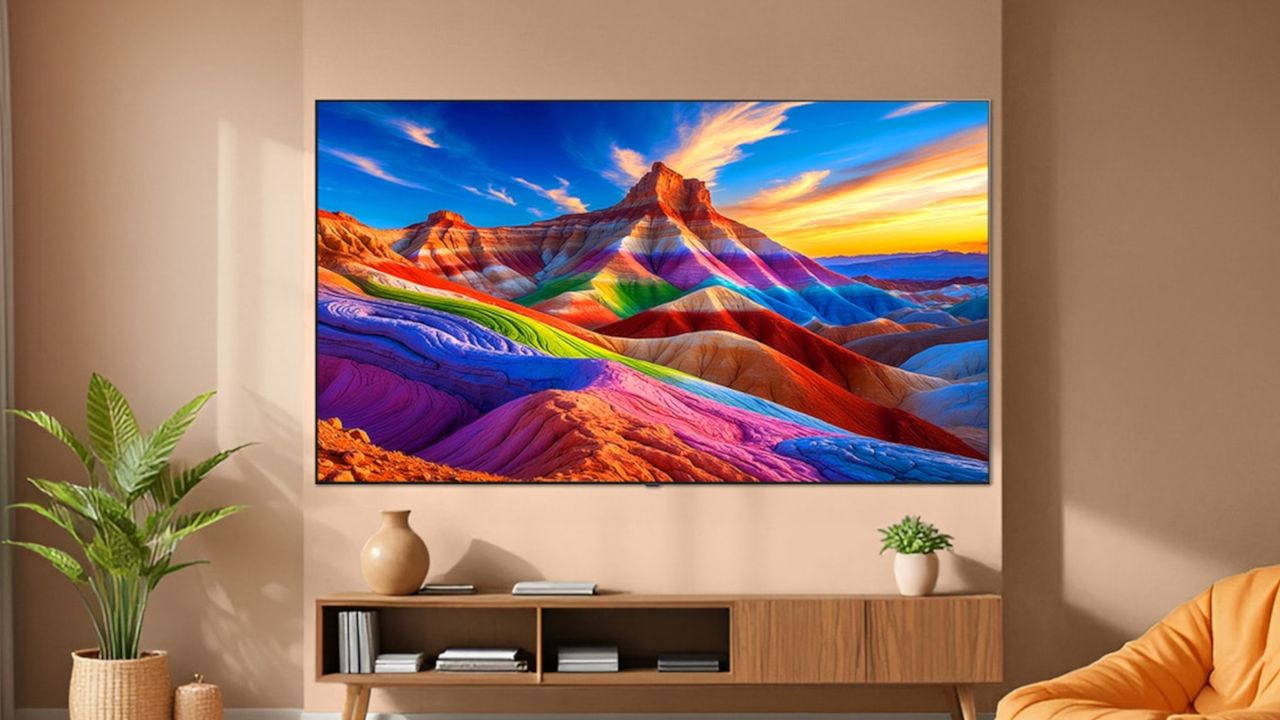
LG’s OLED TVs are some of the most popular and best TVs on the market. However, while many of us would love to have the flagship LG G6 or W6 Wallpaper OLED on our walls, their starting prices of $3,299 and $5,499 make them more of a pipe dream.
That’s why I often recommend the LG C6 and its more affordable little brother, the LG B6 OLED. The latter starts at just $1,999 for a 65-inch screen and, according to our recently conducted test results, is better than its stablemates in one key area.
Here’s what we found out when we ran the set through our test lab.
LG B6 vs C6 OLED test results
LG B6 OLED |
LG C6 OLED |
|
Price |
$1,999 |
$2,699 ($1999 on sale) |
Brightness (HD/SDR)* |
253 nits |
342 nits |
Delta-E (in Standard mode) |
10.5796 |
11.7387 |
Brightness (4K/HDR)* |
694 nits |
1251 nits |
Delta-E (in Filmmaker mode) |
1.0362 |
1.617 |
UHDA-P3 Color Gamut |
97.19% |
99.68% |
*Results measured in a 10% window in Standard mode.
Where the B6 is better than the C6 OLED
Let’s get the obvious facts out of the way first — the LG C6 OLED is brighter, more colorful and, when it comes to 4K/HDR content, a lot more color accurate than the B6 OLED.
But if you’re someone who doesn’t watch a lot of 4K/HDR content and spend most of your time watching cable TV that’s still transmitted in HD/SDR, the B6 OLED is going to offer a slightly better color accuracy right out of the box.
In HD/SDR, the B6 OLED is going to offer a slightly better color accuracy right out of the box.
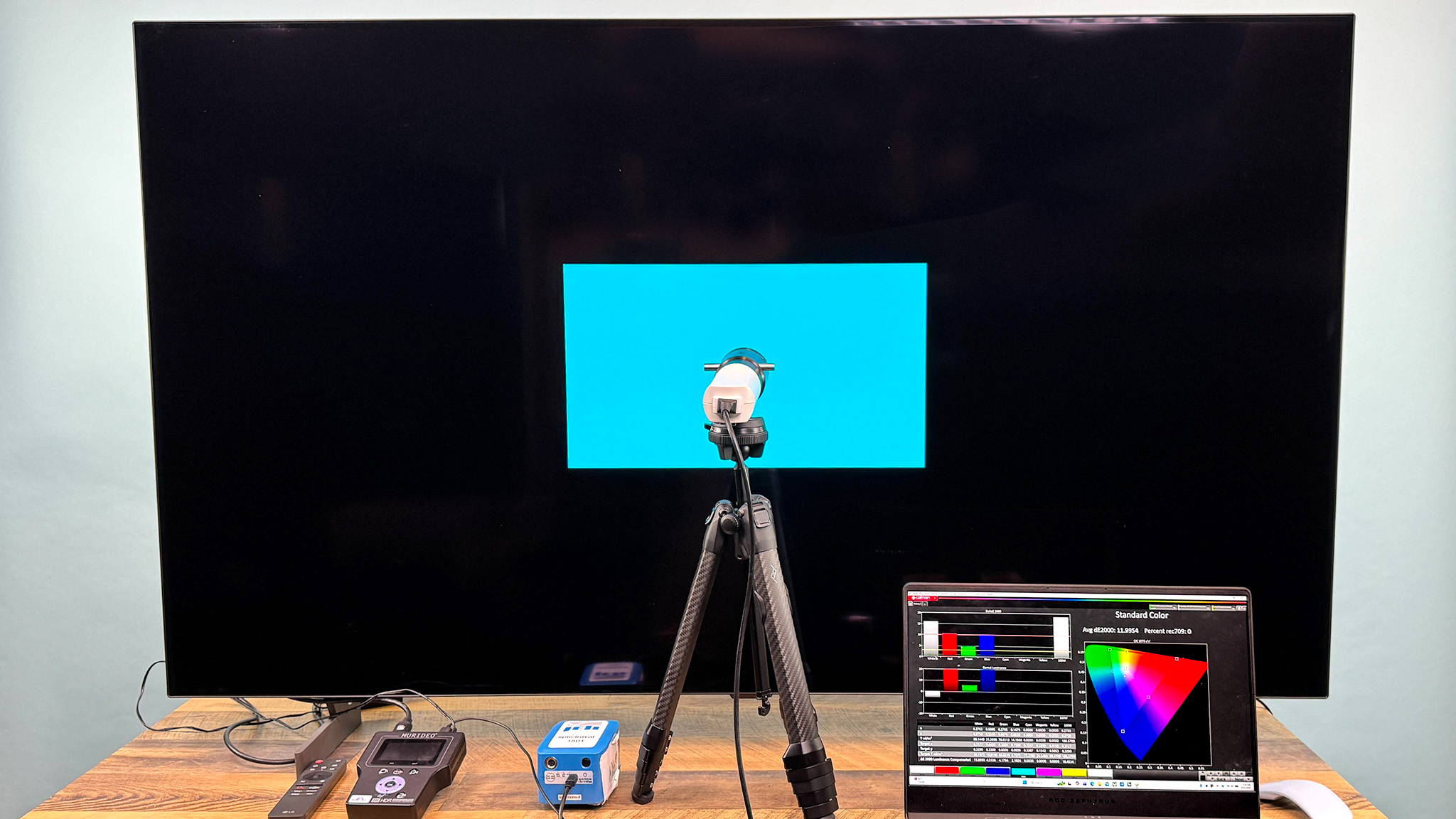
Color accuracy is denoted by that Delta-E score up above and the lower the score is, the more accurate the colors are. In Standard mode, we measured the LG C6 OLED’s Delta-E at a relatively high 11.7387; the LG B6 we tested came in at a noticeably lower 10.5796.
If you really care about color accuracy, however, you’ll probably want to put these TVs into their respective Filmmaker modes to better match what the director intended when they finished color grading. In this mode, the LG B6 also squeaks out a win (1.0362 vs 1.617 on the C6), but it’s worth noting that any difference in a Delta-E under 3 is nearly impossible to distinguish with the naked eye.
If I lost you along the way, the main takeaway from our testing is that the B6 is — surprisingly — more accurate with colors in HD/SDR shows and movies.
HDR, on the other hand, is a different story…
Here’s why you still might want to buy a C6 OLED instead
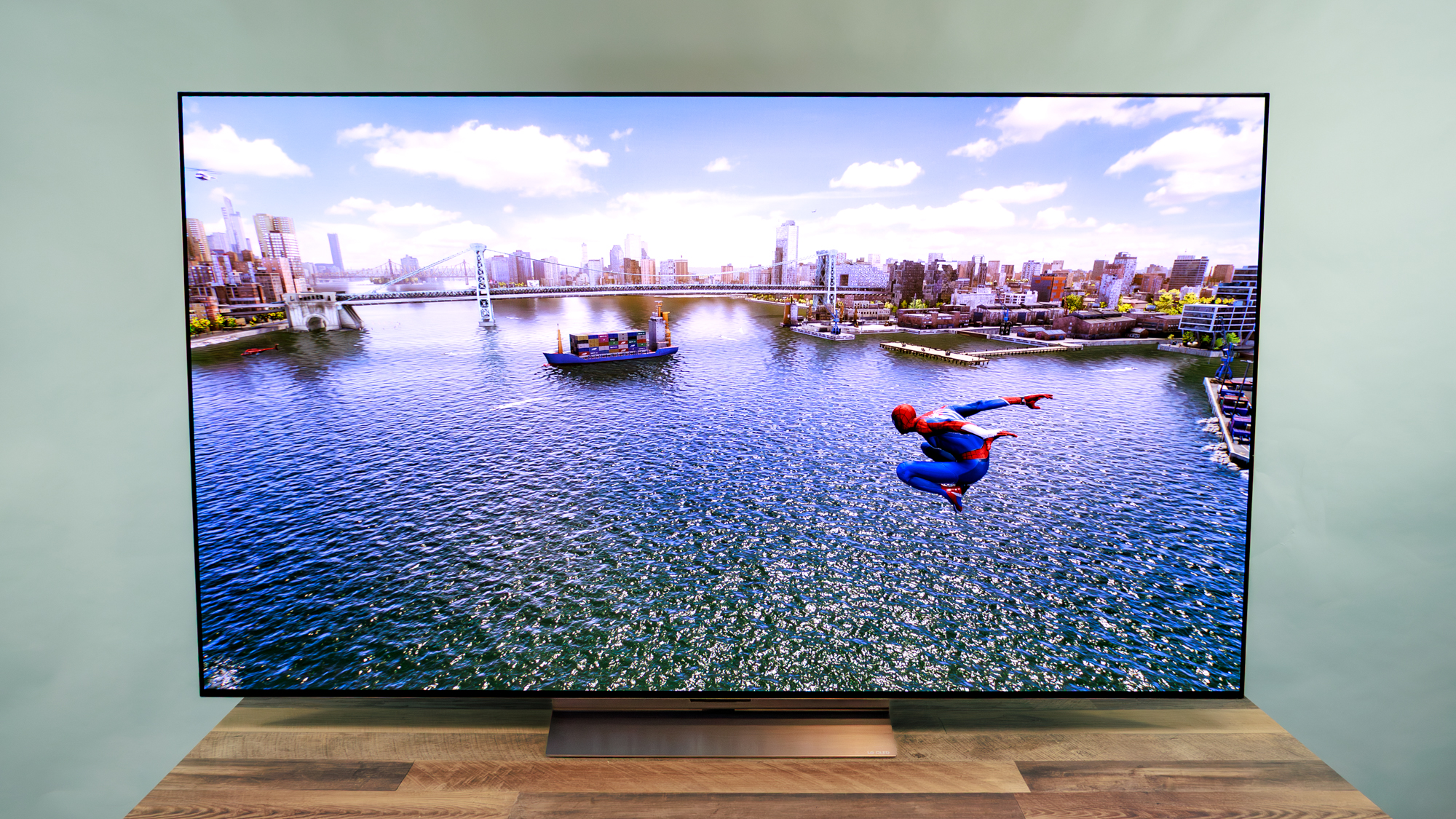
Of course, as you can see from the chart above, the B6 isn’t better than the C6 in every category — in fact, in most categories the C6 is still the better overall TV.
As our tests prove out, the C6 has a wider color gamut and it’s brighter across the board.
As our tests prove out, the C6 has a wider color gamut and it’s brighter across the board.
That’s going to matter for folks who don’t have a perfectly light-controlled dark room. The added brightness will also make specular highlights (like bursts of gunfire or explosions) pop a lot more compared to the dimmer B6 model.
I’d hazard a guess and say that the C6 is going to do a better job upscaling video from HD to 4K and dealing with color banding, too, thanks to its higher-end processor.
Last but not least, the 65-inch LG C6 OLED is currently on sale for the same price as the 65-inch B6 OLED. That's reason enough to go for the more advanced C6 model.
Give it a few months and the LG B6 OLED will settle into a lower price (usually that's around Black Friday and Cyber Monday).
If 65 inches is too much screen, keep an eye out for the inevitable 55-inch B6 that will likely go on sale later this year and, if last year's B5 OLED is any indication, an even-smaller, Best Buy exclusive 48-inch model . In previous years, these OLED TVs were on sale for under $700, so they're an incredible value.