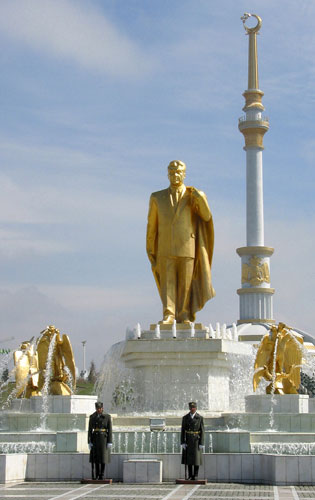
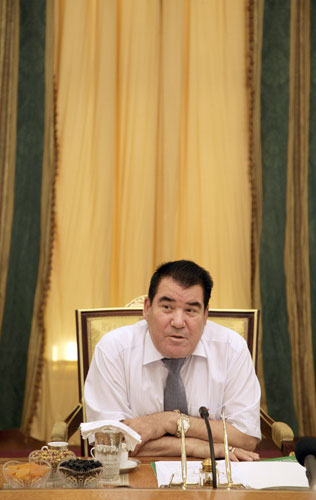
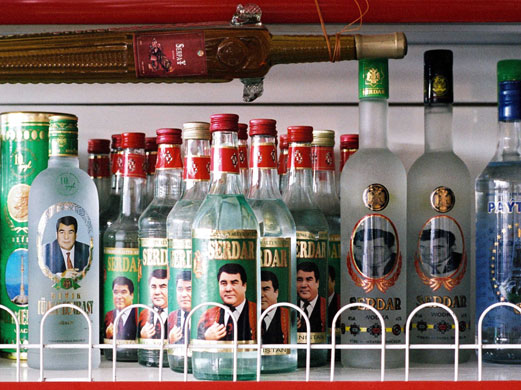
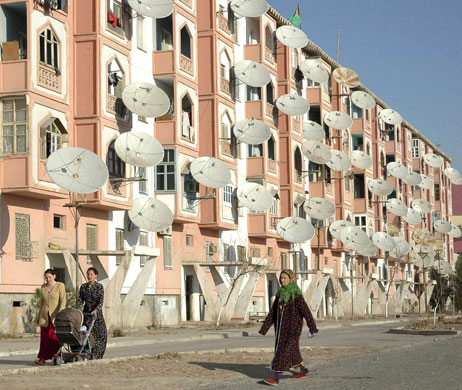
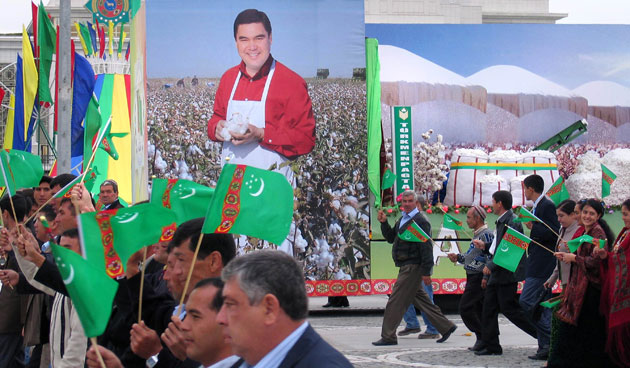
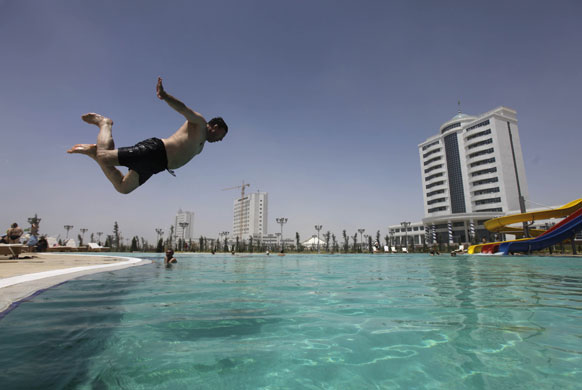
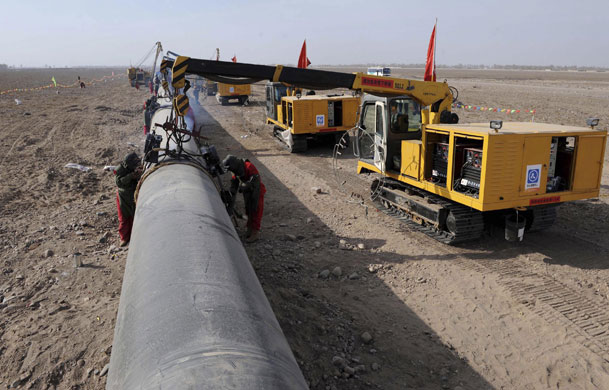
A statue of Turkmenistan's eccentric leader and President, Saparmurat Niyazov, is guarded by soldiers at the country's independence memorial in Ashgabat, Turkmenistan, in 2003. Niyazov ruled the gas-rich nation for 20 years and developed an elaborate personality cult. Golden statues and busts of the president are scattered across the country, and his portrait was on every bank note and coinPhotograph: Burt Herman/APTurkmenistan's President Saparmurat Niyazov also known as Turkmenbashi sitting at his desk shortly before his death in 2006Photograph: Peer Grimm/dpa/CorbisVodka bottles adorned with images of the late Turkmen President Saparmurat Niyazov, Ashgabat, Turkmenistan. His face was also on the country's currencyPhotograph: Sipa Press/Rex Features
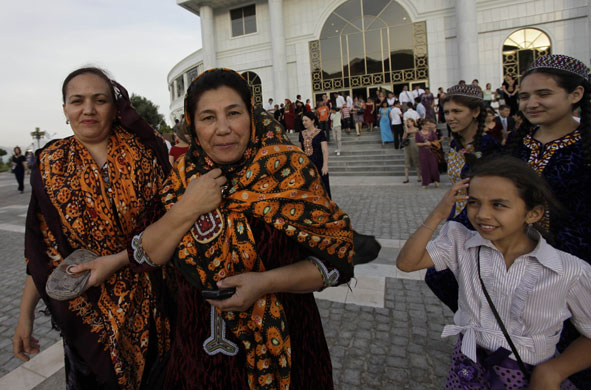
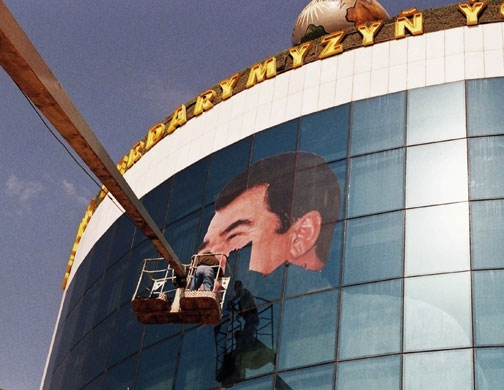
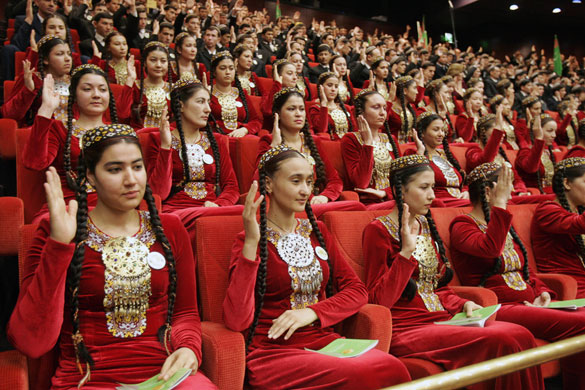
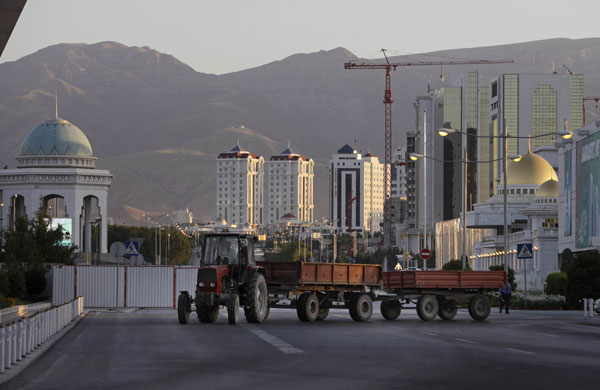
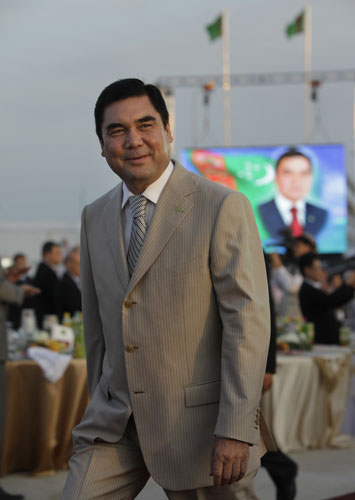
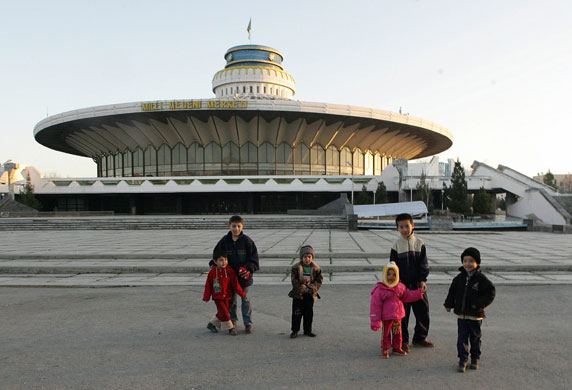
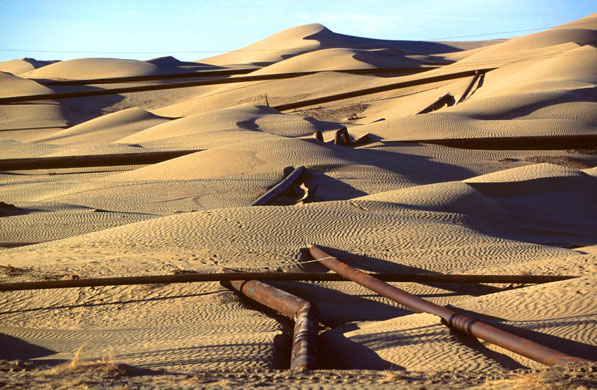
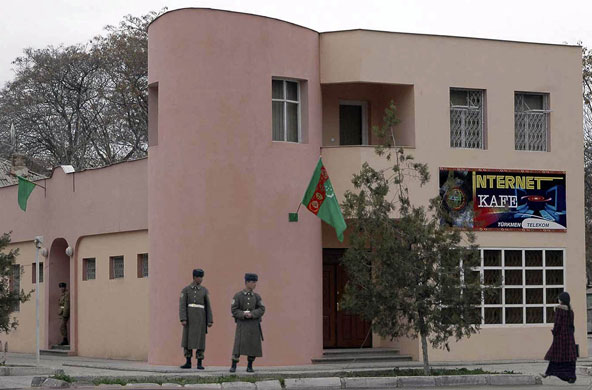
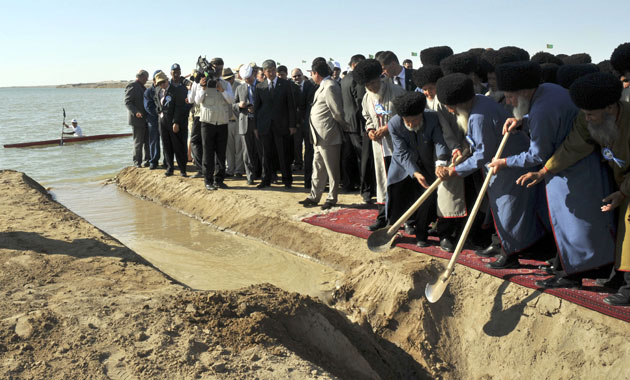
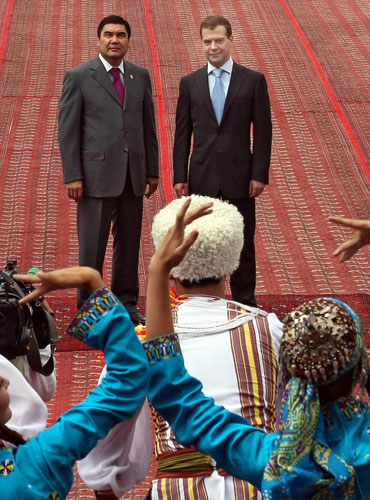
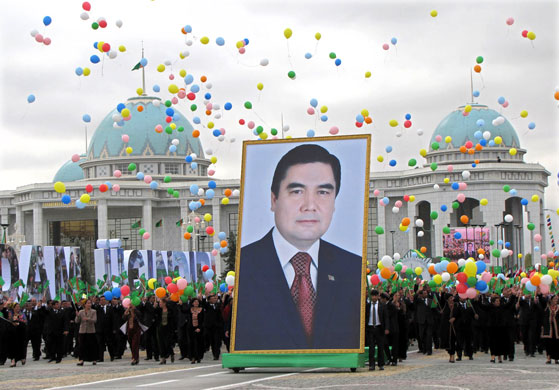
Women walk out from a concert hall in the Caspian Sea port city of Turkmenbashi in Turkmenistan. The late president Saparmurat Niyazov had named the city after his self-appointed title, meaning 'Father of all Turkmen'Photograph: Alexander Zemlianichenko/APA worker removes a portrait of the late President Saparmurat Niyazov from a building in Ashgabat in February 2006. Niyazov, who fostered an extravagant personality cult, crushed all dissent and had himself elected president for life. He died aged 66 of a heart attack Photograph: ReutersDelegates of the People's Council, the Halk Maslakhaty, approve of the presidency of Turkmenistan's new leader Gurbanguli Berdymukhamedov during his inauguration in Ashgabat in February 2007. Berdymukhamedov became gas-rich Turkmenistan's new president, pledging to follow a path set by late authoritarian leader Saparmurat Niyazov and respect existing energy contractsPhotograph: Gleb Garanich/ ReutersA tractor drives through central Ashgabat, Turkmenistan's capital. Little of the country's wealth has made it's way to the Turkmen people, who make an average £120 to £220 a monthPhotograph: Alexander Zemlianichenko/APPresident Gurbanguli Berdymukhamedov at the opening ceremony for a new resort on the Caspian Sea coast near the port city of Turkmenbashi, TurkmenistanPhotograph: Alexander Zemlianichenko/APChildren stand in front of a governmental building in Ashgabat. Turkmenistan's new President Gurbanguly Berdymukhamedov moved to fulfil reform promises made since the death of his dictatorial predecessor, including repair of the education systemPhotograph: Mustafa Ozer/AFPA gas pipeline, uncovered in places because of wind erosion, in the desert near Gumdag, Turkmenistan. The country holds the world's fourth largest gas reserves, according to the BP Statistical ReviewPhotograph: Reza/Getty ImagesTurkmen servicemen stand guard in front of the first internet cafe in Ashgabat in February 2007. Turkmenistan's first internet cafes opened in the capital as the new president of the tightly controlled country declared that he wants to extend schooling, improve healthcare and let Turkmens access the internetPhotograph: Reuters/ReutersPresident Gurbanguly Berdymukhamedov, centre, watches elders digging a breach to allow the flow of water from a tributary canal during an opening ceremony for the man-made Golden Age Lake in the naturally-occurring Karashor depression in northern Turkmenistan, July 2009. Turkmenistan has begun channeling water into a man-made lake in the heart of a barren desert, a Soviet-style engineering feat that some experts fear could cause an environmental catastrophePhotograph: APWomen walk by a block of flats with satellite TV dishes in the provincial Turkmen city of Turkmenabat. Despite the presence of modern technology, internet use is heavily regulated in the country and some cultural pursuits, such as ballet, are banned Photograph: ReutersResidents walk past a poster of Turkmen President Gurbanguly Berdymukhamedov during an Independence Day parade in central Ashgabat in October 2008. The country was celebrating the 17th anniversary of its independence from the Soviet UnionPhotograph: AFPA man dives at a new resort on the Caspian Sea coast near the port city of Turkmenbashi, TurkmenistanPhotograph: Alexander Zemlianichenko/APWorkers weld pipes at the construction site of the second project of the west-to-east natural gas transmission pipeline in Fengle Town of Wuwei City, northwest China's Gansu Province, in March 2008. The 9,102 km pipeline, which will carry natural gas from Turkmenistan and Uygur region to central and west China, is designed with a gas transmission capacity of 30 billion cubic meters annually. The total investment on the project is 142.2 billion yuan (about US$20 bn)Photograph: Xinhua News Agency/APRussian President Dmitry Medvedev, right, and his Turkmen counterpart Gurbanguly Berdymukhamedov attend the opening of the Russian trucks plant KamAZ training and service centre in Ashgabat in July 2008Photograph: Dmitry Astakhov/AFPPeople carry a picture of President Gurbanguly Berdymukhamedov to mark Turkmenistan's Independence Day in Ashgabat on 27 October 2009. Turkmenistan is important to world energy markets because it contains the world's third largest reserves of natural gas, with estimates of the country's total gas resource base ranging as high as 535 trillion cubic feetPhotograph: AFP/Getty Images
Sign up to read this article
Read news from 100’s of titles, curated specifically for you.