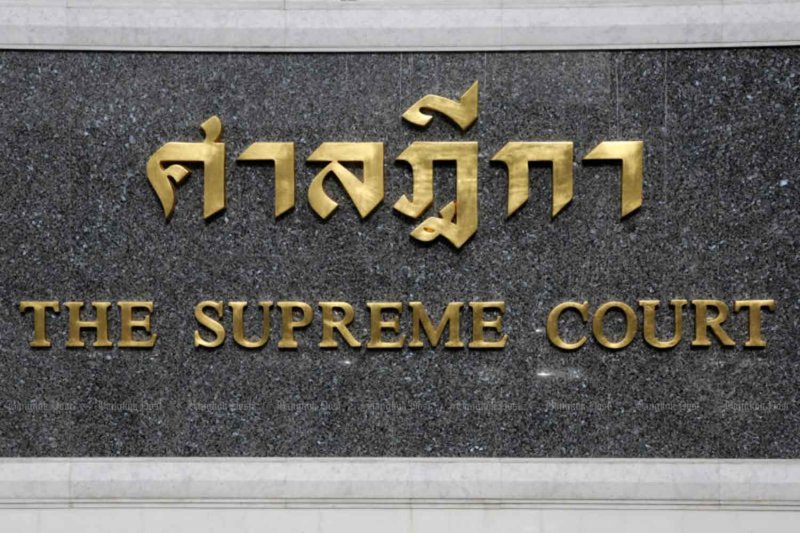
The Supreme Court president has issued new guidelines aimed at screening bad-faith criminal lawsuits and preventing the judicial process from being misused to intimidate citizens or limit freedom of expression.
Adisak Tantiwong signed the recommendations, titled the 2026 Guidelines on Bad-Faith Criminal Litigation, to provide courts with a clearer framework for examining whether criminal complaints are filed dishonestly or with abusive intent. The Office of the Judiciary said the recommendations will be published in the Royal Gazette.
The move follows growing concern over the use of strategic lawsuits against public participation (Slapp), which critics say have been used to silence criticism, discourage civic engagement and burden defendants with lengthy legal battles.
Research cited by legal advocates found that at least 109 cases with Slapp characteristics were filed in Thailand between 1997 and 2022. Most were linked to business disputes and human rights issues, while more than 90% were criminal cases -- particularly criminal defamation -- exposing defendants to both legal penalties and heavy litigation costs.
The Supreme Court's recommendations set out indicators for identifying cases that may amount to abusive litigation, including lawsuits intended to harass, threaten, or impose an excessive burden on defendants, or those filed to pressure individuals into acting or refraining from acting for improper benefit.
Courts are also advised to scrutinise complaints involving false allegations, distorted facts or the concealment of material information from the court.
Other warning signs include filing cases in courts far from a defendant's home or workplace without clear justification, bringing multiple lawsuits arising from the same incident, or targeting individuals exercising lawful rights or speaking in the public interest -- such as on human rights, environmental protection, labour rights, consumer protection or alleged corruption.
Under Section 161/1 of the Criminal Procedure Code, courts already have the authority to dismiss complaints found to be filed in bad faith.
The new guidelines are intended to strengthen the use of that mechanism by giving judges clearer criteria at the complaint-review stage or during preliminary hearings. Courts may also assign judicial officers to help gather facts and evidence to support inquiries, aimed at improving efficiency and ensuring a more comprehensive review.