The prestige of any music competition depends entirely on the calibre of the performers who walk away with the prizes. If a competition is lucky enough to come up with an outstanding winner in its early years, its reputation is secured – the Leeds Piano competition had that good fortune when Radu Lupu came through in 1969 and Murray Perahia won three years later. In 1975, Mitsuko Uchida came second and András Schiff placed third.
Like Leeds, the BBC Cardiff Singer of the World has sometimes found it hard to replicate the success and high profile it enjoyed in its early days. It struck straightaway, when the winner of the first competition, in 1983, was a 22-year-old Finnish soprano named Karita Mattila. Her demure appearance in the final performance, singing Weber, may seem worlds away from the larger-than-life persona she projects on stage and in concert nowadays, but that success was the launchpad for Mattila’s steady rise through the ranks of international diva-dom.
The competition didn’t follow that success up immediately. Slick buffo baritone David Malis sang Rossini and won in 1985 and if, two years later, the charming lyric soprano Valeria Esposito who came first singing Puccini’s La Rondine has hit the heights since, neither she nor Malis have made international careers for themselves the way that winners of such a prestigious competition are assumed to do.
The 1989 competition is remembered – particularly in Wales – for the singer who didn’t win first prize: Bryn Terfel took the then newly created Song prize, while the winner of the overall competition was Dmitri Hvorostovsky, who would go on to become another great baritone.
Head to heads between singers of that calibre, however, are the exception rather than the rule. Since that battle of the baritones, only a couple winners of the main prize have established themselves in the highest echelons. Katarina Karnéus’s beautifully composed performance of Um Mitternacht from Mahler’s Rückert Lieder in 1995 must have been a refreshing change from the rich diet of showy operatic numbers the final usually serves up; and two years later, Anja Harteros showed, with Verdi’s La Traviata, the risk-taking bravura and sense of drama that now makes her stage performances so compelling.
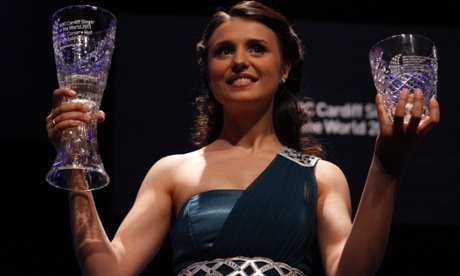
Other singers appear to have vanished, at least in the UK, since their Cardiff successes. We’ve heard nothing of the Chinese mezzo Guang Yang, for instance, since she won in 1997, while the winner of the first prize in 2011, Moldovan soprano Valentina Naforniță, has been seen little outside eastern Europe since (although Scottish audiences can hear a recital at this year’s Edinburgh international festival).
But then, with its mix of opera and orchestral songs, the Cardiff final is bound to be an awkward measure of ability, neither one thing nor the other. It’s a different challenge to sing an isolated aria in a concert hall than it is to play the character convincingly, and not all performers, however beautiful their voices, can do the latter successfully. The song prize may be a more accurate measure of a singer’s prowess in at least one defined area of the repertoire. But there are outliers: Christopher Maltman, who won that award in 1997, has subsequently proved what a fine opera singer and a great recitalist he is.
But in the end even winning such a high-profile competition as BBC Cardiff Singer offers no guarantees. It might open a few doors to a successful career but what the individual artists makes of the opportunity is entirely up to them. One thing no competition can do is measure application or the determination to succeed; only a few years in the profession will test that.
- The Final of Cardiff Singer of the World is broadcast live on BBC4 and Radio 3 from 7.30pm on Sunday 21 June. Previous rounds are available to catch up on iPlayer.