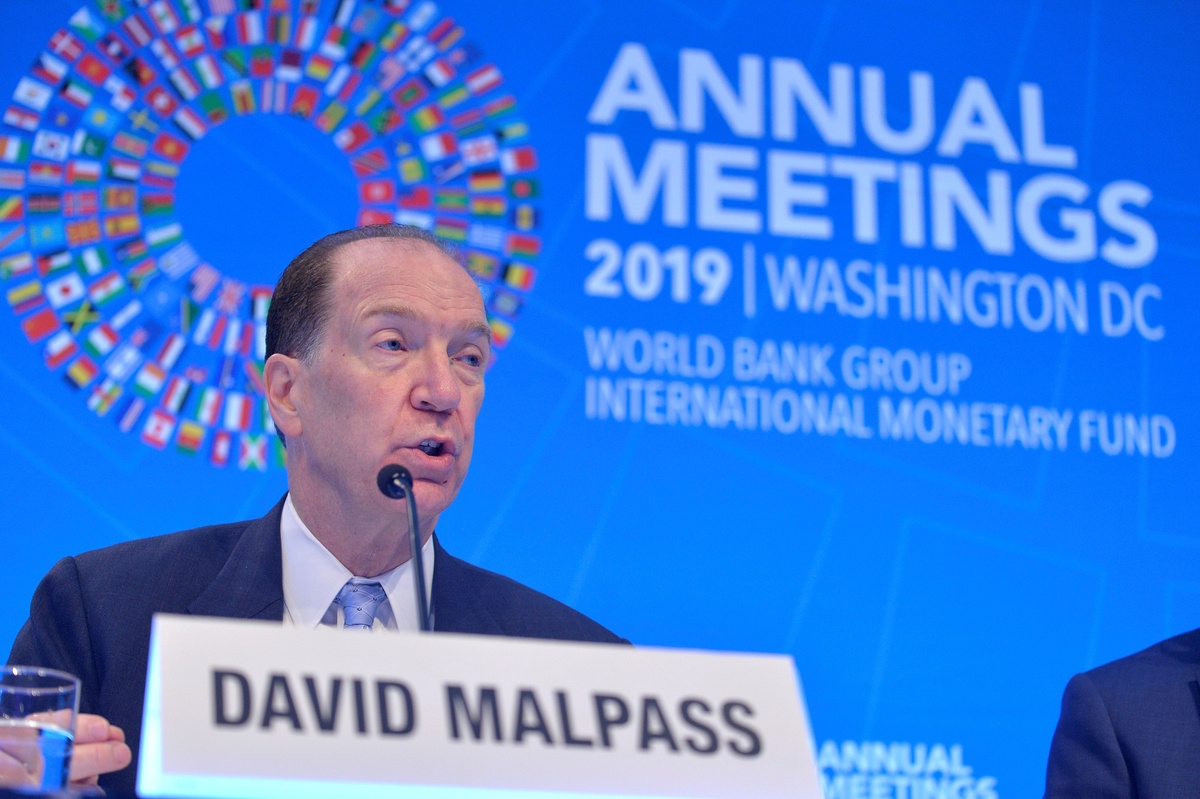
World Bank President David Malpass on Monday urged the world's richest countries to push harder to ensure private sector participation in sovereign debt relief efforts for low-income countries, many of which are coping with record debt levels.
Malpass said the coronavirus pandemic had exacerbated the record debt burdens already faced by many countries before the outbreak, and said urgent action was needed to free up resources for low-income countries to spend on health, education and nutrition, as well as climate action.
"History tells us that countries with no way out of overhanging burdens of debt don’t grow and don’t achieve lasting reductions in poverty," he told the London School of Economics in an online speech, underscoring the need for greater private sector participation.
China, the world's largest creditor, and other Group of 20 major economies last year offered the 70 poorest countries a freeze in debt service payments, with some 43 countries participating thus far and deferring $5.7 billion in payments.
Malpass said further savings of up to $7.3 billion expected by the end of June, but the relief effort had fallen short of expectations because large non-Paris Club bilateral creditors had participated only partially, and bondholders and other private creditors had failed to join at all.
"G20 countries need to instruct and create incentives for all their public bilateral creditors to participate in debt relief efforts, including national policy banks," Malpass said. "They also need to forcefully encourage the private creditors under their jurisdiction to participate fully in sovereign debt relief efforts for low-income countries."
G7 advanced economies should also consider changing their laws to include immunity from attachment by commercial creditors who refuse to take part in debt treatments under the G20 common framework for debt restructuring agreed last year, he said.
Malpass reiterated his call for the G20 Debt Service Suspension Initiative to be extended through the end of the year, but said interest-rate reductions and extended maturities could play a big role in lowering countries' debt load. Transparency would be essential, he said.
"The private sector also needs to accept corporate responsibility – whether that’s applying robust environmental and social standards, paying taxes, or playing its part in debt resolution," he said.
(Reporting by Andrea Shalal; editing by Jonathan Oatis)







.jpg?w=600)