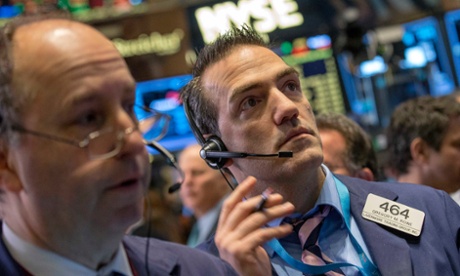
Leading shares slipped back on increased fears about the outlook for Greece, as well as a slowdown in US growth in the final quarter of the year.
But they still managed to record their biggest monthly rise since February 2014, up 2.79% since the turn of the year despite the volatility caused by the Greek election and sporadic worries about the strength of the global recovery, with oil prices continuing to hit new lows. Investors were also unsettled by the prospect of a US interest rate rise later this year, but all these concerns were partly offset by the European Central Bank’s decision to finally unveil a quantitative easing programme.
The week and the month ended on a weak note, however, with the FTSE 100 finishing the day down 61.20 points at 6749.40.
Tensions between Greece and the rest of the eurozone continued as the new government continued its meetings with EU officials, this time Jeroen Dijsselbloem, head of the eurozone finance ministers’ group.
With the US economy growing by 2.6% in the fourth quarter, down from 5% in the previous three months, the Dow Jones Industrial Average was down around 130 points by the time London closed. Chris Beauchamp, market analyst at IG, said:
The FTSE 100 ends the month noticeably higher, making it a good start to the year for this index. This has been done despite a continuation of the slump in oil company share prices, as well as more losses for the beleaguered mining sector. The road however looks grim – Greece is increasingly behaving in a manner that seems calculated to infuriate its eurozone partners, while US growth, as underlined by today’s figures, is entering a softer patch. January may have seen the high-water mark for the index for the time being, especially since it finds itself yet again unable to break through 6900.
International Airlines Group fell 19.5p to 544.5p as Qatar bought a 9.99% stake. Qatar is not allowed to mount a full bid, but such a sizeable stake may deter other predators, said analysts.
Supermarkets came under pressure after new powers to penalise them if they mistreat suppliers. Sainsbury fell 8.4p to 255.4p, Morrisons lost 5p to 179.9p and Tesco slipped 2.25p to 224.75p.
BT lost 11.2p to 417.9p as it unveiled a £7bn pensions deficit alongside its results.
But a rise in gold and silver prices lifted Mexican precious metals miner Fresnillo 36.5p to 899p and Randgold Resources 265p to £56.85.
Imperial Tobacco fell 36p to £31.24 despite a buy note from UBS. Analyst Alan Erskine said:
Our central case assumption is that the Reynolds proposed acquisition of Lorillard is approved and completes in the second quarter of 2015 which will trigger Imperial’s acquisition of several brands and assets from Reynolds. A combination of; greater leverage, cheap debt (a coupon of 2.35%) and tax shield means this acquisition should be very accretive to Imperial’s cash flow. An Ebita contribution of $800m would on a pro forma basis increase Imperial’s equity free cash flow yield to almost 7% (versus the consumer staples sector average of 4%) and underpin management’s medium target of 10% per annum (sterling) dividend growth.
Among the mid-caps troubled oil producer Afren added 1.1p to 5.3p as potential predator Seplat of Nigeria was given until 13 February to make up its mind whether to bid or not. The initial deadline was 5pm on Friday.