Flushing sanitary products down the toilet can be very detrimental for the marine environment, new research has claimed.
The majority of period products such as tampons and sanitary pads are predominantly made from plastic, which makes it harder for them to be broken down when they enter the sewage system.
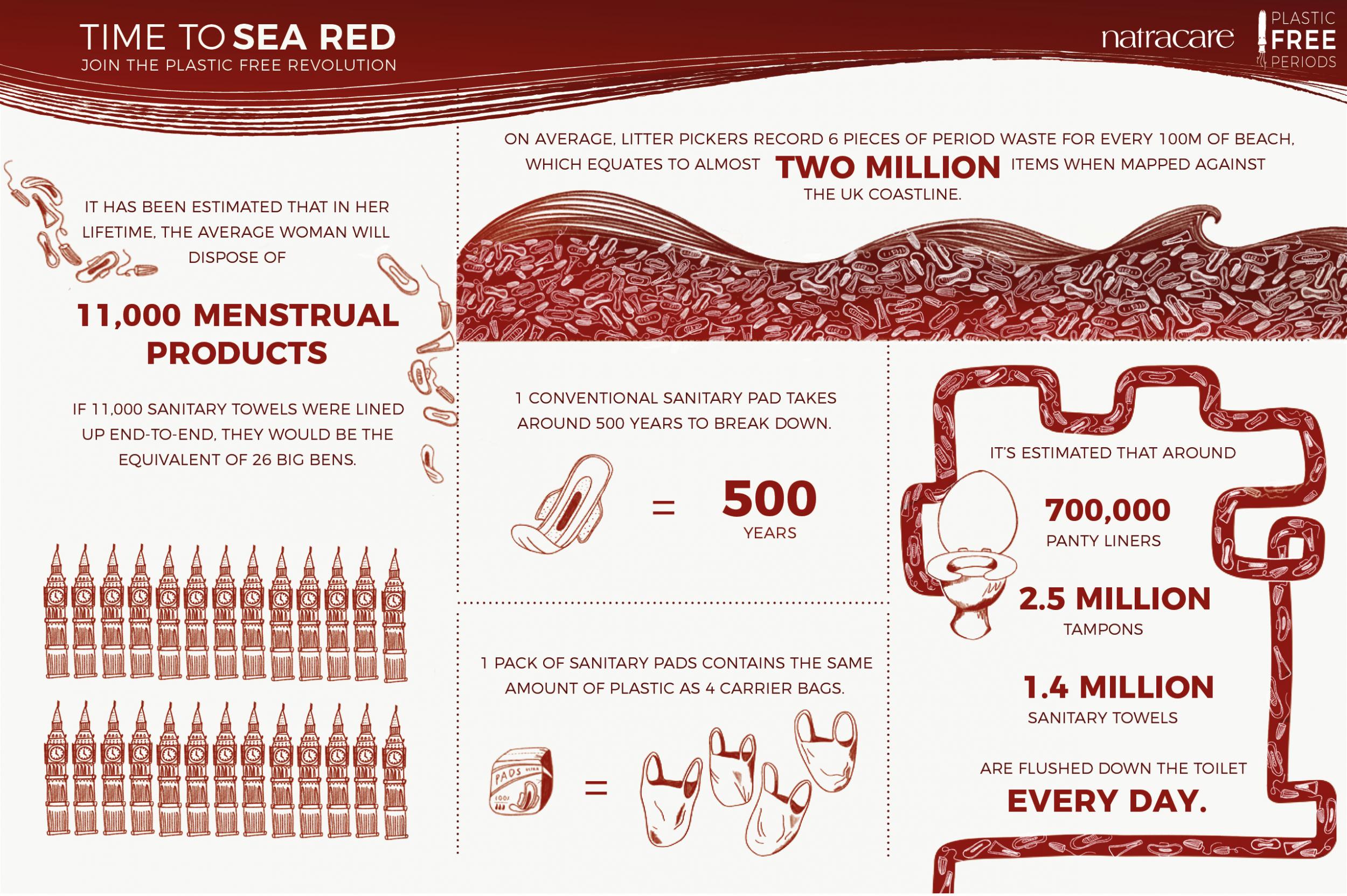
Approximately 700,000 panty liners, 2.5 million tampons and 1.4 million sanitary towels are flushed down the toilet in the UK every single day, according to figures published in the Journal of the Institution of Environmental Sciences.
The Marine Conservation Society and Natracare, a plastic-free period brand, have teamed up to raise awareness about the negative impact of period waste for a campaign that coincides with Plastic Free July.
According to their research, one pack of sanitary pads can contain the equivalent quantity of plastic as four carrier bags. Moreover, one pad can take as long as 500 years to fully break down.
While numerous women may instinctively flush sanitary products down the toilet rather than put them in the bin, doing so is extremely ill-advised, as Rachel Dyson, head of the Anglian Water’s “Keep It Clear” programme explains.
“Many people are unaware that just like wipes, sanitary pads, tampons and tampon applicators should never be flushed,” she says.
Reducing period waste isn’t just a case of throwing used sanitary products in the bin rather than the toilet, but also seeking out alternative menstrual products that are plastic free.
“Thirty years of campaigning for and developing environmentally compatible menstrual products, has led to this perfect storm of actions to reduce plastic entering landfill and our oceans,” says Susie Hewson, founder and CEO of Natracare.
“By choosing plastic free, women have the power to help protect the environment and their own health.”
It’s been estimated that the average woman will dispose of 11,000 sanitary products in her lifetime. Furthermore, 8 per cent of all waste that enters water treatment works comes from period waste, as stated by Water UK.
Over the course of a decade, Marine Conservation Society litter pickers have collected more than 20,000 tampons, applicators and sanitary pads from UK beaches.
A “Plastic Period Protest” is taking place on the beach in Brighton on Sunday.
The aim of the “Sea-ing Red” protest is to raise awareness about the harmful impact that period waste is continuing to have on the UK’s marine environment.