Chancellor Angela Merkel's conservatives and Social Democrats (SPD) are pitted against the ecologist Greens in national elections in September.
Following are topics that arise from national energy transition goals and the planned implementation of the latest European Union policy packages aimed at reducing greenhouse gas emissions.
Separately, read utility leaders' demands from a new government.
EMISSIONS REDUCTION TARGETS
Conservatives and Social Democrats have introduced a target for the energy sector to cut emissions by at least 65% by 2030 compared to 1990, and aim to make the country nearly climate-neutral by 2045.
The Greens want 70% cuts and climate neutrality before 2045.
RENEWABLE EXPANSION
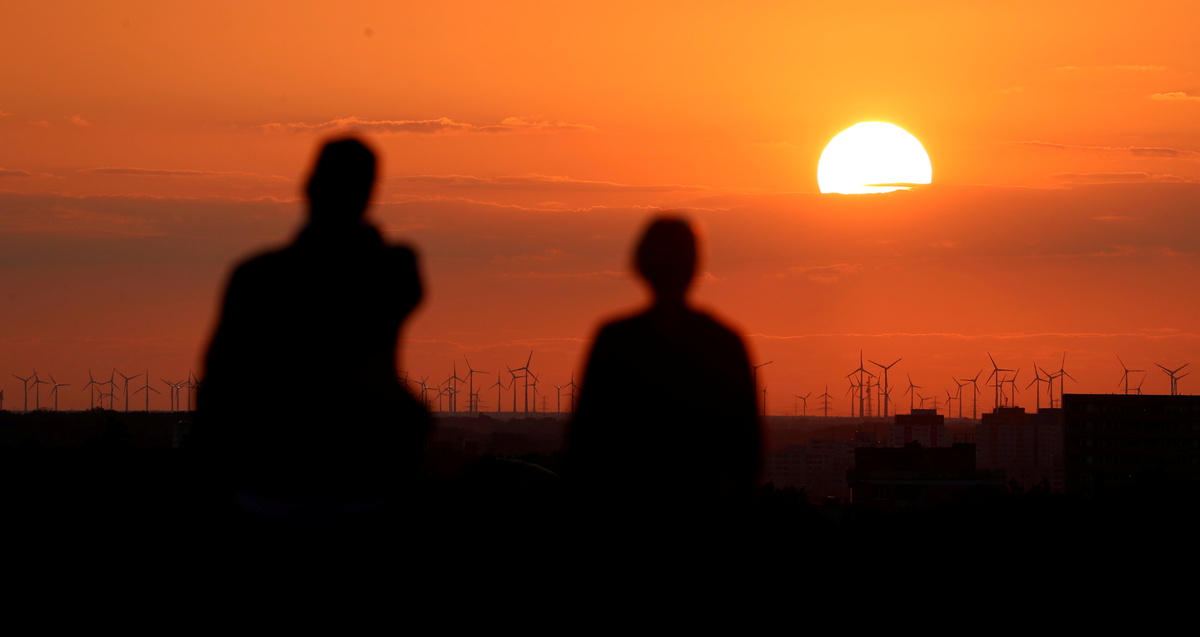
Wind power leads the expansion of renewable energy alongside solar power, biomass, hydroelectricity, geothermal energy and waste.
A government target for green energy to reach at least 65% of electricity output by 2030 would require 4,000 megawatts (MW) of additional wind capacity per year, according to a 2021 law.
Operators believe far more is necessary.
The Greens are most specific in their demands for higher annual expansion targets.
HYDROGEN
Germany wants to scale up "green" hydrogen, produced from renewable power through electrolysis. "Grey" hydrogen from fossil fuels is already a feedstock in many industry processes.
The Conservatives want green hydrogen to be used in hard-to-decarbonise industries and in energy, mobility, or heat provision.
The Greens prefer wider electrification, which they consider more efficient. They are also against transitional "blue" hydrogen derived from gas.
ENERGY PRICES
Germany has Europe's highest retail electricity prices because of costly support for carbon-free energy sources while industry enjoys some exemptions to maintain its competitiveness.
The Conservatives want to end a central contributing factor, the renewable energy surcharge (EEG), as soon as possible, and the SPD by 2025.
The Greens also want it reduced but say industry must pay more towards it, unless it demonstrates energy savings.
CO2 PRICES/MECHANISMS
A tax has been levied since Jan. 1 on heating and transport fuels.
The SPD wants to lessen its impact on low income households and is considering per-capita bonus payments, to which the Greens have committed, while planning to hike the tax rates faster than at present.
(Reporting by Markus Wacket, Tom Kaeckenhoff, Vera Eckert, editing by Barbara Lewis)