Evening summary
That’s all for tonight. Here’s a round up of all that’s happened in politics this evening:
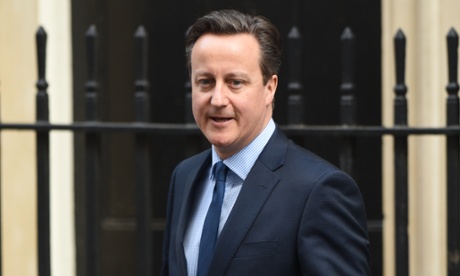
- News that David Cameron does not plan to stand for a third term if he is elected this May has dominated the front pages. In an interview with the BBC, he also named three possible successors.
There definitely comes a time where a fresh pair of eyes and fresh leadership would be good, and the Conservative Party has got some great people coming up: the Theresa Mays, and the George Osbornes, and the Boris Johnsons. You know, there’s plenty of talent there. I’m surrounded by very good people. The third term is not something I’m contemplating.
- Michael Gove appeared on Newsnight to explain why the prime minister made the admission. Gove said: “The prime minister has been asked a direct question and has given an honest answer.” He told interviewer Evan Davis “You are in a state of cognitive dissonance because you’ve found a politician answering a question directly.”
- Also this evening, MEP and general election candidate Janice Atkinson has been expelled from UKIP after a disciplinary hearing into reports that she requested a falsified receipt in order to claim money as official EU expenses.
As polling suggests that the general election will result in a hung parliament, my colleague Frances Perraudin reports that politicians elected in May will have until late summer to form a government before the money runs out.
According to Treasury documents, a Queen’s speech would need to be agreed by a date in late summer – thought to be 5 August – so parliament could vote to release more Treasury money for the government to spend. Politicians elected in May will have until late summer to form a government before the money runs out, according to Treasury documents published last month.
Despite saying spin belongs to a long-gone era, Gove sidesteps questions about when the PM would hand over power at the end of the next parliament.
Gove - 'people tire of manipulation and spin' .... But not answering on leadership election timetable when Cameron wants to go
— Laura Kuenssberg (@bbclaurak) March 23, 2015
Gove: 'PM was asked a direct question and has given an honest answer'
Gove says Cameron has “seen other leaders cling onto power for too long.”
“What is striking is that David Cameron has been honest today in a way previous prime ministers were not. He is a breath of fresh air.
Gove brushed off questions about why Cameron would want to draw attention to a potential leadership battle, saying: “You find bewildering the fact that the prime minister has been asked a direct question and has given an honest answer. You are in a state of cognitive dissonance because you’ve found a politician answering a question directly.”
He added that Campbell was partisan, with “a book to plug and a team to support.”
Updated
Newsnight is speaking to Tony Blair’s former press secretary, Alastair Campbell and chief whip, Michael Gove, about Cameron’s statement that he is ruling out the possibility of a third term if he is elected this May.
Campbell says that the admission is a “potential disaster” for the Conservatives. “He could easily have said I haven’t even won a second election, let alone a third”
But Gove says Cameron “when asked a direct question gave an honest answer that reflects the reality of fixed term parliaments.”
He said that the Campbell belongs to a different age of press management and that the public have tired of his “manicured approach to news management, people tire of the spin and dodging questions.”
Cameron’s announcement that he will not be running for a third term is dominating the front pages. Here’s the Times and the Mail:
Tuesday's Times front page: Cameron fires start gun on Tory leadership race #tomorrowspaperstoday #bbcpapers pic.twitter.com/1BgHuZ6R9I
— Nick Sutton (@suttonnick) March 23, 2015
Tuesday's Daily Mail front page: Cameron: I won't serve 3rd term #tomorrowspaperstoday #bbcpapers #GE2015 pic.twitter.com/ToLKsj0JXd
— Nick Sutton (@suttonnick) March 23, 2015
Ukip candidate Janice Atkinson has been expelled from the party after a disciplinary hearing into reports that she requested a falsified receipt in order to claim money as official EU expenses.
Updated
Both the Guardian and the Telegraph are leading their front pages with news that Cameron does not intend to stand for a third term if he is elected this May
Tuesday's Guardian front page: Cameron pledge: no third term for me #tomorrowspaperstoday #bbcpapers pic.twitter.com/utE1KdLLFG
— Nick Sutton (@suttonnick) March 23, 2015
Tuesday's Telegraph front page - Cameron: I won't go on and on #tomorrowspaperstoday #bbcpapers #GE2015 pic.twitter.com/nRwJCuCEr1
— Nick Sutton (@suttonnick) March 23, 2015
Evening Summary
That’s all from me for tonight. I’m passing the blog onto my colleague Rebecca Ratcliffe, who will be updating you for the next couple of hours.
- David Cameron has ruled out standing for a third term in an interview with the BBC and named three possible successors – Theresa May, George Osborne, and Boris Johnson.
There definitely comes a time where a fresh pair of eyes and fresh leadership would be good, and the Conservative Party has got some great people coming up: the Theresa Mays, and the George Osbornes, and the Boris Johnsons. You know, there’s plenty of talent there. I’m surrounded by very good people. The third term is not something I’m contemplating.
- Boris Johnson has refused to comment on being billed as a potential future Tory party leader. Asked by Sky News about Cameron’s comments, the London mayor said that the next Tory leader is probably “a babe unborn”.
- Labour’s general election strategist Douglas Alexander MP has criticised Cameron’s “arrogance” at looking inwards instead of focussing on the needs of working families.
- Conservative foreign minister Hugo Swire was secretely filmed by Channel 4’s Dispatches joking that benefit claimants can afford to donate £55,000 to his party’s election campaign as he entertained some of the wealthiest people in Britain.
- Cameron has told parliament that he will “be very clear” with Benjamin Netanyahu and that he supports a two-state solution to the Israel-Palestine conflict.
- Ed Miliband has warned that the Tories and SNP have formed an “unholy alliance” to ensure that David Cameron remains as prime minister after the general election.
- Jeremy Paxman has accused broadcasters of acting in a “pathetic high-handed manner” over the proposed TV leaders’ debates. He also said that his own “One-nation Tory” politics will not affect his ability to do his job of hosting the first TV leader election programme on Thursday.
Overall, not a great day for the Tories.
"Tory minister jokes about people on benefits at fundraiser". First Mr Amin, then Cam's blooper and now @HugoSwire scores a third own goal
— anne mcelvoy (@annemcelvoy) March 23, 2015
Theresa May has had to water down government proposals to tackle extremism after at least seven of her Conservative Cabinet colleagues raised concerns, the FT reports.
The home secretary gave a speech today detailing the measures a future Tory government would adopt to prevent extremism. She had originally intended to publish the official UK anti-extremism strategy before parliament was dissolved next Monday but had to drop publication after opposition from senior Tories and Liberal Democrats.
Updated
Jacob Rees-Mogg has commended Cameron’s “nobility”. In an interview on BBC news, the Conservative MP for North East Somerset said:
Cameron’s made it clear that he will serve a term, but I think it’s right that he should be allowed the right to decide when to go. It’s noble that a leader is willing to give up power, its very refreshing. The prime minister has said he’s got to job to do and he’ll do it, then he’s going to let someone else do it. He’s not in it for the power.
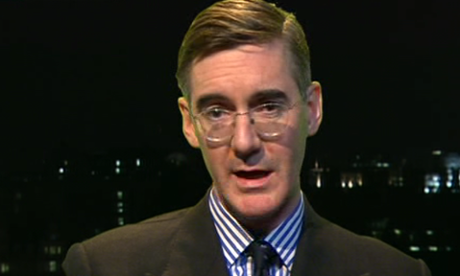
Rees-Mogg also said that he didn’t think Cameron’s announcement would make him a lame duck because, unlike the United States, “our executive is embedded in our legislature.” He added that the history of Tory leadership shows that it’s “not normally the favourite who gets it, it may be somebody we haven’t even thought of”, and cites Anthony Eden as an example.
When asked whether he could be a potential successor, Rees-Mogg said: “I can’t see [that] I would get the Queen’s mandate.”
Updated
The Daily Telegraph’s Christopher Hope reveals that not all Tories are ready to attack Cameron.
A Tory MP on Cameron's third term gaffe: "He is a very polite man and he didn't want to disappoint the questioner by giving a glib answer."
— Christopher Hope (@christopherhope) March 23, 2015
What’s wrong with our MPs? Channel 4 News asks in the first of a pre-election series looking at what’s wrong with our political system.
Well spotted.
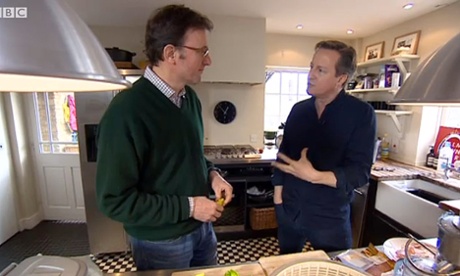
Just me or is that a "Calm Down Dear" sign/chopping board in David Cameron's Cotswolds kitchen? pic.twitter.com/czTyE6Zaw1
— Tina Daheley (@TinaDaheley) March 23, 2015
Boris Johnson refuses to comment on future Tory leadership
Boris Johnson has refused to comment on being billed as a potential future Tory party leader. Asked by Sky News about Cameron’s comments, the London mayor said that the next :
The crucial thing is that David Cameron is going to be serving for another five years as our prime minister and embedding the very considerable economic recovery we’re seeing.”
Watch the full interview below.
Updated
More on tonight’s Dispatches from the Press Association:
A former sleaze watchdog has raised concerns about the potential influence a wealthy Russian Conservative donor could have on the party and suggested the Tories’ glitzy fundraising ball should be more transparent.
Sir Alistair Graham also criticised Deputy Prime Minister Nick Clegg over his dealings with a stooge donor and suggested Labour set up talks over policy between a shadow minister and the entrepreneur “very quickly because he was a prospective donor”.
An email from a Lib Dem peer to Paul, our undercover reporter… #Dispatches How to Buy a Meeting with a Minister, 8pm. pic.twitter.com/E1ciz4SsnY
— Channel 4 Dispatches (@C4Dispatches) March 23, 2015
Was Cameron’s revelation a simple case of ruling out the impossible? The Sun’s Stig Abell thinks so.
I hope this starts a trend for ruling out things that were impossible anyway. I'm sadly saying no to playing guitar for Guns and Roses.
— Stig Abell (@StigAbell) March 23, 2015
And it isn’t the first musical reference of the day...
Smash Hits? Voters told Ashcroft survey Cameron= Bieber, Clegg = Simply Red, Farage =Johnny Rotten, Miliband = Wham! pic.twitter.com/UiWgdQwy9D
— Lucy Fisher (@LOS_Fisher) March 23, 2015
Matthew d’Ancona has written about Cameron’s decision to “confront his own shelf-life”, signalling the start of a bloody Tory leadership campaign.
Though Cameron has generally rated highly in opinion polls – and invariably scores better than Ed Miliband – the shine has evidently diminished, to the point where he has felt obliged to acknowledge his own eventual obsolescence explicitly as part of the Tories’ election offer: hello, I must be going.
Though Cameron is a passionate family man and will enjoy life after Downing Street and (if he makes it to 2020) 15 years at the helm of his fractious party, no prime minister likes to name the date after which “it will be time for new leadership”.
Mindful of an election in which humility may conceivably be rewarded, he has presented his cabinet as a team rather than a personality cult, and singled out Theresa May, George Osborne and – from outside ministerial ranks – Boris as “great people” with “plenty of talent”. Thereby, he has also signalled the start of an almighty leadership campaign that may last for five years. There will, to coin a phrase, be blood.

Updated
Revealed – Tory minister's "joke": benefit claimants can afford party donation
Our political correspondent Rajeev Syal has written about tonight’s Dispatches episode on party funding. Read the first few paragraphs of his story below:
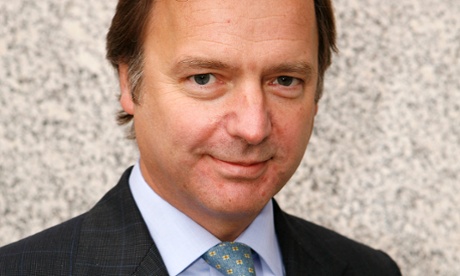
A Conservative foreign minister has joked that benefit claimants can afford to donate £55,000 to his party’s election campaign as he entertained some of the wealthiest people in Britain.
Hugo Swire was secretly recorded making the remarks by Channel 4’s Dispatches at the Conservative Black and White Fundraiser last month as part of a sting on senior politicians from all three main parties.
Before an audience that included hedge fund owners and industrialists, Swire led an auction at the Grosvenor House Hotel in Mayfair which raised millions of pounds for party candidates.
At one point, footage showed that the MP for East Devon attempted to encourage a bid by saying “ “£60,000 … Ian persuade him… He’s not on benefits is he? Well if he is, then he can afford it … £55,000?”
Updated
The Lib Dems have issued a statement.
.@LibDem response to Cameron's third term plans: pic.twitter.com/dz9HXiL7f9
— Lib Dem Press Office (@LibDemPress) March 23, 2015
Updated
Sources close to Cameron have said that her has not made any decision on whether he would fight an election in 2020. As the Press Association reports, a Downing Street Source said: “We will cross that bridge when we come to it. He is clear that we need to win the election in 2015 first.”
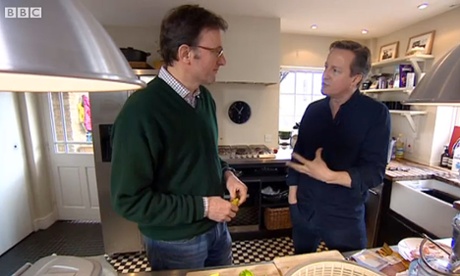
Is the kitchen interview a recipe for disaster?
Pro tip: don't do an interview in a kitchen if you're running for public office
— Alberto Nardelli (@AlbertoNardelli) March 23, 2015
You can watch the whole Cameron interview with the BBC here.
Updated
Just in...
Exclusive pic of Lynton Crosby hearing news about Cameron going off message and discussing what might happen in 2020 pic.twitter.com/gnzuGydYwG
— Tim Montgomerie ن (@montie) March 23, 2015
Meanwhile, Ed Miliband has warned that the Tories and SNP have formed an “unholy alliance” to ensure that David Cameron remains as prime minister after the general election.
As speculation about Cameron’s future continues, let’s take a look at some of his earlier announcements from today.
The Guardian’s Frances Perraudin reports on the prime minister telling parliament that he will “be very clear” with the Israeli prime minister and that he supports a two-state solution to the Israel-Palestine conflict.
She writes:
Speaking in the Commons, the prime minister said he would use a telephone call on Monday night to put pressure on the newly reelected Benjamin Netanyahu to commit to talks on a two-state solution.
The prime minister said:
“We must put pressure on both sides to make sure talks get going on a two-state solution,” he told MPs in parliament. “I’ll be talking to Prime Minister Netanyahu this evening, and I will be very clear that I support a two state solution.
“I think that’s in the long term interests not just to the Palestinians, but also to the Israelis, and Britain’s policy on that will not change.”
Binyamin Netanyahu’s rightwing Likud party surged to victory in last week’s national election in Israel, after he abandoned a prior commitment to an independent Palestinian state and warned the electorate that Arab citizens would vote “in droves”, apparently to attract last-minute support among conservatives.
Updated
For comparison, Thatcher’s pre-election approach from 1987 is laid bare over at the Margaret Thatcher Foundation website. Of particular note was Thatcher’s declaration that she “hopes to go on and on”.
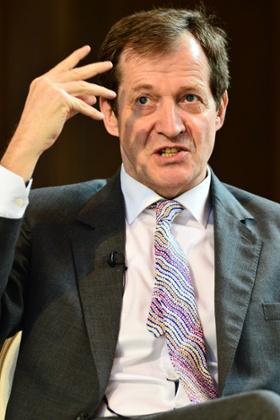
Alastair Campbell has told Channel 4 News’ Jon Snow that Cameron’s interview was “bonkers”.
He said:
I can’t for the life of me believe that this was planned. If you’re five weeks from an election and you’re the prime minister, you have to be devoting every single ounce of energy and time to explaining why you should win. This says to me that he’s given up. That was a losing mindset, that was somebody who’s thinking beyond the job. This is a bit of a disaster for the Tories.
He’s made this election campaign - which should be about the economy, jobs, and public services - about two psycho dramas about him. This will fill the airwaves and papers, and the public, which want a debate about the issues in this election, are taken for granted.
Jon Snow commended Cameron’s honest answer to a straightforward question, to which Campbell responded:
He’s very good at knowing how things are likely to play out. He’s not focused on winning this campaign. Thatcher would be looking at this and thinking why are these people not going all out to win.
I’ve just written a book about winning mindsets. If you’re going out to win something really important, you have to have a winning mindset.
Good plug, Alastair.
Updated
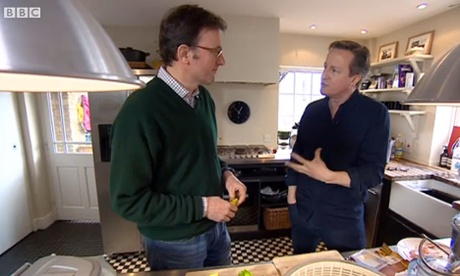
Here are more details of Cameron’s take on his own poshness, from the Press Association:
Mr Cameron played down suggestions that his comfortable background made it difficult for him to connect with voters.
He said:
Look, it hasn’t stopped me from becoming Prime Minister. I think I get asked this question a lot. I think at the end of the day, the British public see through all that. The judgment they are making is can you do the job or not.”
Labour “quite like making attacks on class and background and things like that”, said Mr Cameron.
But he added:
I think that’s completely out of date and switches people off. Their most successful leader in recent decades was a public school educated man from Islington.
He said:
I think it’s overdone. What matters is can you do the job? What does matter is if you’re completely out of touch and you lived some rarefied existence and you don’t listen to people and you couldn’t understand people’s problems then yes, that would be a problem.”
Updated
The New Stateman’s George Eaton says Cameron has failed to learn from Tony Blair’s mistakes:
In 2004, the Labour prime minister pledged not to serve a fourth term in the hope of securing a full third term. The results are well-known. By turning himself into a lame duck leader, he hastened the end of his premiership, making himself easy prey for rebellious MPs in the summer of 2006.
Not only has Cameron repeated that error, he has simultaneously launched the next Conservative leadership election by naming Theresa May, Boris Johnson and George Osborne (a sign that his great friend has not relinquished his ambitions) as possible successors. Tory MPs have been given an open invitation to oust him and install one of these alternatives after he inevitably disappoints them.
Updated
Labour responds to Cameron ruling out third term
Douglas Alexander MP, Labour’s general election strategist, has criticised Cameron’s arrogance, and adds that instead of looking inwards, the Government should be focussed on the needs of working families.
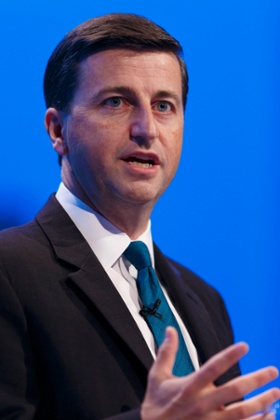
He said:
The Tories are taking the British public for granted.
It is typically arrogant of David Cameron to presume a third Tory term in 2020 before the British public have been given the chance to have their say in this election. In the UK it is for the British people and not the Prime Minister to decide who stays in power.
Instead of focusing on themselves, it is time we had a Government focussed on the needs of working families. Another term of this Government would mean working people worse off and the NHS under threat because of their extreme spending plans. We need a better plan for a better future. We need a Labour government.
Updated
The Spectator’s Alex Massie writes about Cameron’s “baffling declaration”.
No, I don’t know why David Cameron would amputate his authority before he runs for re-election either. But that’s what he has done today by ruling out running for a third term in office. What a bizarre thing to do, not least because no-one expected him to run again in 2020 even if, by some good fortune, he returns to Downing Street on May 8th.
But there is every difference between common knowledge inside the village and broadcasting that knowledge to the wider world. Authority and credibility are all-too-easily bandied-about but they have some importance not least because perceptions of these qualities have some considerable impact on the overall manner in which a politician is perceived. If you doubt this, look at Ed Miliband.
Updated
Our political correspondent Rowena Mason has filed a quick take on Cameron’s decision. She writes:
He appears to have made a calculation that voters do not want a prime minister who goes on for too long in the vein of Margaret Thatcher and Tony Blair. He has previously been rumoured to have struck a deal to hand over to another leader half way through a second term, if he were to get re-elected.
She also reports how during the interview, Cameron compares parliamentary terms to shredded wheat, stating:
Two are wonderful but three might just be too many.”
In the same interview Cameron’s wife Samantha says she thought her husband was: “definitely, in my mind, the best man for the job”.
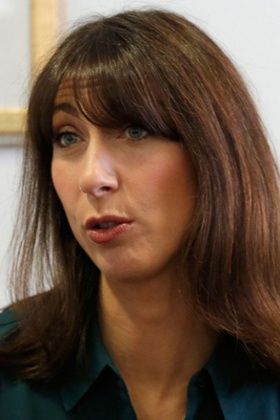
Adding:
I hope that me and the family help him to keep things in perspective, keep him grounded and help him pace himself over the next eight weeks.”
His children were also filmed eating a meal at the kitchen table and Cameron spoke of how his daughter, Nancy, has threatened to go on hunger strike unless his friend Jeremy Clarkson is reinstated as presenter of Top Gear.
Updated
Watch Cameron’s video interview below:
I’m standing for a full second term. I’m not saying all prime ministers necessarily definitely go mad, or even go mad at the same rate, but I feel I’ve got more to bring to this job. I think the job is half done – the economy’s turned round, the deficit’s half down, I want to finish the job. I didn’t just come to do this to deal with the debts and the mess, I want to go on with the education reforms and the welfare reforms.
There definitely comes a time when a fresh pair of eyes and a fresh leadership would be good, and the Conservative party has got some great people coming up - the Theresa Mays and the George Osbornes and the Boris Johnsons. There’s plenty of talent there.
Updated
Here are some other reactions to Cameron ruling out a third term:
How should Labour handle this Cameron self-imposed term limit? "Vote Dave, Get Boris"? No, that's too appealing isn't it...
— Charlie Beckett (@CharlieBeckett) March 23, 2015
David Cameron says "terms are like Shredded Wheat: two are wonderful but three too many" pic.twitter.com/JZd1KhV8LR
— Chris Gibson (@ChrisGibsonNews) March 23, 2015
Every hack in Westminster expected Cameron to stand down in 2018. Not one of them expected him to say so publicly.
— Tim Shipman (@ShippersUnbound) March 23, 2015
Guessing this won't help the whole "right to rule" thing...
— Michael Savage (@michaelsavage) March 23, 2015
So the man who didn't quite win his 1st election and hasn't yet won his 2nd election now says he won't contest a third? That where we are?
— Chris Ship (@chrisshipitv) March 23, 2015
Cameron follows in Blair's footsteps by putting time limit on his premiership. Difference is no anointed successor forcing Dave to do so.
— David Singleton (@singersz) March 23, 2015
What seems most extraordinary to me is he name checks his potential successors - May, Boris and Osborne
— Laura Kuenssberg (@bbclaurak) March 23, 2015
One version would be: vote for me, you won't have to put up with me forever. Statement of the obvious from @David_Cameron
— Adam Boulton (@adamboultonSKY) March 23, 2015
Both Tony Blair (in 2004) & Sir Alex Ferguson (in 2001) found putting a time limit on your term of office severely undermines your authority
— Michael Crick (@MichaelLCrick) March 23, 2015
Updated
Most Tory MPs are presumably surprised by Cameron’s latest revelation. The Times’ Sam Coates has received a text criticising the prime minister’s timing.
Tory MP texts me: "Well done Dave. What the Tory party needs right now is a leadership contest."
— Sam Coates Times (@SamCoatesTimes) March 23, 2015
Updated
James Lansdale, BBC deputy political editor, tells the BBC Six O’Clock news that Cameron’s admission has opened up a “Pandora’s box” and that he has done something risky by allowing the electorate to think about a time where he will no longer be in No 10. “That is the sound of collective jaws being picked up off the floor here in Westminster,” Lansdale says.
Updated
David Cameron rules out third term
The prime minister has given an interview to the BBC in which he rules out standing for a third term and names three possible successors - the home secretary, Theresa May; the chancellor, George Osborne; and the mayor of London, Boris Johnson.
Here is some copy from the interview from the Press Association:
In an interview with BBC News, Mr Cameron was directly asked if he would go for a third term if he remained PM after the election.
He replied: “No, I think I’m standing for a full second term.”
And he added: “I’m not saying all prime ministers necessarily definitely go bad, or even go bad at the same rate, but I feel I’ve got more to bring to this job, the job is half done, the economy’s turned round, the deficit is half down and I want to finish the job.
“I didn’t just come to do this to, you know, deal with the debts and the mess, I want to go on with the education reforms and the welfare reforms.
“There definitely comes a time where a fresh pair of eyes and fresh leadership would be good, and the Conservative arty has got some great people coming up: the Theresa Mays, and the George Osbornes, and the Boris Johnsons. You know, there’s plenty of talent there. I’m surrounded by very good people. The third term is not something I’m contemplating.”
David Cameron has told BBC he would not serve a third term as prime minister if the Conservatives remain in government after the election
— Laura Kuenssberg (@bbclaurak) March 23, 2015
Updated
Hello, Nadia here. I’ve taken over from Andrew for the evening. Stay tuned for all the latest political developments.
Jeremy Paxman has accused broadcasters of acting in a “pathetic high-handed” manner over the proposed TV leaders’ debates. He told Ad Week earlier today:
I thought Michael Grade was right in his criticism. He’s not alone in the industry thinking the broadcasters were high handed.
If you can’t get people to take part in one format, then you have to think of another format. That is one of the really big problems with television staging anything, once you get beyond the realm of reporting into production, you have to have willing participants.
Paxman was asked whether his own “One-nation Tory” politics affects his ability to do his job, to which he responded” “I hope not … I just don’t think it’s got anything to do with it.”
He also confirmed he was approached by the Conservatives to stand as a Tory MP in Kensington and Chelsea in west London, adding:
“I think it’s terribly hard to achieve impartiality. I think fairness is important, but I don’t know whether impartiality is every really truly achievable.
“The definition of impartiality is a terribly hard thing to arrive at. As long as people know where individuals are coming from, that’s probably adequate.”
Afternoon summary
-
Ed Balls, the shadow chancellor, has said that he has has reservations about the plans for HS2 beyond Crewe. Speaking on Sky’s Ask the Chancellors event, he said there was still a “debate” to be had on the route to be taken further northwards to Manchester, Leeds and beyond. Ministers should get on with the HS3 link between Liverpool and Hull “as soon as we can”, he said.
The chancellor says we should have HS3 after HS2 but why should we wait to connect across the north for 10, 20, 30 years? We should get on and do that as soon as we can, in my view.
Balls and George Osborne both took questions from a studio audience for half an hour, but the event did not generate any surprises and both men sailed through the questions quite easily.
-
David Cameron has told MPs that he has no regrets about intervening to topple the Libyan leader, Colonel Gaddafi. In a Commons statement on the EU summit, he admitted that some of those behind the recent attack in Tunisia are thought to have trained in Libya. He went on:
I know some people are looking at the situation and asking whether Britain, France and America were right to act to stop Colonel Gaddafi when we did. We should be clear the answer is yes. Gaddafi was on the brink of massacring his own people in Benghazi and we prevented what would have been a wide scale, brutal, murderous assault. It was the right thing to do and we should be very proud of the British servicemen and women who carried out this vital task.
-
Theresa May, the home secretary, has accused the last Labour Government of funding extremists and certain of its members of “embracing hate preachers”. Speaking in the Commons, in response to a question from Labour, she said:
When we came into government we found the last Labour government was funding extremist organisations, members of the Labour party were standing on platforms embracing extremist hate preachers. We take a very different view on this side of the House.
That’s all from me for today. But my colleague Nadia Khomami will be taking over now for the rest of the evening
Updated
Earlier Ed Miliband said the election amounted to a straight choice between a Labour government and a Conservative government. My colleague Alberto Nardelli has been fact checking whether that is really the case.
Earlier today Ed Miliband said that David Cameron should get rid of Afzal Amin as a candidate. Now that this has more or less happened (see 4.20pm), has Labour run out of things to say? Of course not. Here’s the shadow Cabinet Office minister, Jon Ashworth.
It’s right that Afzal Amin has gone but what on earth took so long? Given the serious allegations involved it was obvious that David Cameron should have expelled him immediately, instead he dithered until the candidate himself jumped before he was pushed.
This deeply damaging episode has exposed a Conservative campaign in chaos and a prime minister paralysed by indecision.
Updated
I missed David Cameron’s statement on the EU summit earlier. The highlight may well have been a rather good joke from Ed Miliband.

Responding to David Cameron, he said:
Were you disappointed just last week the president of the European Council, supposedly an ally of Britain, described the your position as mission impossible? Now, with the typical modesty we have come to expect from you, you then compared yourself to Tom Cruise. Though, to be fair, you did admit one crucial difference. You said ‘he’s a little bit smaller than me’. I have to say, I am not sure that’s the main difference that comes to mind. I would say one has a consistent and relatively coherent approach to international affairs and the other is the prime minister of Britain.
Updated
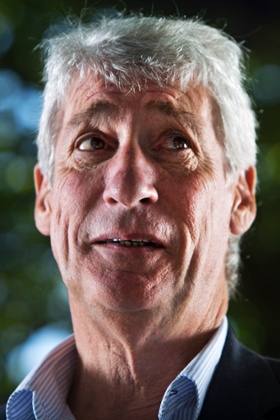
Jeremy Paxman, the former Newsnight presenter who is interviewing David Cameron and Ed Miliband on Thursday night, has been speaking at an advertising conference today. He doesn’t seem to rate the Labour leader’s TV skills highly, according to the Times’s Sam Coates.
Paxman: Doesn't know how election will end. But "I get the sense things running the Tories way"
— Sam Coates Times (@SamCoatesTimes) March 23, 2015
Paxman confirms he was tapped up as candidate for Kensington and Chelsea as well as Mayor of London
— Sam Coates Times (@SamCoatesTimes) March 23, 2015
By the Conservatives, that means.
Paxman, who presents election leaders' interviews on Thursday, speaking at Advertising Week conference
— Sam Coates Times (@SamCoatesTimes) March 23, 2015
Paxman on Clegg: "what a great man" he says, I think it's fair to say sarcastically.
— Sam Coates Times (@SamCoatesTimes) March 23, 2015
(Phone battery went dead). Paxman asked to name leaders whose TV performances he admired / rated. Names Hammond, Hague, Cameron.
— Sam Coates Times (@SamCoatesTimes) March 23, 2015
... When it's pointed out that he forgot Ed Miliband, Paxman replied: "How astute" (to notice).
— Sam Coates Times (@SamCoatesTimes) March 23, 2015
Updated
NHS should be government's top priority, says ComRes poll
ComRes has just released the results of a new poll for ITV which suggests people think the NHS should be the top priority for the government. Here’s an extract from the news release.
A brand new poll conducted by ComRes for ITV News reveals that managing the NHS should be the biggest priority for the government at the present time (53%). This is followed by controlling immigration (45%) and growing the economy for everyone in Britain (40%).
There’s a difference of opinion in age groups on the issue of controlling immigration – it’s selected as a top priority for the Government by three in five (60%) of those aged 55–64, compared to only a quarter (26%) of 18–24 year olds.
A quarter (26%) of the British public say that making the welfare system fairer should be one of the three biggest priorities, while a fifth say the same for providing adequate care for the elderly (21%), improving housing affordability (21%) or redefining Britain’s relationship with the EU (20%). Just one in ten Britons think that reducing crime and anti-social behaviour or improving the education system should be one of the biggest priorities for the Government (both 11%).
That’s good for Labour, obviously, because Labour has put the NHS at the centre of its election campaign.
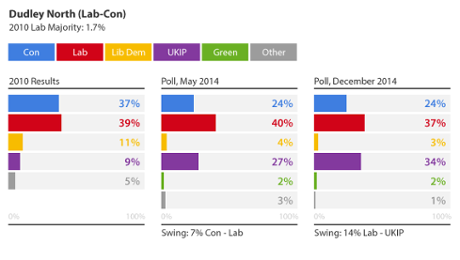
It is worth pointing out that Afzam Amin’s chances of winning Dudley North were slim anyway.
According to a poll Lord Ashcroft conducted in December last year, Labour is on course to hold the seat, but Ukip is not far behind. The Conservatives were trailing in third place.
Updated
And this is from the BBC’s Norman Smith.
Tory sources say Afzam Amin stood down "after a period of reflection"
— norman smith (@BBCNormanS) March 23, 2015
That’s a polite way of saying he was going to get pushed out anyway.
This, from David Mills, a former Labour adviser, is rather good.
I hope that, as he fired him, Shapps handed Afzal Amin a guide on how he could become rich enough to own a car with a fridge in it
— David Mills (@DavidMills73) March 23, 2015
The Conservatives have put out this statement about Afzal Amin.
Afzal Amin is resigning as Conservative candidate for Dudley North with immediate effect. Conservative chairman Grant Shapps has welcomed Mr Amin’s decision and thanked him for his work in the past.
That “in the past” in the statement is rather telling. In Conservative politics, Amin doesn’t seem to have a future.
To anyone who has followed this story, or who heard Amin on the Today programme this morning, this announcement will not come as a massive surprise.
Afzal Amin resigns as Conservative candidate
The Press Association has just snapped this.
Suspended Conservative candidate Afzal Amin has resigned as prospective parliamentary candidate for Dudley North with immediate effect, a party source said.
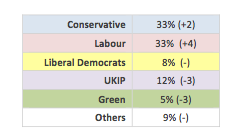
Ashcroft poll shows Labour and Conservatives tied on 33%
Lord Ashcroft’s latest poll is out. It shows Labour and the Conservatives neck and neck on 33%.
And that’s it. The Q&A is over.
Ed Balls is now meant to be answering questions on Facebook.
I’ll post a summary soon.
Balls on farming
Balls says he does not like the common agricultural policy because it costs consumers quite a lot.
He would like to see fewer farming subsidies, he says.
Updated
Balls on women and zero hours contracts
Q: What will you do to get more women into business?
Balls says he has two daughters, aged 15 and 10. It is important to start in schools. He wants girls to be encouraged to go into science and business. Apprenticeships should be offered to girls. And banks need to get better at lending to women starting their own firms.
Q: What are you going to do about zero hours contracts? They are offered predominantly to women, and they are being “violated”.
Balls says the use of zero hours contracts have gone to far.
Labour will not outlaw them. For professional people, they can make sense. But for too many people they are exploitative. If people are on ZHCs for six months, doing regular hours, they will get the chance to have a proper contract. And, after a year, firms will have to offer regular contracts.
People in business recognise that the use of ZHCs has gone too far, he says.
Q: Why do you want to slow the pace of deficit reduction?
Balls says he wants a balanced approach to defict reduction.
Q: How much would rasing the top rate of tax to 50% cost?
Balls says the gross cost of cutting that was £3bn.
Q: That is insignificant. When will you do the big stuff?
Balls says it is important to get the economy to grow. That could raise tax revenues by £15bn.
Balls on business rates
Q: What will you do to help firms pay business rates?
Balls says Labour would cancel the proposed cut in business rates for large companies. Instead, it would use the money to cut business rates by 1%, and then freeze them the following year, for small firms. That would be worth £470.
Q: Could you cut them?
Balls says, in the medium term, he would like an alternative solution. But he has not got any easy answers. He wants to take the government’s propose review seriously.
Balls on housing
Q: What would you do to promote house building?
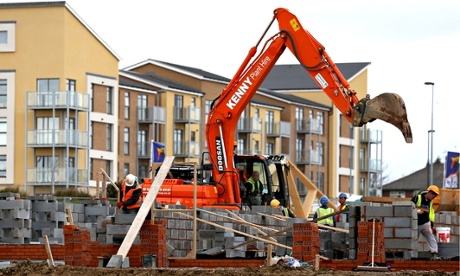
Balls says he wants to see more building on brown field land.
George Osborne wants to help people get a mortgage. That is fine by him, Balls says. But you also need to improve supply.
Labour did not build enough homes, he says.
Labour wants to build 200,000 more homes a year by the end of the decade.
He says it is frustrating seeing councils sell off homes.
But he wants people to buy homes. When he hears people in Labour oppose right to buy, he does not agree.
For some people, renting is a good choice. For others, it is a forced house.
If you could get house prices more in line with earnings, people would find it easier, he says.
Updated
Balls on Europe
Q: How do you asses the state of the economy now?
Balls say when he was in Washington recently, their main concern was about Britain being isolated in Europe.
Generally, Britain has some great companies, he says.
But walking away from Europe would be a big mistake, he says. Some of the big multinationals located here would move.
Balls says Europe could be better. But, to achieve change, Britain has to be in Europe, making its case.
Q: Are you saying, no matter how bad you got, you would stay in?
Balls says he wants to stay in. But he wants to win the argument.
His experience - and he has been involved in this for 20 years, he says - is that if you are serious, you can win the argument. But if people in the EU think you are not serious about membership, they will give up on you.
He reminds people that he was one of the people who helped stop Britain joining the euro.
Balls on the crash

Q: When will you apologise for the state Labour left the country in?
Balls says he has made an apology for the fact that bank regulation was too lax.
But it was not just the regulators fault. The bankers themselves did not know what they were doing.
But, when Lehmans went bust, it was not because of the British government spending money on nurses and schools.
And Osborne was complaining that regulation was too tight.
Updated
Balls on mansion tax
Q: What will you do to make the mansion tax work? It’s a bad idea.
Balls says he did not come into politics to levy a mansion tax. But our NHS is going backwards, and so the government needs the money.
Anyone who is a basic rate taxpayer will be able to defer payment.
He says “so many” of these homes are owned by international investors.
Q: Why not introduced tax relief for private health?
Balls says he cannot afford to spend tax relief money to enable people to go private. The last Labour government abolished it, he says.
He says the mansion tax will pay for more doctors and nurses.
Ed Balls questioned on Ask the Chancellors
Now Ed Balls is taking questions.
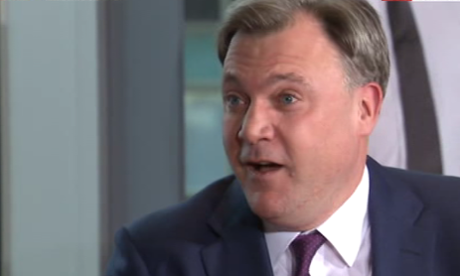
Q: Should the UK be investing in HS2 when broadband is so poor?
We need both, says Balls. He says we need HS2, but we must face the broadband challenge too. On HS2 Balls says Labour is supporting the legislation for the first phase. There is a debate on the second phase.
He has said there is no blank cheque.
Phase two is all about extending north. But he says he thinks there is a case for using it to improve east to west links, from Hull to Liverpool.
Broadband can be extended before HS2 comes on stream, he says.
Updated
Summary
My colleague Dan Sabbagh has sent me the first field notes from Britain Thinks on Glasgow East as published on their site.
By way of summary, it’s interesting to see how far Labour has collapsed in the minds of what were once its core voters.
When imagining the Labour Party as a person, our panelists imagined them living in an area of mixed affluence (wrongly thinking themselves more popular than the SNP), offering ‘poncey food’ at Come Dine With Me occasions and working as an NHS administrator (“one of the ones telling people what to do and making an arse out of it”). The soundtrack to their life was ‘Changing Man’ by Paul Weller.
The depth of alienation from national politics and Westminster:
In particular there was a strong and widely endorsed belief that English politicians, businesses and the media conspired to ensure that the Scottish people were frightened into voting to maintain the union.
And you can see the feelings about the SNP here:
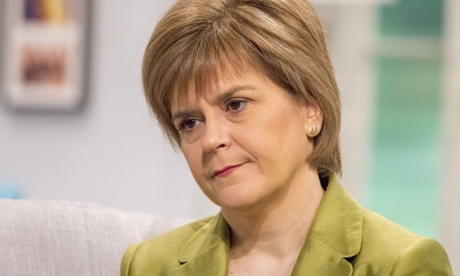
Sturgeon & Salmond were the only political figures who generated any admiration among our panel. Where other leaders were seen as dishonest and lacking in understanding of local people and issues, Sturgeon and Salmond were seen as honest, brave and ‘Scottish’. “With [Sturgeon] being young and female – it’s a change from the dreary old guys in the suits, isn’t it?”
There was only one residual question - whether some would still vote Labour to keep the Tories out:
A significant minority in the group, though, acknowledge that, come the election, they may opt to vote Labour as the surest way to avoid another Conservative government.
Updated
Osborne on Ask the Chancellors - Verdict
Osborne on Ask the Chancellors - Verdict: Christ, that was dull. I do hope we haven’t got six more weeks of shows like this. It does say something when the most exciting moment in an interview with a politician comes when they switch to an advert.
Moment Sky News cut off Osborne mid-sentence. What will he do about tax dodging corporations? We may never know https://t.co/kHRxaxrR9A
— Conor Pope (@Conorpope) March 23, 2015
Still, as Andrew Woodcock points out, Number 10 may be happy.
Osborne's #AskTheChancellors stint doesn't bode well for TV non-debates - certainly no danger of it "sucking the life out" of the election
— Andrew Woodcock (@AndyWoodcock) March 23, 2015
Without being a TV producer, it is hard to know quite what the problem was. The questions were all sensible. Perhaps they were too sensible? Or perhaps there was not enough time allowed for follow-up questions? The only time it really started to look like watchable telly came when Osborne was being questioned about zero hours contracts.
As for what Osborne said, there was nothing of great interest in it. The Press Association has filed a story on Osborne saying repairing the economy will take “a lot more work”
Although our economy is recovering and although we grew faster than almost any other major country in the world last year and although we have got a lot of people in work now, it is still a very difficult economic situation out there.
That is why interest rates are so much lower than they have been in other times in our nation’s recent history.
So let’s not think the problems are over. Not for one second do I think problems in the British economy are fixed. There’s lots more work to do. The job isn’t finished.
To his credit, though, Osborne did get through the half hour without mentioning the “long term economic plan” (unless I had dropped off that point). But he did talk quite effectively about his belief in long-termism. (See 2.48pm.)
Osborne is now supposed to be taking questions on Facebook.
Osborne on business rates
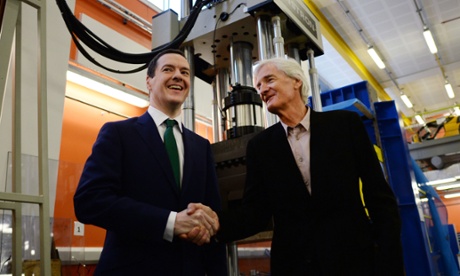
Q: Business rates are a big obstacle to growth. What will you do about this?
Osborne says he agrees. The business rate system has not adapted, even though the economy has changed.
He is doing two things. Every small firm will get a £1,500 rebate on business rates.
In the long term, he is holding a review, starting in 2017. That sounds a long way away, but it takes time to consult business. It will be a no-holds-barred review.
Faisal Islam says the Treasury said it would be revenue-neutral. So it won’t be a giveaway.
Osborne says the review will look as how the system could be made fairer.
Sky News has cut away from the broadcast to show an advert instead. Sky clearly aren’t that interested in their own broadcast.
Updated
Osborne on zero hours contracts
Q: What will you do to protect people on zero hours contracts?
Osborne says these contracts have been abused. The biggest abuse is exclusivity. The government has passed a law to stop this.
But the best answer for people who do not want ZHCs is to create full-time jobs. New jobs are being created and some 80% of new jobs are full-time.
Q: People on ZHCs cannot eat sometimes because they have no work.
Osborne says of course he does not want that. He cannot create jobs. But he can create an environment where businesses do expand and hire more staff.
Q: You bang the drum about more people being employed than ever before. But these people are on ZHCs. That makes people depressed.
Osborne says more and more people are getting these jobs. In the Midlands, where the questioner (a young woman) comes from, a new job is being created every seven minutes.
Having an expanding economy is the best answer to the concerns she is raising.
Osborne and pensioners
Q: Why are old people dying because they cannot heat their homes?
Osborne says he has protected winter fuel payments, and increased the state pension.
Osborne on Europe

Q: What could the business case for leaving Europe possibly be?
Osborne says many business people complain about red tape from Europe. The Conservatives want to address this.
And there is a democratic case for a referendum. Young people have not had a say, he says.
Q: Why don’t you reduce VAT on hotel rooms?
Osborne says he has looked very closely at this. It is a proposal from the hotel sector. First, it would be very expensive. It would cost billions of pounds. And, in other countries where this has been tried, it has not led to the boost in tourism anticipated.
He would rather use the money to promote tourism. The Great Britain campaign has been impressive. And he would rather spend the money on improving transport links. That will help tourism.
He has never said there are short-term fixes for Britain. He has always said fixing the economy is a long-term job. Announcing improvements to the A303 won’t change things overnight. But, in years to come, it will make a massive difference to the south west, he says.
Updated
Here are some preliminary verdicts on Ask the Chancellors.
This "Balls v Osborne" event makes the drying of paint seem vividly exotic. They aren't even in the same room at the same time.
— Jim Pickard (@PickardJE) March 23, 2015
oh god. i thought that ed balls was actually going to be appearing with george osborne. clearly i have got this format wrong....
— ann treneman (@anntreneman) March 23, 2015
Osborne says increasing interest rates just to help savers would not help the economy generally.
The fact that rates are so low is a reminder of how difficult the global economic situation is generally.
Not for a minute does he think the problems are over, he says.
He says the main item in his budget was a tax cut for savers.
Osborne on interest rates
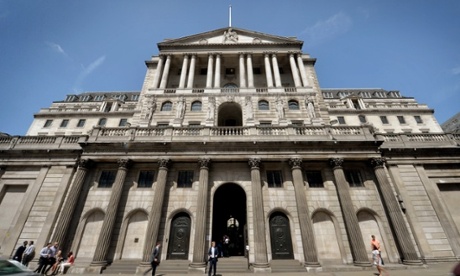
Q: It is six years since the Bank of England declared war on savers. Interest rates are too low. When will they go up? And when will we have a democratic process to allow people to influence the Bank?
Osborne says he disagrees on the final point. It is better to have the Bank independent. If it was controlled by politicians, they would take decision for electoral gain.
He says the pensioner bonds have been hugely popular. He has sold £10bn’s worth.
Updated
Osborne says the planning system has been one of the biggest obstacles to getting homes built.
Osborne on housing
Q: [From Sue Wimpenny, from the Lady Builder, a construction company] How are you going to get more young people on the housing ladder?
George Osborne says he is passionate about this. There are three points he would make. First, you need economic stability. Second, you need to get more homes built. And, third, you need measures to help people afford home. The government has introduced Help to Buy, and he has just announced Help to Buy ISAs.
Faisal Islam, the Sky political editor, says 140,000 homes have been built on average under the coalition. Under Labour it was 190,000 homes a year.
Osborne says that was because we had an economic crash. Housebuilding went off a cliff. In the last year we have had planning permission for 250,000 homes.
Updated
George Osborne questioned on Ask the Chancellors
Sky News and Facebook are holding an Ask the Chancellors event, with George Osborne and Ed Balls taking questions from a studio audience, and then answering questions on Facebook.
George Osborne is first up. His Q&A is about to start.
I will be covering them both in detail.
Lunchtime summary
- Ed Miliband has accused the SNP of being involved in an “unholy alliance” with the Conservatives to keep David Cameron in power. Speaking in Scotland, he also bluntly dismissed suggestions that he would let the SNP influence the contents of a Labour budget. (See 11.26am.) The SNP’s Stewart Hosie later said that Miliband had “lost the plot”.
-
Theresa May, the home secretary, has revealed that the Home Office is drawing up a blacklist of extremist individuals and organisations with whom the government and public sector should not engage is being drawn up. This was one of more than a dozen ideas she floated in a speech advocating a new approach to tackling extremism. She said her strategy was based on the idea that there were fundamental rules and norms, “British values”, that had to be upheld.
Some say we cannot base a counter-extremism strategy on British values because it is too difficult to define them. But we are not calling for a flag to be flown from every building, or demanding that everyone drinks Yorkshire Tea and watches Coronation Street. Our definition of extremism is “the vocal or active opposition to fundamental British values, including democracy, the rule of law, individual liberty and the mutual respect and tolerance of different faiths and beliefs”. And we regard calls for the death of members of our armed forces as extremist behaviour. This is a limited, practical and inclusive definition – and I challenge anybody to say it is unreasonable.
Others imply that promoting British values is somehow narrow-minded or jingoistic. But British values are open, inclusive and pluralistic. And we must promote them not just because we are proud of them and because they form an important part of our identity – but because we know they are the means by which a multi-racial, multi-cultural and multi-religious society can function. Because our values haven’t just sprung out of nowhere. They have evolved over centuries in response to our political, cultural, religious and intellectual history. We believe in religious freedom because the alternative is conflict and bloodshed. We believe in democracy because the alternative leads to the arbitrary abuse of power. We believe in equality because the alternative is discrimination and suffering. We believe in our values because they are what make a successful society.
Yvette Cooper, the shadow home secretary, told the World at One that she did not object to the principle behind May’s speech, but that May should have acted sooner
- The Labour MP Simon Danczuk has blamed “a difficult day” for the fact that he told an interviewer that any Labour MP who says Ed Miliband is popular with voters on the doorstep is “telling lies”. (See 11.38am.)
Boris Johnson has been answering questions on Twitter. For the papers, the best line is probably his offer to replace Jeremy Clarkson on Top Gear.
am mega clarkson fan but if a vacancy wd def let my name go forward. #askboris @asabenn
— Boris Johnson (@MayorofLondon) March 23, 2015
I presume that’s a joke but, with Johnson, you can never be 100% sure. Truly, there is no limit to his ambitions.
According to the Press Association, Ukip has lifted the suspension imposed on one of its parliamentary candidates, following an internal investigation into allegations of an incident at his workplace. Stephen Howd, a barrister, was reconfirmed as Ukip’s candidate for Scunthorpe after the party found that the allegation had been dealt with by his chambers some time ago and should not bar him from standing in the general election on 7 May.
Updated
Grant Shapps, the Conservative party chairman, has said that the Labour MP Simon Danczuk has confirmed that Tories are saying about Ed Miliband.
Simon Danczuk has joined the growing number of Labour MPs who know that Ed Miliband just isn’t up to the job.
He is a weak leader who it utterly out of touch with the lives and concerns of hard-working taxpayers.
Not only is Ed Miliband ‘aloof’, his short-term gimmicks would cause chaos and damage the economic security upon which British families depend.
In my earlier post about Danczuk’s New Statesman interview (see 11.38am), I failed to mention that Danzcuk also implicitly described Harriet Harman as a “fucking knob”.
Today's Guardian seat projection - Conservatives 276, Labour 270
Here’s today’s Guardian seat projection.
Theresa May's counter-extremism proposals - Full summary
Theresa May’s speech on counter-extremism wasn’t short of content. The Home Office has been drawing up a detailed counter-extremism strategy, and May identified more than a dozen specific proposals which she said she would like the next government to take forward. Deploying a Whitehall euphemism, she said that some of them were “bold”.
Here is a full summary of what she proposed.
-
An official blacklist of extremist organisations that public sector bodies should avoid. May said the Home Office’s new extremism analysis unit was already working on this.
The extremism analysis unit will help us to develop a new engagement policy – which will set out clearly for the first time with which individuals and organisations the government and public sector should engage and should not engage. This will make sure nobody unwittingly lends legitimacy or credibility to extremists or extremist organisations, and it will make very clear that government should engage with people directly and through their elected representatives – not just through often self-appointed and unrepresentative community leaders.
-
New measures to encourage people to speak English, including potential sanctions against people who do not learn. May did not specify how these could work, but she seemed to be referring to benefit conditionality.
We plan a step change in the way we help people to learn the English language. There will be new incentives and penalties, a sharp reduction in funding for translation services, and a significant increase in the funding available for English language training.
-
New banning orders for extremists, and similar measures.
We will deny extremists the opportunity to spread their messages of hate by introducing banning orders for extremist groups that fall short of existing terrorist proscription thresholds. We will introduce extremism disruption orders, which are civil powers to be used against individual extremists who incite hatred. And we will be introduce closure orders, for premises that are owned or occupied by extremists or are used to host extremist meetings or speakers. When we decide whether to impose a banning order on an organisation based in this country, we will take into account the conduct of any organisations to which they are affiliated overseas.
-
A helping isolated communities programme, based on the troubled families programme.
We will learn from the successful Troubled Families Programme by creating a similar place-based, multi-agency, single-pot funding model called the Helping Isolated Communities Programme. Starting with the most isolated communities, this will include training and skills projects, help for women to get into work, mentoring schemes, interfaith projects, getting school pupils mixing with children from other backgrounds, and intensive English language training.
- A review of Sharia law (See 12.21pm.)
- A review of citizenship law to ensure applicants respect British values.
- A halt to extremists who pose a threat to national security being offered asylum.
- A requirement for foreign religious workers working in pastoral roles to speak English. This would be applied through immigration rules.
- New checks on school governors. These would include: a national database of school governors, tougher rules ensuring that the identities of governors are widely known; and rules saying governors should only serve on two or more governing bodies in exceptional circumstances.
- A review of supplementary schools, which are unregulated, to protect children from extremists.
- A review of governance arrangements for further education colleges to ensure they are tackling extremism.
- A review of how police forces are dealing with crimes like “honour” killings, female genital mutilation and forced marriage. Forces would also be made to record anti-Muslim crimes, as they do anti-Semitic crimes.
- People to have the right to demand action if the police fail to investigate hate crime or extremist-related offences.
- Prisons to have extremism officers to help tackle extremism.
- New guidelines to show when the government will intervene against councils refusing to tackle extremism.
- A crackdown on online extremism with social media companies.
- A review of Ofcom’s remit to ensure it has the power to deal with extremist broadcasts.
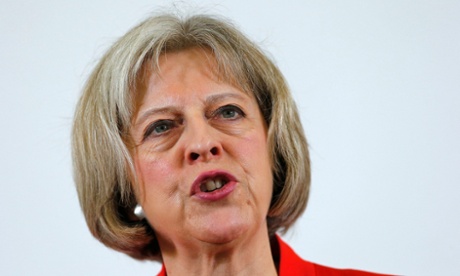
Updated
This is the top to my colleague Alan Travis’s report of Theresa May’s speech:
A Home Office blacklist of extremist individuals and organisations with whom the government and public sector should not engage with is being drawn up, the home secretary, Theresa May has revealed.
The list of unacceptable but legal organisations is being compiled by a new Home Office ‘extremism analysis unit” which is also to develop a ‘counter-entryism strategy’ to tackle Islamist entryism and ensure that there is no repeat across the public sector of the Trojan Horse affair in Birmingham schools.
In a major speech outlining a wish-list of new measures and powers to tackle extremism in Britain, the home secretary acknowledged that the work of the of the new Home Office unit was the only one which has so far got cabinet approval.
The home secretary was put in charge last October in developing a cross-government extremism strategy but she has so far failed to resolve outstanding problems arising raised by a least four of her Conservative cabinet colleagues.
“Chris Grayling wants more clarity on its impact on prisons. Theresa Villiers wants more consultation with Northern Ireland, where extremism is obviously historically a big issue. Eric Pickles wants work to be done on the impact on communities and faiths and Nicky Morgan wants more work done on the role of Ofstead,” said a Westminster source.
Instead the home secretary outlined a list of measures which a majority Conservative government would introduce including closure orders for premises being used by extremists, banning orders, and a review of the impact of Sharia law in Britain. The package would include a positive campaign to promote British values.
Updated
May proposes new banning orders for extremist groups
In her speech on countering extremism Theresa May, the home secretary, unveiled a plethora of proposals. Here are two of the main ones.
-
May proposed new banning orders for groups that did not fit the current criteria used to ban terrorist groups.
We will deny extremists the opportunity to spread their messages of hate by introducing banning orders for extremist groups that fall short of existing terrorist proscription thresholds.
-
May proposed an independent review of the operation of Sharia law in England and Wales.
There are some areas where – like in the application of Shari’a law – we know enough to know we have a problem, but we do not yet know the full extent of the problem. For example, there is evidence of women being “divorced” under Shari’a law and left in penury, wives who are forced to return to abusive relationships because Shari’a councils say a husband has a right to “chastise”, and Shari’a councils giving the testimony of a woman only half the weight of the testimony of a man. We will therefore commission an independent figure to complete an investigation into the application of Shari’a law in England and Wales.
I will post a full list of what she’s proposing in a moment.
According to a survey for PinkNews, the Conservatives are for the first time the joint favourite party amongst gay voters. This is an extract from the news release they’ve sent out.
For the first time in the 10 years that PinkNews has polled the LGBT community, the Conservatives are neck and neck Labour at 26% percent each, up from 21% for the Conservatives in 2010 and down from 28% for Labour five years ago. The Greens are at 20%, up from 4% in 2010. The SNP, which introduced same-sex marriage in Scotland, are at 6%, with 62% support among Scottish LGBT people. Ukip has support of just 2% of the LGBT community, a fraction of their national support.
And this is from the PinkNews chief executive Benjamin Cohen.
The polling shows that the LGBT community is as divided as the rest of the country when it comes to this year’s general election. However, there is one striking difference, the almost negligible level of support for Ukip and consequently the increased popularity for the Greens and SNP.
The negative position of Ukip to the defining LGBT political issue of the current Parliament, same-sex marriage, has meant those who are disenchanted with the big three parties have no choice but to vote for the Greens, or if they live in Scotland, for the SNP.
Tommy Robinson, the former English Defence League leader, was on LBC earlier talking about his dealings with Afzal Amin. As we report in our latest version of the story, he does not accept Amin’s version of what happened. Robinson told LBC that Amin should “be honest” and “cut the nonsense”.
.@TRobinsonNewEra's account of the Afzal Amin allegations contains some remarkable statements http://t.co/JAFmiC58lL pic.twitter.com/Fa3UXDGGZs
— LBC (@LBC) March 23, 2015
Nick Clegg has criticised the protesters who forced Nigel Farage to flee a pub where he was dining with his family yesterday.
I disagree with Nigel Farage too but leave his wife and kids out of it. Intimidating a politician's family is never acceptable.
— Nick Clegg (@nick_clegg) March 23, 2015
Farage has been speaking at the Ukip economy event. I will post a summary a bit later.
Populus poll gives Labour 2-pt lead
Populus have a poll out today. Here are the figures.
Latest Populus VI: Lab 33 (-1), Con 31 (-), LD 9 (-), UKIP 16 (-1), Greens 5 (-), Others 6 (+1). Tables here: http://t.co/yaMi0HIXBO
— Populus (@PopulusPolls) March 23, 2015
And here is the poll put in context by our data team’s great polling interactive guide:
Updated
Labour's Simon Danczuk blames 'difficult day' for anti-Miliband interview
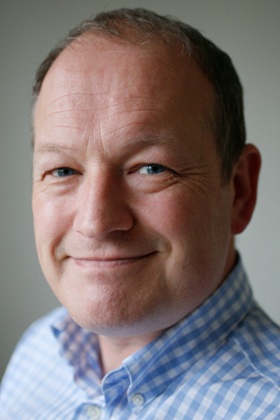
The Labour MP Simon Danczuk has been scathing about Ed Miliband in an interview with the New Statesman. He said:
Any Labour politician that says to you they knock on a door and Ed Miliband is popular are telling lies. They’re just telling lies. It’s just not true. I spend four hours knocking on doors on a Sunday – they [constituents] say things like ‘you’re doing an alright job as MP but I don’t want Ed Miliband as prime minister, so I won’t vote for you.’ So it’ll cost me votes ...
You get it on the doorstep. If we’re having a straight conversation about this, he [Miliband] has an image of being more of a toff than David Cameron. That’s how the public see it. And what they mean by that is that he’s seen as more aloof. They’d prefer to go for a pint with David Cameron than they would with Ed Miliband, that’s the reality of it.
This morning Danczuk seems to have had a change of heart.
That NS interview does not fully reflect my views. We all have off days. I'd had a very difficult day & was feeling emotional 1/2
— Simon Danczuk (@SimonDanczuk) March 23, 2015
I do not meet anyone on the doorstep who is enthusiastic about David Cameron. I want Ed Miliband in Downing Street 2/2 #Labour
— Simon Danczuk (@SimonDanczuk) March 23, 2015
The wider point, which was what the interview was supposed to be about, still stands. Politics needs to re-connect with working people
— Simon Danczuk (@SimonDanczuk) March 23, 2015
Updated
Miliband urges Cameron to expel Afzal Amin from the Conservatives
Ed Miliband has urged David Cameron to expel Afzal Amin from the Conservative party. This is what he said in Scotland.
These are shocking allegations when you have a Conservative candidate saying that he is going to be an ‘unshakeable ally’ of the English Defence League
There is only one course of action for David Cameron: he should end the dither, end the delay and kick this man out of his party.
We cannot have these sort of people standing for mainstream parties in British politics.
Ed Miliband's speech and Q&A - Summary
Ed Miliband’s speech in Clydebank contained an interesting line about austerity and the SNP, but otherwise it was a fairly standard election stump speech. What was more striking, though, was the Q&A. Miliband isn’t bad at these things, but he isn’t always great either. Today, however, he was impressive. The language he used in his answers was concise and memorable, and it sounded authentic too. Maybe all that debate preparation is paying off.
Here are the main points.
-
Miliband dismissed suggestions that he would let the SNP decide a Labour budget. Responding to the points made Alex Salmond on the Andrew Marr show yesterday, he said:
There seems to now by an unholy alliance between the Conservative party and the SNP to carry on a Tory government. And, frankly, Alex Salmond is at it again. And it is a combination of bluster and bluff. I gather he’s got a book to sell.
I’ll tell you who’s going to be writing the Labour budget, it’s me and Ed Balls. And it’s not going to be Alex Salmond, not in a million years.
(I haven’t read Alex Salmond’s book yet, but Chris Deerin’s review of it in the Scottish Daily Mail is worth a read.)

- Miliband said that there was “an unholy alliance” between the SNP and the Conservatives to keep David Cameron in power. (See quote above.) This is partly just campaign rhetoric, but it does point to a key factor in the election and its aftermath, the SNP paradox. That is that, although the SNP are much closer to Labour in policy terms, their long-term strategic interests would be best served by David Cameron being re-elected. The SNP want Scottish independence, and that is more likely to happen if the Conservatives are in power in Westminster for another five years. Fraser Nelson explained this in more detail in a recent column.
-
He refused to rule out a confidence and supply arrangement with the SNP. And he urged people not to pre-judge the election before it was over.
How other parties decide to vote on the basis of a Labour Queen’s Speech is up to them. But I want a majority Labour government. With the greatest of respect, we are going to let Alex Salmond try and sell his book. What we are going to try and do is show the people of Scotland what the choice is at the general election. You don’t blow the whistle on the match before the game is over.
-
He said the only question that mattered at the election was whether people wanted him or David Cameron as prime minister.
I think it is up for grabs how people see this election. It is incredibly important that people see the election as what it is. The referendum was last year’s decision. The general election is this year’s decision. And it is a very simple decision. Do you want David Cameron? Do you want another five years of David Cameron and George Osborne? Or do you want change? Do you want an end to this Tory government? And I’m the only person who can make this happen.
- He said the SNP would not be able to end “Tory austerity” because they wanted Scotland to have full control over its finances.
The SNP fight this election still proposing to end the sharing of resources across the UK, the principle of redistribution.
They are campaigning for the end of the Barnett Formula, replacing it with a reliance on risky and unpredictable oil revenues - revenues which even Nicola Sturgeon admits are astonishingly hard to predict.
That has real consequences for Scotland because fiscal autonomy would make it impossible for Scotland to end Tory austerity - and in fact, worse than that, it would extend it.
New figures recently published by the Scottish government show it would mean huge cuts to the funding of health, education and policing - in total, on the basis of last week’s Budget, £7.6bn lost to the people of Scotland.
The SNP proposal for fiscal autonomy would cost Scotland billions, money that would have to come from cuts to the fundamental public services on which all the people of Scotland rely.
Updated
Theresa May, the home secretary, is delivering her speech on tackling extremism now.
I’ll post a summary when I’ve read the full text.
Angus Robertson, the SNP’s leader at Westminster, has put out a statement welcoming the findings in today’s Guardian/ICM poll.
This latest poll is another welcome indication of the strong backing for the SNP we are seeing in communities across Scotland. The poll also shows very strong and positive ratings for Nicola Sturgeon and Alex Salmond - with negative ratings for Jim Murphy. Extraordinarily, Ed Miliband as a Labour leader has consistently worse ratings in Scotland than even a Tory prime minister.
Labour are continuing to pay the price for working hand in glove with the Tories during the referendum, and lining up with them at Westminster to vote for more cuts.
We take nothing for granted, and will work extremely hard to win people’s trust on 7 May, so that we can deliver jobs and growth in place of Westminster cuts.
More anti-Tory MPs than Tory MPs at the election means that we can lock David Cameron out of Downing Street. And electing a strong team of SNP MPs will also ensure that Scotland has real power at Westminster to ensure that Scottish interests are served - and progressive politics delivered across the UK.

Updated
Q: Many people in Scotland are treating the election as referendum two.
Miliband says people should not pre-judge the result of the election.
The election will either lead to him being prime minister, or David Cameron.
Labour offers another way forward, he says.
The Q&A is still going on, but BBC News have cut their live coverage and I cannot find another live feed.
I will post the highlights shortly.

Q: Nicola Sturgeon has been awarded a salary higher than Cameron’s. Is that a good idea?
Miliband says he will let the people of Scotland decide.
But pay at the top is an issue. The Tories are not tackling tax avoidance, he says.
Updated
Q: Are you ruling out a confidence and supply arrangement with the SNP?
Miliband says how other parties vote on a Labour budget is up to them. He will let Salmond sell his book. You don’t blow the whistle on the match before the game is over.
At the budget people said the Tories would shoot Labour’s fox.
People said the Tories would say they don’t believe in big cuts.
But Cameron and Osborne do believe in big cuts, he says.
He says people in Scotland want to see the back of Cameron and Osborne. But they will only see the back of them if Miliband becomes prime minster.
Ed Miliband's Q&A
Ed Miliband is now taking questions.

Q: [From ITV] Alex Salmond said yesterday whoever holds the balance holds the power. He seems to think he has you over a barrel.
Miliband says there is an unholy alliance between the SNP and the Tory party to carry on a Conservative government. It’s bluster, he says. Salmond has a book to sell.
I’ll tell you who will be writing a Labour budget. It will be me and Ed Balls. It won’t be Alex Salmond in a million years.
Updated
Miliband says there has been a lot of talk of coalitions in recent weeks. But there won’t be a Labour coalition with the SNP.
He says he is interested in a coalition with the people.
The choice is between a Labour goverment and a Tory government, he says.
In his speech Ed Miliband is now getting to one of his key points - his attack on the SNP’s call for an end to austerity.
Nicola Sturgeon, Scotland’s first minister, wants to end Tory austerity, he says.
But the SNP are also committed to Scotland having full fiscal autonomy. That would cost the country billions, he says. Scotland would not be able to end austerity.
Unlike the SNP, Labour wants to extend redistribution in the UK, he says. It would introduce measures like the 50% top rate of tax and the bankers’ tax to help the people of Scotland.
Ukip would keep defence spending at 2% of GDP, says Patrick O'Flynn
On the Today programme earlier Patrick O’Flynn, the Ukip MEP and the party’s economics spokesman, said Ukip would keep defence spending at 2% of GDP. It would spend £3bn a year more than on defence than the Conservatives are planning, he said. That could easily be funded with the money saved from scrapping HS2, cutting subsidies for Scotland and cutting the foreign aid budget, he said.
O’Flynn will be setting out more details at a Ukip economy event later where Nigel Farage and Paul Nuttall are also speaking.
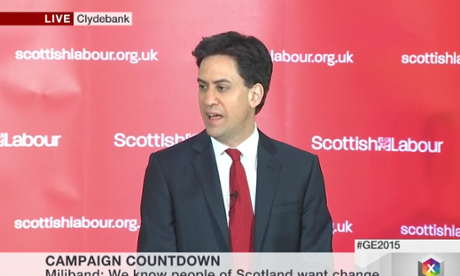
Ed Miliband has just started delivering his speech in Scotland.
He says the election will involve a fight to get rid of a “rotten, discredited, unfair Tory government”.
I will be monitoring the speech, and will post a full summary when it’s over.
Updated
Labour likely to lose Scotland – exclusive Guardian poll
Tom Clark reports:
Labour is on the cusp of losing control of Scotland, according to a special Guardian/ICM poll, which suggests that three months of Jim Murphy’s leadership has failed to dent the SNP at all.
Nicola Sturgeon’s Scottish Nationalists are way out in front on 43%, exactly the same level of support that they enjoyed in ICM’s last Scottish poll for the Guardian in December.
Meanwhile, Scottish Labour languishes 16 points behind on 27%, an advance of only one point since Christmas and the arrival of their new leader. The Liberal Democrats are on an unchanged 6%, while the Scottish Conservatives inch up one to 14%.
On a uniform swing since the last general election, the ICM figures would see the SNP leap from their current six MPs to take 43 of Scotland’s 59 seats.
Labour would surrender 29 of the 41 Scottish seats that Gordon Brown won in a strong 2010 performance in his own country, being reduced to a rump of just 12 MPs – a performance that makes it virtually impossible to walk into No 10 without the support of the SNP.
You can read the full report here and see a graphic showing the state of the parties below.
Updated
Afzal Amin's Today interview - Summary
Afzal Amin told the Today programme that he intended to make a “robust defence” of his conduct when he appears before a Conservative party disciplinary hearing tomorrow. And he was articulate and calm in his interview, impressively so when you consider the situation he’s in. Yet he failed to provide a credible answer to at least one key question about his actions, and, judging by what he said when asked about his prospects of being reinstated as a candidate, he sounded like someone who knows the game is up.
Here are the key points.
- Amin claimed that he had been the victim of a “year-long sting operation”.
-
He said that he would make a “robust defence” of his actions at a Conservative party hearing tomorrow. But he did not sound confident of being reinstated as the party’s candidate. Asked if he accepted that his chances of being a candidate for the party at the election were over, he did not answer the question directly. Instead, he replied:
I have got to make my case on Tuesday to the Conservative party and I want to make a robust defence of my actions and I want to ensure the party that I am a loyal party member and a party supporter, and I look foward to seeing a Conservative victory in May and David Cameron returned as prime minister.
-
He said it was Tommy Robinson, the former English Defence League leader, who first proposed a second EDL march in Dudley. And Robinson was the one who proposed announcing it so that it could be called off, he said.
He’s the one that proposed absolutely that we would do this march, that we would negotiate our way out of it.
- Amin claimed that this sort of strategy was a normal conflict resolution measure.
What you are describing here is very normal, conflict resolution, confidence-building measures. And if people do announce that we are going to do an action, and other people disagree with it, then they sit together and resolve their differences and the action is then stopped, then this helps the communities feel that on the other side there’s a working partner they can work with. And that is what we were trying to stage manage.
- He failed to explain why he had not told the police about the proposed second EDL march. When he was asked about this, he said that he had only met Chief Superintendent Chris Johnson twice. When asked why he did not just call him to tell him about the idea, Amin said that was “exactly what was going to happen next”.
- He said that his words were being taken out of context.
This is a good example, as Kipling would say, that the truth you’ve spoken is twisted by others to make traps for other people.
-
He claimed that he was just being compassionate when he told Robinson that he would never go hungry if Amin became an MP. Asked about this remark, Amin replied:
When a man is in front of you in tears, because he cannot provide Christmas presents for his children, you have to extend a degree of humanitarian compassion to him. And, of course, I did say that to him, if I’m eating you won’t go hungry, because that’s a normal human response.
- He said he wanted to stop the EDL holding a second march in Dudley because the first one cost the town £1m.
-
He said he was motivated by the desire to achieve better community relations.
I stand by my desire to see peace between our communities; I stand by my desire to see a united Britain where we all live together. The British Muslim community isn’t going anywhere, supporters of the EDL aren’t going anywhere. We all need to share this space on our island and the more we understand each other, the greater that unity can be and what I want to see in all of this work is that that intention is recognised.
Updated
Afzal Amin's Today interview - Reaction from the Twitter commentariat
Here is some Twitter reaction to Afzal Amin’s interview.
As a career rescue operation, it seems to have failed.
From the Labour MP Diane Abbott
#AfzalAmin Tory Candidate for Dudley North astoundingly stupid and venal @BBCr4today
— Diane Abbott MP (@HackneyAbbott) March 23, 2015
What possible reason for any candidate of any mainstream party to have private meetings with EDL? @BBCr4today #AfzalAmin
— Diane Abbott MP (@HackneyAbbott) March 23, 2015
#AfzalAmin does not seem to understand that his political career is over @BBCr4today
— Diane Abbott MP (@HackneyAbbott) March 23, 2015
From the Labour MP Jonathan Ashworth
This Dudley Tory Afzal Amin really needs to stop digging. Surely David Cameron now needs to call time on his Tory Party career @BBCr4today
— Jonathan Ashworth MP (@JonAshworth) March 23, 2015
From the Guardian’s Gaby Hinsliff
I don't often feel like shouting at the radio but listening to afzal Amin trying to defend the indefensible, tempted to make an exception
— Gaby Hinsliff (@gabyhinsliff) March 23, 2015
From Prospect’s Josh Lowe
Afzal Amin going for the "haters gonna hate" approach in a remarkably unapologetic #r4today interview
— josh lowe (@JeyyLowe) March 23, 2015
From Newsnight’s Laura Kuenssberg
Not quite sure Amin's wish to stay on will come true..... Rather, It looks like he is going to be sacked rather soon
— Laura Kuenssberg (@bbclaurak) March 23, 2015
Updated
This is from the BBC’s Ross Hawkins.
V senior Tory source - Amin will get chance to make his case but in all my years in politics never seen the like; outrageous
— Ross Hawkins (@rosschawkins) March 23, 2015
Minister tells me Amin’s "complete jerk"; ethnicity/religion beside point, gives impression Tories are friends with right wing extremists
— Ross Hawkins (@rosschawkins) March 23, 2015
Updated
Here’s the Today interview.
Tory candidate Afzal Amin, suspended over claims he schemed with EDL, gives his side of story http://t.co/tAwxMxH6oq pic.twitter.com/oOV3NzZevN
— BBC Radio 4 Today (@BBCr4today) March 23, 2015
Q: Why did you not mention this to the police superintendent?
Amin says he has only met him twice. He did not have a chance.
Q: But you could have picked up the phone to the superintendent and told him that was what was being proposed?
Amin says that was what was going to happen next.
The previous EDL march was peaceful, he says.
Q: No one doubts you played a positive role in that march. So that is why you wanted to play the trick again?
Amin says the EDL march cost Dudley £1m. He did not want another. He wanted to develop a model for confidence-building measures.
Q: You wanted to emerge as the hero. But it was all pre-planned.
Amin quotes Kipling, saying the truth is being twisted. In Dudley there were no other politicians trying to bring the communities together.
Q: Tommy Robinson said you told him he would never go hungry again if he helped you. What did you mean?
Amin says Robinson was in tears, and could not feed his family. He says he was being compassionate.
Q: You accept that your chances of standing for the Conservatives in this seat have disappeared?
Amin says he wants to make his case to the party tomorrow. He says he supports the party.
And that’s it. The interview is over.
I’ll post a summary shortly.
John Humphrys is interviewing Afzal Amin.
The interview was recorded yesterday.
Q: You talked to Tommy Robinson about playing roles. Isn’t it clear what you were doing?
Amin says this is normal conflict resolution. The second march was proposed by Tommy Robinson. There is no way he, Amin, would have proposed this. Robinson presented himself to Amin in tears, saying he wanted a better Britain. Amin says he was the victim of a year-long sting.
Q: So why weren’t the police aware of this?
Because it had not been announced, says Amin.
Q: When was it going to be announced?
That was up to the EDL, says Amin.
Afzal Amin's Today interview
It’s Andrew Sparrow, taking over from Claire.
I’ll be covering Afzal Amin’s interview on the Today programme in detail.
Judging by what the Tories are saying about him, his political career already sounds as dead as Richard III, but if he is giving an interview, he clearly hasn’t given up hope. It should be interesting.
Updated
A whisper ahead of the official unveiling of Ukip’s economic policy, expected later this morning, from the BBC’s Robin Brandt:
.@UKIP will commit to spending 2% of britains GDP on defence if it is in government after the general election
— Robin Brant (@robindbrant) March 23, 2015
That 2% of GDP is a level endorsed by Nato; earlier this month after a backbench business debate, MPs backed a motion to set 2% as the minimum level of spending on defence, though the government is not bound by it.
Britain currently does spend the 2%, but none of the main parties have yet committed to this past the next election.
More on Afzal Amin, the prospective Tory candidate for Dudley north, now suspended pending a formal investigation into claims he conspired with EDL leaders to plan a march against a new “super-mosque” that would then be called off – with Amin taking credit for his intervention.
Amin is due on Radio 4’s Today programme later this morning. He is reportedly in Dubai at the moment, but has published a rebuttal to the Mail on Sunday story on his own website. He denies wrongdoing and calls the story “a gross misrepresentation of the reality”:
Politics requires an amount of bravery and using my experience as a strategist in Afghanistan, negotiating between pro-Taliban militias and the US military, I decided to use the same tactics to improve community relations here in my own country between the EDL and Muslim communities. While the discussions were sensitive, I informed Chief Superintendent Johnson, who was supportive of my plans of resolving very violent tensions through face to face dialogue, and he was aware of subsequent meetings between the EDL and members of the Dudley Muslim community …
This was altruistic, community service work. Instead of these private discussions leading to something fruitful, [Tommy] Robinson [former leader of the EDL] clearly wishes to further damage community cohesion instead of working to prevent conflict as he had originally presented himself as doing. I am saddened that the Mail on Sunday has furthered this agenda.

Defence minister Anna Soubry yesterday urged Amin to “fess up” and “go now” if the claims were true, and others in the party were keen to distance themselves from him, with Baroness Warsi, the former party chair, telling the Times that claims she had “recruited” Amin to the Tories were a “lie”.
Tory sources indicated to the Guardian that Amin was likely to be ousted “within days”, leaving the Tories with a hole to fill in a crucial marginal seat.
Updated
Amid the talk of Labour, the SNP, red lines and pockets, Paul Goodman, editor of ConservativeHome, suggests another way this morning: that David Cameron should negotiate with Alex Salmond:
A constitutional horror? An offence to Conservative principles? An invitation to break up the United Kingdom? Far from it.
Remember: the Conservative party has already offered more devolution to Scotland than Labour, through the Strathclyde Commission, which said that the country “should have full powers over income tax” – three months or so before the Vow and six months or so before the Smith Commission.
The next logical step would be to offer Scotland Home Rule, together with Home Rule for all the Home Nations – including, of course, England – in a fully federal UK .
This might prove tricky, however, given that Nicola Sturgeon, in her incoming speech as SNP leader last November, said the SNP would “never, ever” help put the Tories into government.
Updated
Morning briefing
Good morning and welcome to the first of the Guardian’s live election blogs.
With just over six weeks to go until the UK goes to the polls on 7 May, we will be live blogging from 7am to 10pm every day – you’ll read everything worth knowing about the campaign here.
I’m Claire Phipps and I’ll be cranking up the blog today, handing over to Andrew Sparrow later this morning. You can follow us on Twitter @Claire_Phipps and @AndrewSparrow, if that’s your thing, or leave us a comment below the line.
Each morning we will be kicking off with an essential morning campaign briefing to leave you clued up for the day ahead.
The big picture
With 45 days to go till polling day, the 45 – the 45% who voted yes to independence in last September’s referendum – are having another moment in the sun. Today is all about Scotland. Ed Miliband is heading to Clydebank, where he will make a speech alongside Scottish Labour leader Jim Murphy.
Before he speaks, Miliband might want to have a look at the Guardian’s exclusive ICM poll, launching later this morning, which sets out the challenge Labour faces in trying to hang on to its Scottish seats against a resurgent SNP. As the Guardian’s data editor, Alberto Nardelli, has pointed out, barring an unlikely Labour-Tory grand coalition, no combination of parties currently has the numbers needed to form a stable government without the votes of the SNP.
Today the Guardian also launches its Battleground Britain series, with part one focusing on Scotland. This series, in conjunction with pollsters Britain Thinks, will track undecided voters in five key constituencies throughout the campaign. Today: Glasgow East. We’ll have links and key excerpts on this live blog when they launch. In the meantime, take a look at the Guardian’s latest poll projection, showing the number of seats that would be won by each party based on current polling:
More on Scotland below. But you should also know:
- The Telegraph reports that tonight’s Channel 4 Dispatches investigation will show Paul Wilmot, an undercover businessman posing as a potential donor to the three main parties, meeting David Cameron, Ed Miliband and Nick Clegg on separate occasions. The Conservatives and Labour said they had broken no rules, but the programme could stoke the embers of the row over cash for access. You can read more on that story here.
- A Conservative parliamentary candidate who was recorded allegedly plotting with the English Defence League to increase his vote by intervening in a row over a new mosque is expected to be formally removed by the party within days. Tory sources indicated that Afzal Amin’s position is unsustainable after the Mail on Sunday published a transcript of his discussions with the EDL. Amin is due to be interviewed on Radio 4’s Today programme at 8.10am.
- An anti-Ukip protest backfired when demonstrators forced not only Nigel Farage, but also his wife and two children, out of the pub where they were having their Sunday lunch. Farage said afterwards:
I hope these ‘demonstrators’ are proud of themselves. My children were so scared by their behaviour that they ran away to hide.

Diary
-
Ed Miliband and Jim Murphy are speaking in Clydebank at 9am. The Guardian’s Scotland correspondent, Severin Carrell, will be there: keep an eye on his tweets @severincarrell.
- At 10.30am, home secretary Theresa May will make a speech on tackling extremism.
- Nigel Farage, along with Ukip deputy leader Paul Nuttall and economics spokesman Patrick O’Flynn, will be lifting the lid on the party’s economy policy in Heywood and Middleton at 11.15am.
- Separately, a Ukip disciplinary hearing is due to take place into Janice Atkinson, an MEP and the party’s candidate in Folkestone & Hythe, suspended over allegations that a member of her staff attempted to obtain an inflated receipt to claim EU expenses.
- From 2.30 to 4.30 Sky News hosts its “ask the chancellors” debate. George Osborne is first up, followed by Ed Balls, each questioned separately for 30 minutes followed by 15 minutes of questions via Facebook.
- At 3.30pm, David Cameron will make a statement on the EU summit.
- At 4pm, Lord Ashcroft will tweet the results of his latest national poll.
- At 4.15pm, the IFS and OBR are up before the Treasury select committee to be quizzed on the budget. Keep an eye on our business live blog for more on this one.
The big issue
It’s Alex Salmond. Well, it’s Scotland, really, but some people find it hard to remember that he’s not in charge any more.
Surely nobody thought the former first minister would slink away quietly? Even in his resignation speech in the wake of defeat in the Scottish referendum last September, he gave a pretty strong hint:
We lost the referendum vote but can still carry the political initiative. More importantly Scotland can still emerge as the real winner.
On Sunday, Salmond – now candidate for the Gordon constituency in Aberdeenshire – told Sky News’s Murnaghan programme that the SNP in Westminster could support a Labour government in return for concessions on issues such as HS2:
What I think is possible is a confidence and supply arrangement where we have a limited number of objectives and in return we would vote for budgets.
More probable is a vote-by-vote arrangement. We would move, or attempt to move, the Labour party away from signing up to the Tory austerity agenda.
His claim that he expected the SNP to “hold the power” in a hung parliament was described by defence minister Anna Soubry on the BBC’s Andrew Marr show (it was a busy morning) as “scary”.
The moment when @Anna_SoubryMP says the @AlexSalmond interview was 'one of the most frightening I have ever heard' http://t.co/pszfSary3v
— Robbie Gibb (@RobbieGibb) March 22, 2015
Soubry is not alone, with many UK papers today acting similarly feart. The Daily Mail front page says Salmond is “hold[ing] Ed to ransom”, a claim echoed by page one of the Times. And the Telegraph front page says: Salmond boasts he will write Labour’s first budget.
Pluckily, Miliband will head north anyway today, for a speech in which he will try to win back Labour voters disillusioned with the party’s tactics during the referendum campaign. On this topic, Ruth Wishart’s column is well worth a read: many Scots will vote SNP hoping to help Labour rediscover its soul.
Read these
A quick dawn round-up of what’s caught my eye this morning; Andrew Sparrow will no doubt add more later. You can find all of today’s Guardian politics stories here.
- John Crace reads Farage’s memoir so you don’t have to.
- Michael Fallon, the defence secretary, is writing in the Telegraph about armed forces spending. There’s no mention of Trident, which might yet be the defence issue that proves most crucial in the days after 7 May. But Fallon writes:
Our American friends know that the UK is not about to let down its guard.
- Also in the Telegraph, Boris Johnson takes on “the miserabilists on the Left” – I know, surprise! – over claims that “life was better in the 70s”. OK, Johnson concedes that this claim comes from a book “which I mistakenly bought at an airport bookstall”, but no matter: if you fancy a read about why the Left should just cheer up and stop ruddy bleating on about poverty and social justice, this column is just the thing.
- In the Times (paywall), Tim Montgomerie admires Miliband’s pluck in putting himself forward for the debates despite the constant ridicule he faces.
-
Lesley Riddoch, writing in the Scotsman, welcomes the prospect of Nicola Sturgeon facing opposition at next weekend’s SNP spring conference over plans for all-women shortlists:
Actually, some dissent is good news. Onlookers need to see that the SNP is a feisty, fully functioning political party, not a compliant sect, and members need an honest debate not just a surly toeing of some new ‘feminist’ line.
- The Daily Mail joins the rest of us in tiring of the Tories banging on about their “long-term economic plan”. In an editorial today, the Mail says the phrase is uninspiring, and further laments:
Even more troubling, however, is the continued absence of a Tory Big Idea to fire a moribund campaign by all parties.
-
Mail columnist Dominic Lawson warms to the theme, observing that “long-term economic plan” came only fourth in a recent poll of irritating political phrases:
The overwhelming winner as most maddening phrase was: ‘Hard-working families’. I would have cast my vote for that as worst offender, if asked. It is especially annoying because variations of it are used by every party, so there is no escape, no matter which politician is being interviewed and regardless of the topic under debate (‘I’m glad you’ve asked me about the EU Common Fisheries Policy, Jeremy. What we’ve said is that we must have the sort of fish that ordinary hard-working families want to eat...’).
On this, I am sure, Left and Right are united.
The day in a tweet
#Election outcome in Scotland remains the single factor most likely to shape the composition of the next government http://t.co/S8gjS2FbbI
— Claire Phipps (@Claire_Phipps) March 23, 2015
If today were a TV show on one of those cable channels that just shows repeats, it would be...
Jonathan Creek. Take a look at this latest Tory attack ad on Labour and the SNP. It’s got the Danse Macabre theme tune. It’s a bit creepy, with the piping and the puppetry. And behind it all, someone – who knows who? – is involved in a bit of misdirection and trickery …
The key story you’re missing when you’re election-obsessed
Singapore’s founding prime minister has died. Tributes to Lee Kuan Yew were led by the current prime minister, Lee Hsien Loong, who also happens to be his son. This might explain why appraisals of his three decades in power list his achievements as the prosperity and stability he oversaw, rather than democracy.