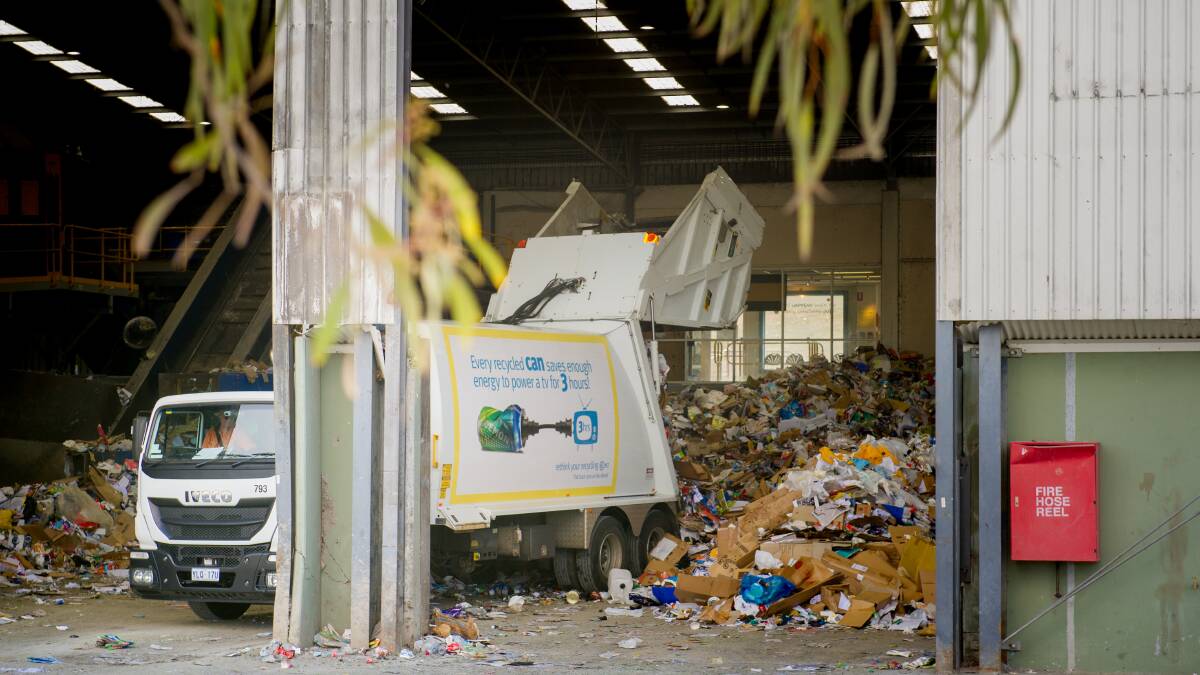
The ACT could be set to become a national leader in processing mixed plastic waste following from an export ban on the recycled products, according to industry experts.
However, some have said the tight deadline to transition to onshore processing could lead to lags in the industry across other states and territories.
From July 1, mixed plastic waste - where different types of plastic are bundled together - will be banned from being sent overseas to be recycled.
The ban came following a decision from federal, state and territory governments in 2019 to ban the export of plastic, paper, glass and tyres.
Glass waste exports have been banned since January this year, with unprocessed plastics to be stopped from being sent overseas from July 1, 2022.
Since the decision to stop the waste exports, National Waste and Recycling Industry Council chief executive Rose Read said the ACT had been leading the charge in processing recyclables in Australia.
However, she said the turnaround in the lead up to the July 1 deadline could cause other states and territories to fall behind.
"What has been challenging about this is that it's been a tight timeline and quite a transition and everyone needs to work as hard as they can, but it's not going to be perfect," she said.
"Other jurisdictions have moved slower such as NSW and Queensland.
"However, the ACT government have responded quickly and have committed, and the ACT has some of the best recycling rates in the country and have ben very proactive at putting recovery systems in place."
It's estimated 75,000 tonnes of mixed plastics were exported from Australia each year, prior to the ban coming into place.
The ban came after several overseas countries such as China and India refused to take waste coming from Australia, sometimes due to contamination issues.
Ms Read said while there may be a shortfall in coming months, it would be resolved in the near future.
"It might take 12 to 18 months to get us up to speed, but for it to work well, we need people to create value of recycled materials over virgin materials," she said.
Federal Environment Minister Sussan Ley said despite the overseas ban, there was capacity at Australian recycling facilities to handle the extra amount of waste products set to come through.
"This is about taking responsibility for our waste, creating economic opportunity and helping our environment," Ms Ley said.
"Recent surveys identified that there is already annual spare capacity of just over 160,000 tonnes at 52 of Australia's operational plastics processing facilities to meet this demand and that capacity is growing."
Figures have shown waste plastics exports have fallen by 5000 tonnes per month since the ban was announced.