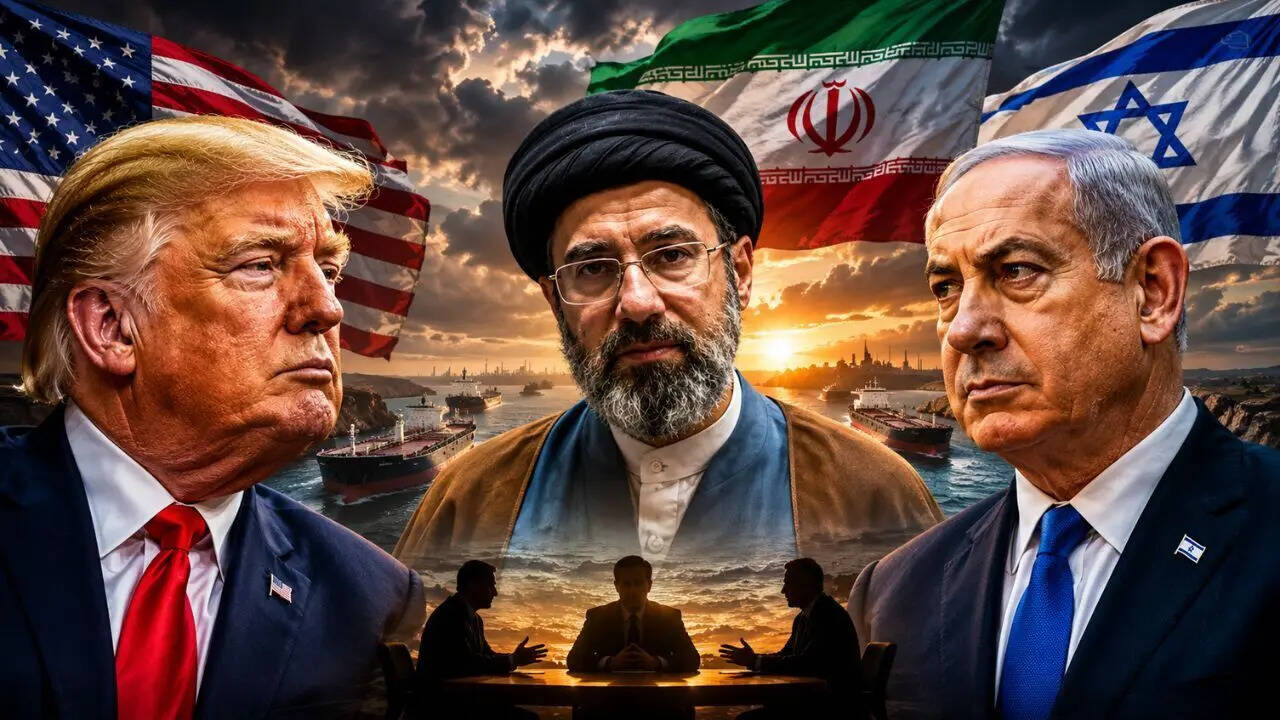
TOI correspondent from Washington: “Iran never won a war, but never lost a negotiation,” U.S President Donald Trump said in January 2020 during his first term. It is a line that may be returning to haunt his second term administration.
After weeks of military escalation against Iran alongside Israel, a chastened Trump now appears to be scrambling toward a deal that falls significantly short of the maximalist goals proclaimed at the start of the conflict: no “complete and total surrender” by Iran, no regime collapse in Tehran, no verified dismantling of Iran’s nuclear infrastructure, and no surrender of all highly enriched uranium stockpiles.
Instead, the immediate American objective has narrowed to something far more modest: reopening the Strait of Hormuz and preventing a wider global economic meltdown triggered by disruptions in Gulf energy shipments. Trump on Saturday said the Strait “will be opened” under a new understanding with Tehran, ostensibly due to pressure from other Gulf allies.
Ironically, the Strait was functioning normally before the U.S.-Israeli military campaign began.
“An Agreement has been largely negotiated, subject to finalization between the United States, Iran, and various other Countries… Final aspects and details of the Deal are currently being discussed, and will be announced shortly,” Trump said on “Truth Social,” the drawdown slipped in between a blizzard of bizarre posts, including one kissing up to China, raging against Democrats, and one claiming he’s getting younger.
In leaks to the American media, U.S officials claimed that the proposed agreement included an undertaking by Teheran to give up its uranium and unconditionally reopen the straits. But Iran’s state-linked Fars News agency said there were no such commitments, insisting Tehran would continue exercising sovereign control over passage routes, timing, permits and access through the strategic waterway through which nearly one-fifth of the world’s oil supplies pass.
According to reports circulating in Washington diplomatic circles, the proposed framework could involve a raft of concessions by the U.S, including partial sanctions relief for Iran, access to some $25 billion in frozen Iranian assets, and a phased reopening of maritime traffic in exchange for renewed but undefined discussions over Tehran’s nuclear programme.