
House Republicans cleared a $70 billion reconciliation package Tuesday to fund immigration enforcement agencies for the rest of President Donald Trump’s term.
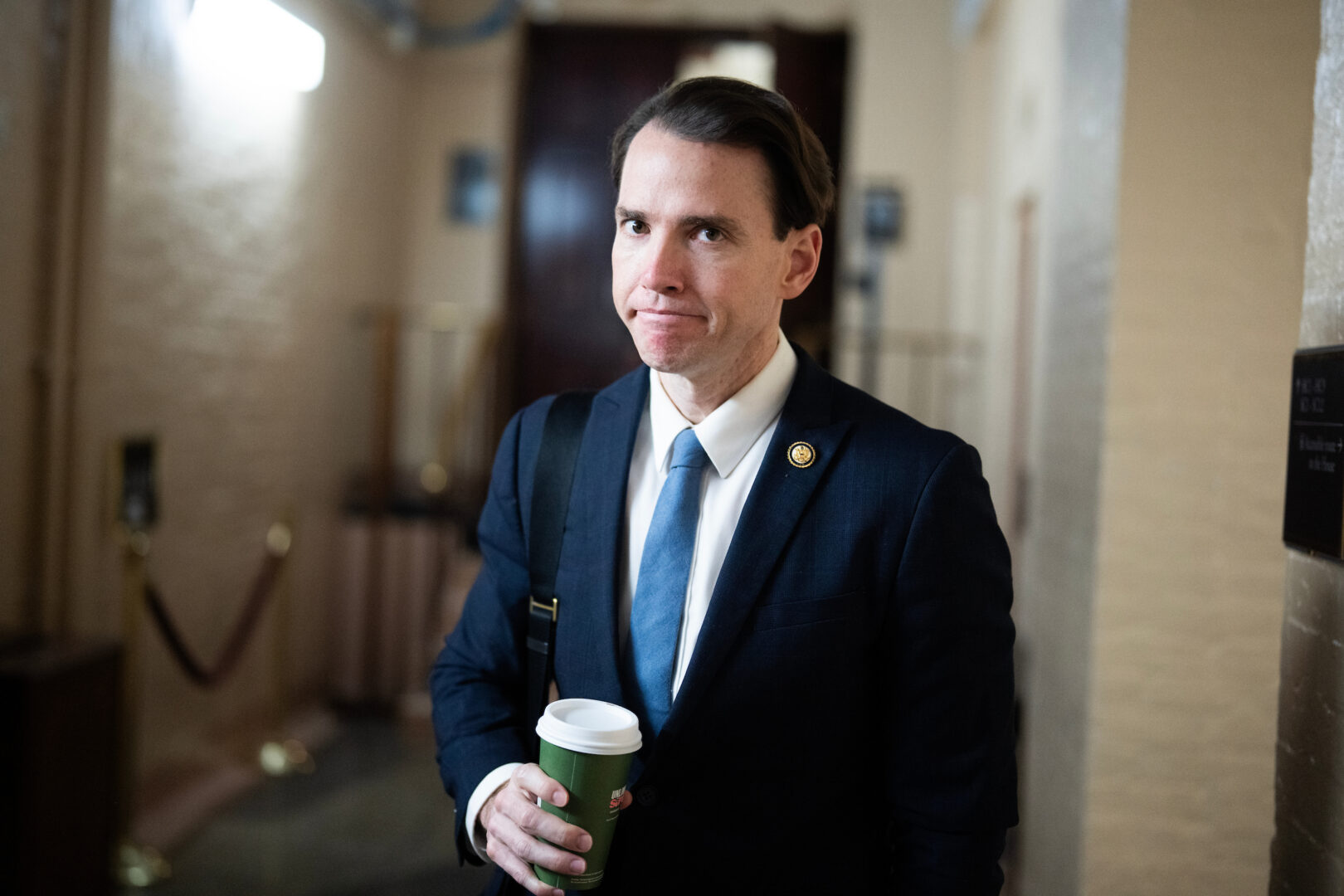
On a party-line vote of 214-212, the House cleared the reconciliation bill that the Senate passed last week. Independent Kevin Kiley of California, who caucuses with the Republicans, voted no.
Final passage of the measure brings to an end a monthslong partisan stalemate over immigration enforcement funding.
After immigration agents shot and killed two U.S. citizens in Minneapolis last winter, Democrats insisted on imposing new policy restrictions to advance fiscal 2026 Homeland Security funding. Republicans resisted the curbs, saying they would hamstring the Trump administration’s immigration enforcement crackdown.
The two parties eventually agreed to fund the Department of Homeland Security except for Immigration and Customs Enforcement and the Border Patrol though September, the end of the fiscal year.
And Republicans decided to break the gridlock over immigration enforcement funding by resorting to a filibuster-proof reconciliation bill that would fund those agencies without any new restrictions.
The Senate passed the bill last week in a mostly party-line 52-47 vote, after delays caused by proposed security funding for the White House ballroom project and the administration’s $1.8 billion “anti-weaponization” fund for the Justice Department, which was eventually shelved.
House Republicans criticized Democrats over the department’s lengthy shutdown and said the bill would allow Trump to continue to enact his agenda to secure the border and restrict immigration.
“I stand with the American people and say, let’s keep our communities safe … let’s pass this bill, let’s fund this department,” said Majority Leader Steve Scalise, R-La.
Democrats blasted Republicans for bringing forward a bill that would spend much more on immigration enforcement without policy changes or addressing other major issues, like growing costs on American consumers.
“Once again, while working families struggle with high costs caused by this administration, Republicans’ only focus is on spending more money on their lawless immigration enforcement agenda, even as ICE continues to abuse its authority,” said Education and Workforce ranking member Robert C. Scott, D-Va.
Reservations linger
Some House conservatives had expressed desires to expand the reconciliation package, though those concerns were not enough to derail the bill.
An earlier vote on a rule governing floor debate was held open for about 45 minutes as Speaker Mike Johnson, R-La., sought to persuade reluctant members of the ultraconservative Freedom Caucus to come on board.
Some members were demanding a commitment from GOP leaders to bring up the party’s massive immigration bill, known as HR 2 in the last Congress, according to Rep. Tim Burchett, R-Tenn., one of the holdouts. That measure, which would limit asylum eligibility for migrants crossing the border with Mexico, heighten employment verification requirements and expand migrant family detention, among other changes, passed the House in the last Congress but died in the Senate.
“We were using [the rule vote] for leverage to get HR 2 up, and we got an agreement, so we’re going to get it up,” he said.
Rep. Keith Self, R-Texas, said earlier Tuesday that he wants to codify Trump’s immigration enforcement actions into law to ensure they could not be easily reversed in the future.
“We’re going to fund the people who will try to keep the bad guys out, but we haven’t codified the actions to prevent [migrants] to come back here in three years or so,” Self said. “So there’s concern that we haven’t codified anything into law.”
On the other hand, Kiley, who is running for reelection in a district that became much more Democratic after redistricting, said he is concerned about taking funding out of the traditionally bipartisan appropriations process to pass in a party-line reconciliation vote. He also expressed concern about approving several years’ worth of regular funding for the immigration agencies in one fell swoop.
“To even begin to consider that, I would need to see significant bipartisan reforms to interior immigration enforcement to accompany that,” he said. “So that if we’re going to have multiyear funding, we can at least have some input from Congress to assure that that funding is used in ways that reflect where I think the majority of the American people are on these issues.”
Other Republicans have expressed concerns about the status of the “anti-weaponization” fund, which critics say could funnel taxpayer money to Trump allies who broke the law, potentially including participants in the Jan. 6, 2021, attack on the Capitol.
Rep. Brian Fitzpatrick, R-Pa., has teamed with Rep. Tom Suozzi, D-N.Y., on a bipartisan discharge petition that would force a vote on their bill to block payments from the fund.
Acting Attorney General Todd Blanche told House appropriators last week that the administration would not pursue the fund, a statement that paved the way for eventual Senate passage of the bill. But Trump himself continued to express support for the fund as recently as last week, and some Republicans still want to use legislation to block it, though that effort could not garner the 60 votes needed to pass the Senate last week.
Reconciliation 3.0
The completion of the second reconciliation bill this Congress is sparking increased conversations about a third reconciliation package, a prospect the House appears more keen on than the Senate.
Members of the House Freedom Caucus, including Self, are pushing for House Republicans to peel more funding out of the bipartisan annual appropriations process and pass it along party lines through reconciliation.
“I think we ought to put every leverage that the Democrats have for a shutdown, and put it into [reconciliation] 3, and take all of that leverage away from them,” Self said.
But that idea is not popular with appropriators, who want to keep the process as is. House Appropriations Chairman Tom Cole, R-Okla., said passing appropriations bills through reconciliation is a “bad practice” that will not be a “regular feature.”
“The only reason we’re doing it now is, first, the Senate Democrats, I think, have misused the filibuster, and honestly, the Republicans have let them misuse the filibuster,” Cole said. “They are more interested in defending the filibuster, which is a Senate rule, than the appropriations process, which is an Article 1 constitutional imperative.”
Whether or not a third reconciliation bill is even feasible, with just five months left before the midterm elections and limited days left in session, has been up for debate.
While the administration has asked for a major boost in defense spending through reconciliation, Senate Appropriations Chair Susan Collins, R-Maine, and Defense Subcommittee Chairman Mitch McConnell, R-Ky., both said Tuesday they do not believe a third reconciliation bill will happen.